In this article, we will briefly review the factors behind human anxiety as a topic in psychology. In psychology, anxiety refers to a negative and uncomfortable emotion that arises from worrying threats or concerns as an individual anticipates the future.
Everyone experiences these emotions and accepts them as part of life, and we will look at the principles behind how they arise.
The types of anxiety originate in Freud's psychoanalytic theory, and to understand them, it is useful first to know the concepts of the 3 components of the mind and the 3 components of personality.
1. The 3 Components of the Mind and Personality
 The 3 Components of the Mind
First, the 3 components of the mind can be broadly divided into consciousness, the preconscious, and the unconscious.
Consciousness refers to all the sensations and experiences we can feel. It encompasses what we can directly feel when something happens in everyday life—all the feelings that arise at a particular moment.
The preconscious serves as an intermediary between consciousness and the unconscious. It refers to awareness that an individual cannot access immediately but can bring forth through focused effort.
The unconscious cannot be directly felt by humans, but it has the power to control thought and behavior. When you say that you are fine but do not feel fine at all inside, the unconscious is at work.
 The 3 Components of Personality
In psychoanalytic theory, personality can be broadly divided into the id, the ego, and the superego.
The id is humans' most fundamental desire and is based on the emotion of 'pleasure'. It can be described as the most 1-dimensional desire and is instinctive, allowing us to feel satisfaction.
The ego is the component that makes judgments and controls behavior by considering real-world circumstances. It serves as an intermediary between the id and the superego and can be seen as an objective perspective that considers oneself, the environment, and other factors together.
The superego is the component that judges whether human behavior is right or wrong. It is related to a moral perspective, and a representative example is whether one feels pangs of conscience about one's own behavior.
2. The 3 Components of Anxiety
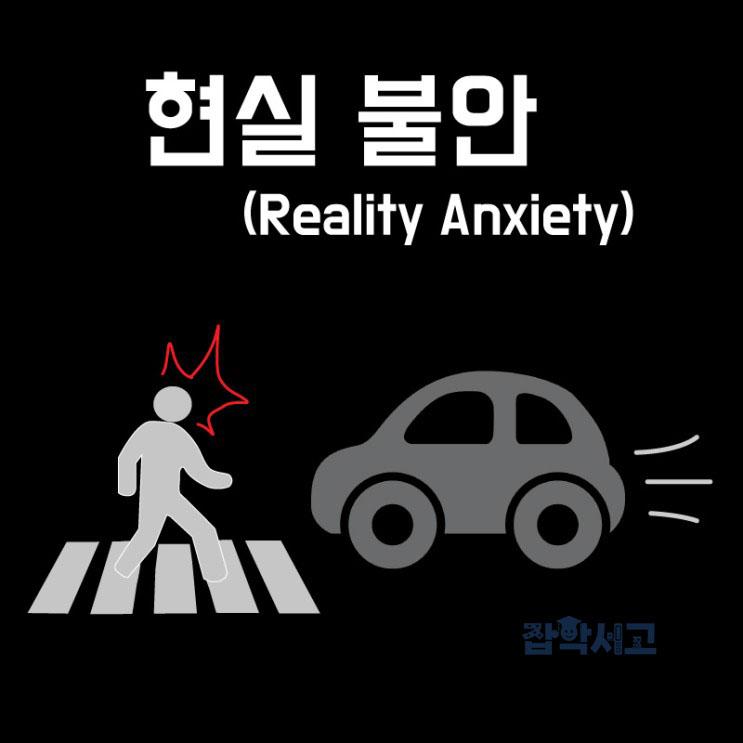 What Is Reality Anxiety?
First, among the 3 components of anxiety, reality anxiety is also called 'objective' anxiety. It refers to an emotion that arises when a person perceives a real threat.
For example, it refers to realistic anxiety such as the sense of threat you feel when a car approaches at high speed and you fear it may hurt you.
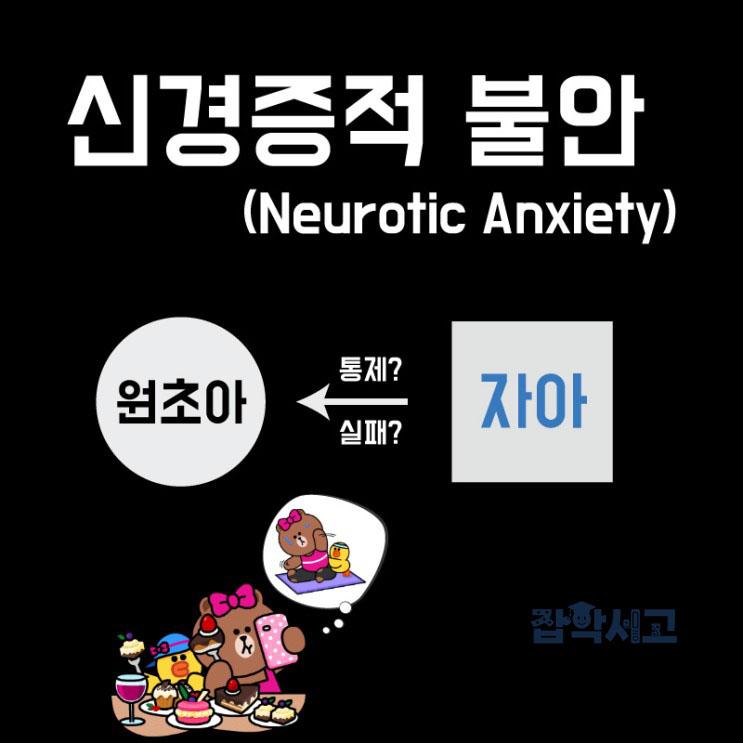 What Is Neurotic Anxiety?
Neurotic anxiety arises from feeling threatened by the negative effects that could result if the ego fails to control the id.
For example, this refers to a situation in which your appetite surges at the sight of delicious food, and you feel anxious that you might gain weight if you cannot resist it.
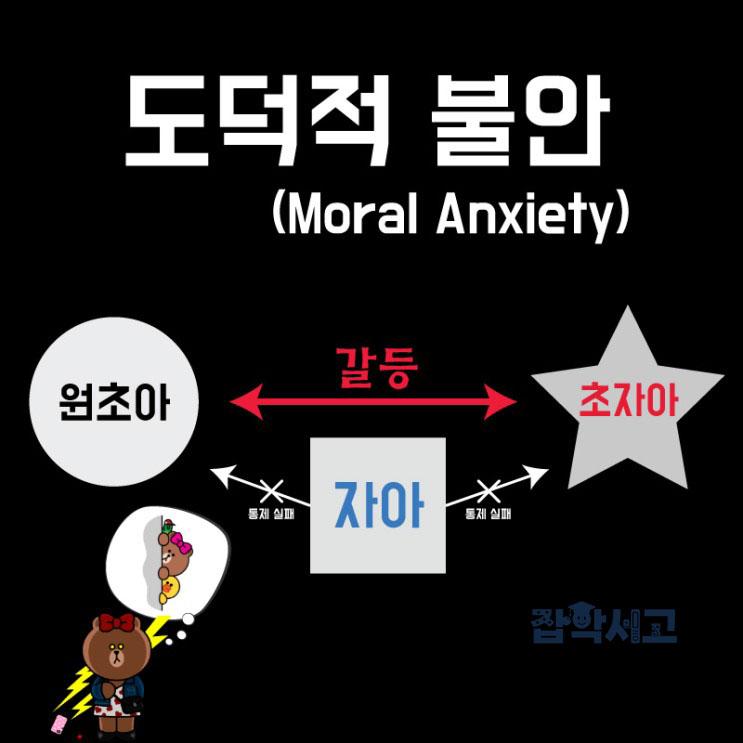 What Is Moral Anxiety?
Finally, moral anxiety arises from conflict between the id, which is the most instinctive component, and the superego, which is the highest-level concept. It originates in a situation where the ego, the intermediate component, cannot smoothly regulate the relationship between the two. Moral anxiety arises when you feel pangs of moral conscience after acting according to your instincts (the id).
For example, it arises when you want to throw trash onto the street because there is no trash can in sight nearby, but feel guilt and anxiety over your wrongful behavior if you put that desire into action.
So far, we have examined the 3 components of the mind and personality based on Freud's psychoanalytic theory and, based on these components, the 3 types of anxiety. Anxiety is perceived as a negative concept, but a moderate level of anxiety can protect individuals from threats and sometimes plays an important role in achieving goals.
Of course, if this emotion becomes excessive and persists for a long time, it can have a major impact on everyday life, so appropriate management and treatment may be necessary. Although this is a simple concept, I hope it can be of great help.