
Black holes are among the most mysterious and complex objects in the universe, and for a long time they have been a subject of great curiosity and inquiry for researchers. Studying their origin and nature plays an important role in understanding time, space, and the fundamental laws of nature.
This article takes an in-depth look at how black holes come into being, the course and achievements of historical research on them, and the directions future exploration may take. In doing so, it aims to help readers understand black holes more deeply.
The Origin of Black Holes: Uncovering the Secrets of the Universe's Creation

The Birth of a Black Hole: Stellar Evolution and Its Final Moments
A black hole forms through gravitational collapse after a star reaches the end of its life. Throughout its life, a star releases energy by converting hydrogen into helium through nuclear fusion. During this process, internal pressure and gravity stay in balance, and the star shines steadily. But once its fuel runs out, fusion no longer takes place, gravity takes over, and the star collapses rapidly.
Large stars with more than 20 times the mass of the Sun explode as supernovae at the end of their lives, and the core that remains is compressed into a black hole. In particular, as heavy elements such as iron build up in the core, fusion can no longer proceed, and the star eventually collapses under its own gravity. This process releases an extreme amount of energy and gives birth to a black hole, one of the most powerful objects in the universe.
Black Holes in the Early Universe: The Beginnings of Supermassive Black Holes
Black holes cannot be explained simply as the final stage of stars. In the early universe, that is, just after the Big Bang, the first stars that formed had far greater masses than the stars we know today. The black holes formed when these stars died had enormous masses, and it is highly likely that they were the seeds of today's supermassive black holes.
The black holes of this era were already very large objects in their own right, but over time they grew even larger by absorbing surrounding matter and merging with one another. This process played a decisive role in the formation of the supermassive black holes at the centers of galaxies and in the formation of the structure of the universe. Research shows that most of the galaxies we observe today have such a supermassive black hole at their centers, and these black holes act as an important factor shaping the evolution and activity of galaxies.
The Influence of Black Holes on the Universe: The Interaction of Matter and Energy
Black holes pull in surrounding matter, and in the process their powerful gravity compresses that matter and creates friction, turning it into high-temperature plasma. The X-rays and gamma rays emitted in this process provide important clues for astrophysical research. In particular, this radiation helps measure a black hole's mass and spin, and it is essential for understanding the properties of black holes.
Black holes also interact with the galaxies around them. A black hole's powerful gravitational field draws in stars and gas clouds at the center of a galaxy, which makes the galactic center highly active. These interactions have a major influence on the evolution of galaxies and play an important role in explaining how galaxies form and change.
The Significance of Black Hole Research: A New Understanding of the Universe and the Laws of Nature
Black hole research plays an important role in understanding the fundamental laws of the universe. Because black holes themselves cross the boundaries of gravity, time, and space, studying them is also a way of testing the limits of the physical laws we know. In particular, the singularity inside a black hole is a region that current theory cannot explain, and it is said that there time stops and space is infinitely distorted. This suggests that black hole research could be the key to answering fundamental questions about the universe.
When and how black holes formed, and what role they have played in the evolution of the universe, remain unknown. By studying how black holes form and evolve, researchers hope to understand the history and evolution of the universe as a whole more deeply. In this way, black holes are not just celestial objects but important clues that explain the evolution of the universe.
Future Black Hole Research: A Testing Ground for New Theories
Black holes are objects that demand the unification of quantum mechanics and the theory of gravity. Because current physics cannot fully explain what happens inside a black hole, new theoretical approaches are needed. Black hole research can serve as an important experimental stage for testing such new theories.
In particular, phenomena that occur around black holes offer opportunities to drive new theoretical developments. For example, the physical phenomena that appear at a black hole's event horizon offer a new perspective in which quantum mechanics and the theory of gravity can be applied at the same time. Such research will not only unlock the secrets of black holes but also provide important clues that could fundamentally change the way we look at the universe.
A Revolution in Astrophysics: The History of Black Hole Research
The First Proposal of the Black Hole Concept: The Emergence of Dark Stars
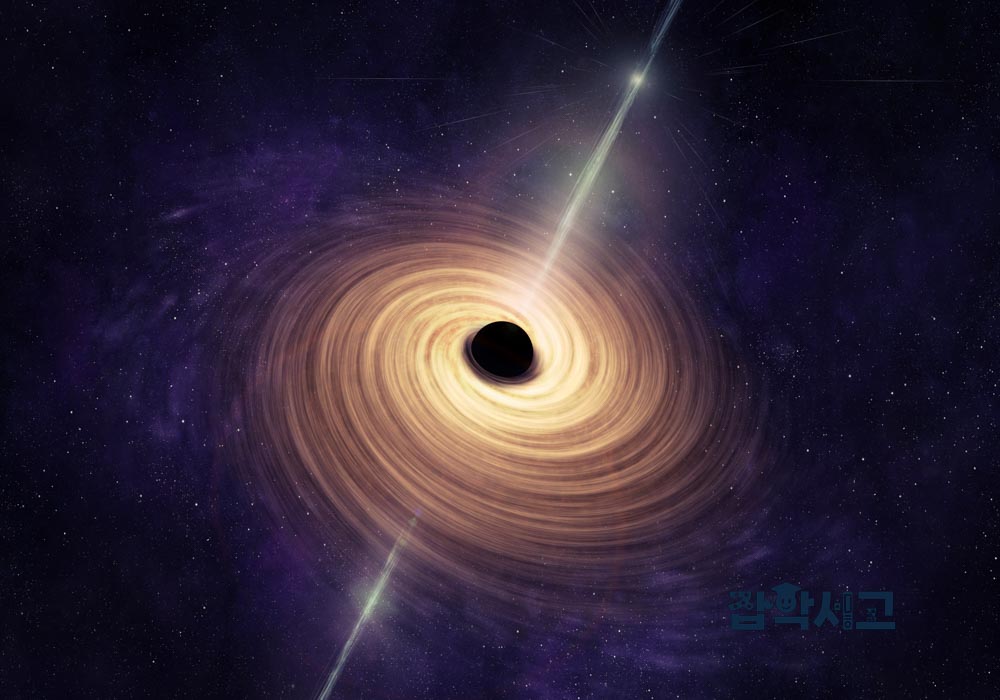
Black hole research dates back to the 18th century. In 1783, the English astronomer John Michell proposed the concept of a "dark star," hypothesizing that the gravity of a massive object could be so strong that not even light could escape it. This idea resembles today's concept of the black hole and was revolutionary at the time. Michell's theory marked the beginning of black hole research, and the concept was later refined further and further by many scientists.
The Arrival of General Relativity: A Turning Point in Black Hole Research
In the 20th century, Einstein's general theory of relativity provided an important theoretical foundation for black hole research. Published in 1915, the theory introduced the new idea that gravity warps spacetime and redefined the nature of gravity. In particular, the concept of the "Schwarzschild radius" emerged from this theory, and it came to be interpreted as a black hole's event horizon, the boundary from which neither light nor matter can escape. At this point, the concept of the black hole became more sophisticated and took on an important place in theory.
The Development of X-ray Astronomy: Indirect Evidence of Black Holes
By the 1960s, astronomers had begun to look for indirect evidence of black holes through X-ray astronomy. In particular, an object called “Cygnus X-1,” discovered in 1964, became an important clue supporting the existence of black holes. This object had a powerful gravitational field and emitted X-rays as it absorbed surrounding matter, and this was regarded as observational evidence that black holes might exist. Through this, scientists began to accept black holes not merely as a theoretical concept but as objects that actually exist.
The Proposal of Hawking Radiation: The Lifespan of a Black Hole
In the 1970s, Stephen Hawking drew wide attention by proposing a new theory about black holes. He argued that black holes could "evaporate" because of quantum mechanical effects. This phenomenon is called "Hawking radiation," and it raised the possibility that black holes do not exist forever but can evaporate after a certain amount of time. This opened up a new perspective on the lifespan of black holes and became an important theory in modern physics. The theory also offered a new view of the thermodynamic properties of black holes and made black hole research even deeper.
The Discovery of Gravitational Waves: A New Era in Black Hole Research
In the 21st century, the discovery of gravitational waves opened a new chapter in black hole research. In 2015, the Laser Interferometer Gravitational-Wave Observatory (LIGO) succeeded in observing, through gravitational waves, two black holes colliding and merging. This discovery marked a groundbreaking turning point in black hole research and proved that black holes actually exist and can interact with one another. Gravitational waves have become a new tool for studying the behavior and properties of black holes in more detail, opening up new areas of astrophysical research.
The Historical Significance of Black Hole Research
From its beginnings to the present, black hole research has established itself as an important field of astrophysics. From early theoretical hypotheses to observations that use the cutting-edge technology of modern science, black hole research has been an important key to unraveling the mysteries of the universe. Black holes are important objects that may provide answers to fundamental questions about the universe, and scientists will continue their research to solve this mystery.
Exploring the Inside of a Black Hole: Beyond the Event Horizon
The Event Horizon: The Secret of a Black Hole's Boundary
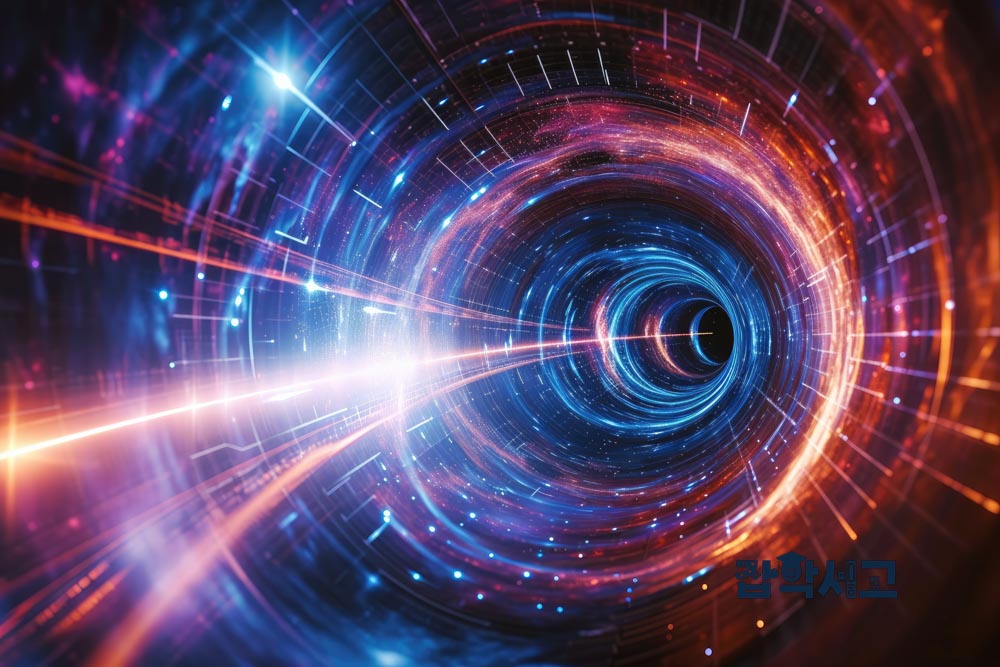
Exploring the inside of a black hole remains a great challenge for scientists. The event horizon is the boundary of a black hole, and matter and light that cross this point can never come back out. What happens beyond this horizon cannot be observed directly, but by studying the various phenomena that occur near the event horizon, we can approach the nature of black holes.
The event horizon is one of the most extreme environments in the universe, where gravity is so strong that not even light can escape. Because of this, everything that happens beyond the event horizon remains unknown to us, and it is very difficult to obtain information about the inside of a black hole. Even so, studying how this boundary forms and the physical phenomena that occur near it is an essential part of understanding black holes.
The Distortion of Gravity and Time: The Extreme Environment Near a Black Hole
Near the event horizon, the gravitational field becomes so extremely strong that the ordinary laws of physics may no longer apply. In particular, the powerful influence of gravity greatly distorts time and space. Near the event horizon, time can appear to slow down or stop, creating a physical state completely different from that of ordinary space. These phenomena are explained by Einstein's theory, but what happens inside the event horizon cannot be fully explained by current theory.
The distortion of gravity and time at this point creates an extreme state that is hard to grasp through everyday experience, and it calls for new theoretical approaches in physics. The combination of quantum mechanics and gravity now being studied is regarded as a potential tool for explaining these phenomena near the event horizon.
The Singularity: The Center of a Black Hole Where Everything Converges
The most mysterious part of a black hole's interior is the singularity. The singularity is the point where all matter and energy converge into a single point; there, gravity becomes infinite and all existing laws of physics break down. At this point, where density increases without limit, time stops and space is infinitely curved. Such a singularity is a region that physics so far cannot explain, and it strongly suggests the need for a new theory.
At the singularity, all matter collapses, and it is an essential element in explaining a black hole's internal structure and mechanism. Scientists believe that understanding the singularity will be an important key to explaining not only black holes but also the evolution and structure of the universe as a whole. The singularity is regarded not merely as the center of a black hole but as an important area of research that could answer fundamental questions about the universe.
The Information Loss Problem: A Quantum Mechanical Puzzle of Black Holes
One of the most important debates in black hole research is the "information loss problem." According to quantum mechanics, information is never destroyed, yet information that falls into a black hole appears to disappear. This raises questions about what happens inside a black hole after it forms, and scientists see this problem as conflicting with the fundamental theories of physics.
This problem is directly tied to whether information is preserved even as a black hole evaporates. A black hole slowly releases energy and evaporates through Hawking radiation, but there is still no clear answer as to how information is handled in this process. The information loss problem is one of the most important unsolved problems in physics, and it plays an important role in explaining the physical phenomena inside black holes.
A New Hypothesis: The Quantum Horizon and the Inside of a Black Hole
To explain the properties of black holes, some researchers have put forward hypothetical concepts such as a “quantum horizon.” This is not yet the name of an established theory; it is closer to an umbrella term for various attempts to explain the quantum effects that may occur near the event horizon. These attempts apply relativity and quantum mechanics together to understand the inside of a black hole, and there are hopes that they could offer clues to understanding the complex physical state of black holes.
Although these theoretical approaches are still at the stage of being tested, they may help explain the internal dynamics of black holes and extend existing physical theories. If they are backed up by observation and experiment, they could provide important clues not only for black hole research but also for future physics research.
The Future of Black Hole Exploration: Limitless Possibilities and Challenges
Exploring the inside of black holes still holds countless mysteries, and the field will face many challenges in the future. But its possibilities are limitless. Understanding what black holes are really like beyond the event horizon is essential for broadening our fundamental understanding of the universe, and this research will provide an important turning point in the development of physics and astronomy.
In the course of exploring the inside of black holes, we will gain a new understanding of the universe and the laws of physics, and this research will make an important contribution to humanity's deeper exploration of the universe. Black hole research will continue to drive scientific discovery and innovation and carry on the journey toward answers about the most mysterious parts of the universe.
The Riddles of the Universe: Directions for Future Black Hole Research

New Challenges and Opportunities in Black Hole Research
Black hole research has made great progress so far, but it still holds countless riddles. To fully understand how black holes form, how they evolve, and how they affect the universe, scientists are exploring new research directions using a variety of advanced technologies and theoretical models. This process will be important not only for the advancement of physics but also for providing insight into the fundamental principles of the universe.
The Role of Gravitational-Wave Astronomy: Evidence of Black Hole Collisions
Gravitational-wave astronomy is one of the most important breakthroughs in black hole research. Gravitational waves are ripples in spacetime produced when black holes collide or merge, and by detecting them we can directly study how black holes form and evolve. As the technology for detecting gravitational waves advances, scientists are studying black holes in ways that were previously unimaginable. Gravitational-wave observations are opening a new window for understanding not only the properties of black holes but even the history of the early universe.
Next-Generation Telescopes and Space Exploration Technology: New Eyes for Observing Black Holes
To understand black holes better, advances in observation technology are essential. The latest projects, such as the Event Horizon Telescope (EHT), have used very-long-baseline interferometry to succeed in directly imaging a black hole's shadow. Such observations mark an important turning point in understanding the structure and properties of black holes and will also help reveal their internal mechanisms. In addition, future advances in space exploration technology will provide new opportunities to observe how black holes form and their surrounding environments more precisely.
Advances in Quantum Computing and Artificial Intelligence: Innovation in Black Hole Simulation
Advances in quantum computing and artificial intelligence (AI) are expected to play an important role in analyzing the complex properties of black holes. Quantum computers can perform complex simulations that were impossible with conventional computers, which can be a great help in analyzing how the laws of physics change in extreme conditions such as a black hole's singularity. AI will be useful for making black hole research more precise and for processing vast amounts of data efficiently. These technologies will open new horizons for black hole research.
Theoretical Unification: Combining Quantum Gravity and Relativity
Theoretical unification is essential in black hole research. Current quantum mechanics and general relativity cannot fully explain the properties of black holes. To solve this, new theories such as string theory and loop quantum gravity have been proposed, and these theoretical approaches offer new insights into understanding the fundamental nature of black holes. Advances in theoretical physics will play an important role in deepening our understanding not only of black holes but of the universe as a whole.
Philosophical Questions: What Black Hole Research Says About Existence and the Meaning of the Universe
Black hole research goes beyond physical phenomena and connects with philosophical questions. Black holes test the boundaries of spacetime and lead us to ask fundamental questions about the nature of the universe. The process of understanding the properties and influence of black holes makes us re-examine how we perceive the universe and how we understand the meaning of existence. It is an important research topic that leads humanity to rethink its place in the universe and the meaning of the universe itself.
The Future of Black Hole Research and Its Potential
Black hole research will continue to lead to new discoveries and will have a major impact on many fields, including physics, astronomy, and philosophical insight. Advances in gravitational-wave astronomy, next-generation telescopes, quantum computing, and theoretical physics will greatly expand the potential of black hole research, and this will fundamentally change our understanding of the universe. Black hole research will be an important guide to uncovering the deepest secrets of the universe.
Black holes remain a mystery of the universe that still holds many secrets. Exploring their origin and nature leads to new discoveries and will be an opportunity to further advance our understanding of the universe.
Research on black holes provides an important step in the search for answers to fundamental questions about the universe, and it will continue to offer scientists endless challenges and inspiration.