
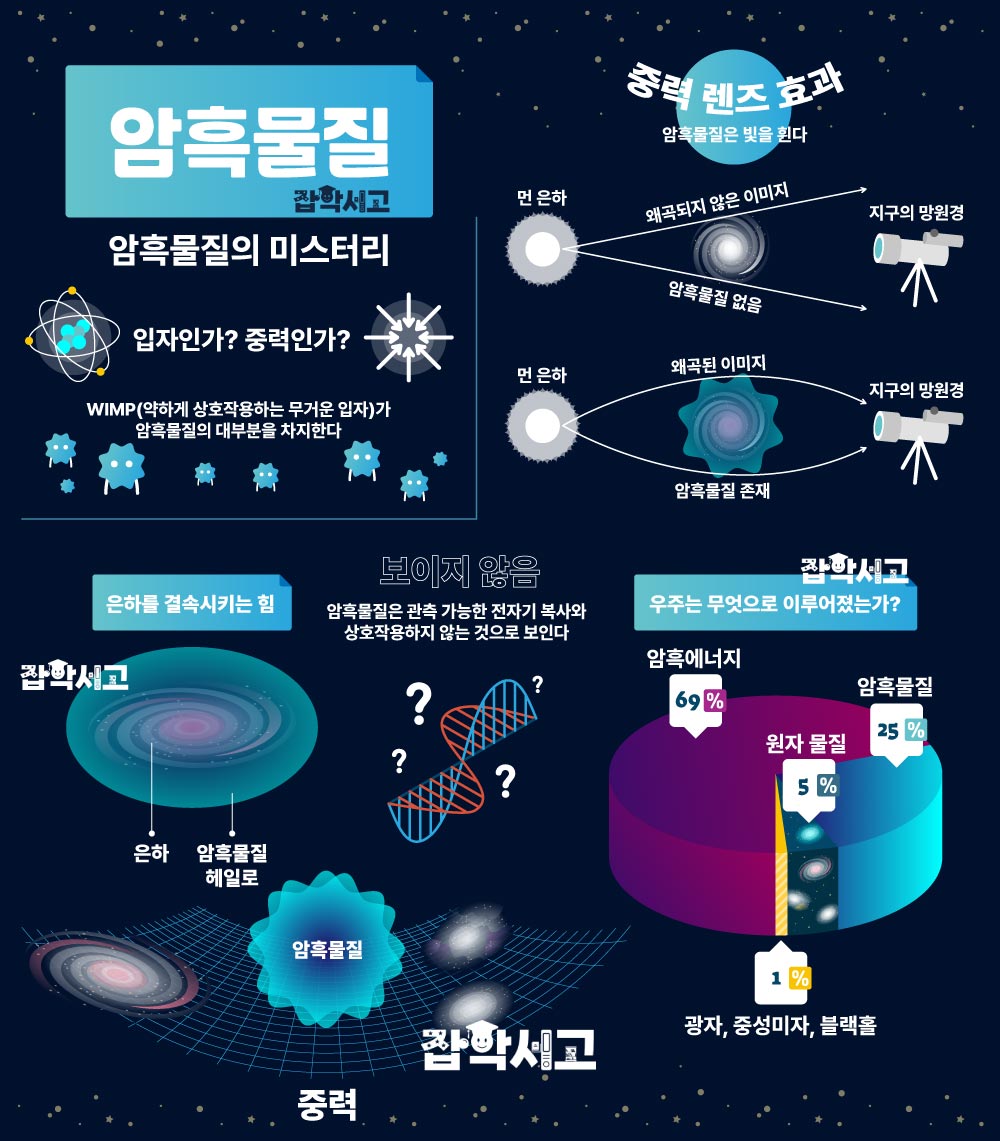
The universe remains full of mysteries, and dark matter is among its greatest enigmas. Although invisible, dark matter is estimated to make up approximately 27% of the universe, and its existence is currently understood to be detectable only through gravity.
This article examines in depth the scientific investigation into the existence of dark matter, the research achievements to date, and the directions for future research.
The Existence of Dark Matter: A Mystery That Shakes the Universe
The Existence of Dark Matter: A Mystery That Shakes the Universe
Dark matter does not emit light of its own and does not interact electromagnetically, making direct observation impossible. However, clues that can confirm its existence are found in astronomical observations. By examining the rotation speeds of galaxies, scientists witnessed phenomena that could not be explained without dark matter, leading them to conclude that dark matter contributes substantial, invisible mass.
The concept of dark matter was first proposed by Fritz Zwicky in the 1930s and was explained on the basis that visible matter alone was insufficient to account for the mass within galaxy clusters. Scientists have since studied dark matter through various methods for decades, but its true nature remains a mystery.
The Impact of Dark Matter on the Formation of Cosmic Structure
Beyond simply contributing mass, dark matter profoundly influences the formation of cosmic structure. A theory proposes that dark matter formed enormous gravitational wells in the early universe immediately after the Big Bang, allowing baryonic matter to accumulate and stars and galaxies to form. If dark matter did not exist, galaxies and stars as we know them today would very likely not exist.
Dark matter is regarded as highly significant because it played an essential role in the formation of cosmic structure. This could provide an important clue to understanding the fundamental mechanisms of the universe and nature.
Dark Matter Candidates: Theoretical Models
Various theories about the nature of dark matter exist, but among the most promising candidates are particles such as WIMPs (WIMP) and axions (Axion). These serve as models for explaining the characteristics of dark matter and are being tested through various experiments. However, no conclusive evidence has yet emerged, and debate continues over whether these particles truly constitute dark matter.
Theoretical models of this kind are being actively studied in various fields, including particle physics and theoretical physics. If the identity of dark matter is revealed, a new understanding of the fundamental laws of nature will become possible.
Gravitational Lensing: Indirect Evidence of Dark Matter
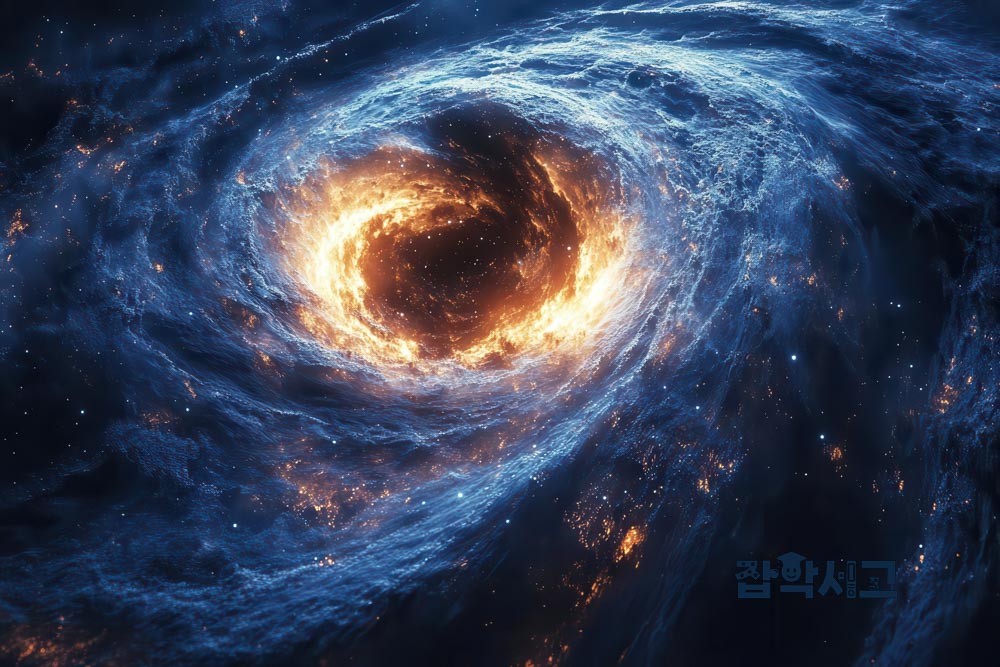
Gravitational Lensing: Indirect Evidence That Sheds Light on Dark Matter
Gravitational lensing is an important method of indirectly proving the existence of dark matter. Massive celestial bodies curve the surrounding spacetime, causing light from objects behind them to bend. This phenomenon resembles the way a lens refracts light and can be used to determine the distribution of dark matter. In particular, this effect is explained on the basis of general relativity and is stronger around massive objects.
Because dark matter does not emit light of its own, gravitational lensing plays a very important role as indirect evidence of dark matter. Observable matter alone cannot fully explain gravitational lensing, so invisible dark matter is presumed to necessarily exist. Dark matter, which we cannot see directly, reveals its existence through this effect, allowing researchers to study where it is distributed and in what amounts.
Mapping the Distribution of Dark Matter and Cosmic Structure
Scientists are using gravitational lensing to map the distribution of dark matter. This process is particularly pronounced in enormous structures such as galaxy clusters, and the observed gravitational lensing strongly demonstrates the presence of matter with a very large mass that we cannot see. The distribution of dark matter is known to be an important factor contributing to the formation of the universe's large-scale structure, and a theory proposes that this distribution led to the formation of today's galaxies and cosmic structures.
Given that enormous structures such as galaxy clusters could not have formed without dark matter, understanding its distribution provides important clues to the fundamental mechanisms of cosmic structure formation. Analyzing this distribution through gravitational lensing is a major pillar of current research into the universe.
Advanced Equipment and Progress in Dark Matter Research
Advanced observational equipment such as the Hubble Space Telescope plays a major role in studying gravitational lensing. Data obtained through this equipment are essential for revealing how dark matter is distributed throughout space and how this distribution affects the expansion of the universe and the formation of its structure. As observational equipment advances, increasingly precise data are also being accumulated, helping to explain more clearly how dark matter operates within the universe.
These data also play a very important role in testing cosmological models. The distribution of dark matter and the resulting gravitational lensing serve as a natural experimental apparatus for testing our models of the universe, providing deeper insights into its large-scale structure, including the rate of cosmic expansion and the formation of galaxy clusters.
Various Research Methods and the Analysis of Dark Matter
Gravitational lensing is an essential method in dark matter research, but optical observations alone cannot explain everything. Various research methods are therefore being used together. New fields of research, such as neutrino astronomy, contribute to identifying other characteristics of dark matter, while different methods complement one another to enable a more precise understanding of its properties.
Using data obtained through gravitational lensing, scientists from various fields are proposing theories about the particle properties and interactions of dark matter, and these theoretical models are being tested experimentally. Questions remain about how dark matter contributed to the structure of the universe and what its nature is, but combining gravitational lensing with other research methods is gradually bringing us closer to understanding its true nature.
Consequently, gravitational lensing is an important tool for overcoming current observational limitations, allowing us to study the distribution and characteristics of dark matter and gain a deeper understanding of the universe's fundamental structure. Dark matter research is now in the process of unraveling its secrets by accumulating more data and testing new theories.
Scientists' Challenges: The Frontiers of Dark Matter Exploration

Scientists studying dark matter face the challenge of revealing its identity through various methods. Efforts to prove its existence through numerous experiments and observations continue, but the process remains full of complex and difficult problems.
Particle Detection Experiments: The Difficulties of Detecting WIMPs
Experiments to detect WIMPs (WIMP), among the leading candidates for dark matter, are being conducted in underground laboratories. These experiments attempt to detect minute interactions with dark matter particles using radiation shielding and extremely precise equipment. Because WIMPs interact with other matter only through very weak forces, detecting them directly is an extremely difficult task. Given that no conclusive WIMP detection has yet been achieved, new theoretical approaches may be needed to reveal the true nature of dark matter.
These experiments require exceptional precision, including blocking atmospheric radiation and various sources of noise originating on Earth, and many scientists continue to work to overcome this challenge.
Indirect Searches Using Particle Accelerators
Indirect searches using particle accelerators are also being actively pursued. At Europe's Large Hadron Collider (LHC), attempts are underway to produce dark matter candidate particles through high-energy particle collisions. This method artificially creates extreme conditions under which dark matter particles could be produced and may provide important clues about how dark matter forms and interacts.
These experiments are significant because they can open new horizons in particle physics while providing crucial data for determining the properties of dark matter.
Astronomical Observations: Searching for Dark Matter in the Universe
Astronomical observations play a very important role in dark matter research. Large-scale observational programs using space telescopes are investigating the distribution of dark matter through the motions of galaxies and galaxy clusters, as well as gravitational lensing. This provides essential information for understanding the role dark matter plays in the universe and how it contributed to the formation of cosmic structure.
Data obtained through these observations are used as important material for comparing and testing theoretical models and experimental results. Astronomical observations have become an important means of indirectly revealing the existence of dark matter, particularly through phenomena such as galaxy rotation speeds and gravitational lensing.
Theoretical Modeling of Dark Matter
Theoretical modeling aimed at understanding the properties of dark matter is also being actively pursued. Scientists are proposing various theoretical frameworks to explain its particle properties, interactions, and distribution, and these models are tested by comparing them with experimental data.
Theoretical models that seek to explain the characteristics of dark matter and the forms in which it exists in the universe provide an important foundation for its exploration. When these models agree with experimental results, they can help clarify the true nature of dark matter.
The Importance of Interdisciplinary Approaches and Collaboration
Dark matter research requires collaboration across various disciplines, including astronomy, particle physics, and theoretical physics. Bringing together expertise from these fields to unravel the secrets of dark matter has become a major challenge of modern science. This problem is difficult to solve through the efforts of a single field alone, and close collaboration among scientists is gradually bringing us closer to understanding the true nature of dark matter.
Consequently, dark matter research stands at the forefront of scientific progress, and the challenge of revealing its nature will continue. If its secrets are unraveled through various research methods and academic collaboration, major advances will be possible in understanding the fundamental principles of the universe and nature.
Future Research Directions: The Keys to Understanding Dark Matter
The Future of Dark Matter Research: New Technologies and Challenges
Dark matter research will require increasingly innovative technologies and approaches. Next-generation particle detectors and space telescopes are expected to play a major role in overcoming existing technological limitations and identifying the properties of dark matter more clearly. These instruments will be designed with far greater precision and sensitivity, allowing them to detect even minute interactions that existing equipment could not capture. This will make new discoveries and a deeper understanding of dark matter possible.
The Introduction of Artificial Intelligence and Big Data
Artificial intelligence and big data technologies are playing important roles in dark matter research. When processing large volumes of astronomical observational data, machine learning algorithms are highly useful for identifying subtle signals that suggest the presence of dark matter. These technologies can improve the accuracy of observational data while contributing to the discovery of new patterns and correlations. Advances in artificial intelligence will become an important tool for accelerating dark matter research and producing better analytical results.
The Need for New Theoretical Approaches
Changes are also needed in theoretical approaches to revealing the identity of dark matter. New theoretical possibilities are gradually being explored beyond existing WIMP and axion (Axion) theories. In particular, innovative ideas such as multidimensional cosmology and supersymmetry theory could play important roles in explaining the complex properties of dark matter. Such theoretical models, combined with experimental results, will provide a clearer understanding of its properties.
The Importance of International Collaboration
Dark matter research can make greater advances through international collaboration. Scientists around the world are drawing more reliable conclusions by sharing data and comparing research achievements. Through this process, dark matter research is developing in a way that maximizes synergy among scientists from different countries working toward a common goal. This collaboration will go beyond scientific progress to serve as a catalyst for new discoveries.
The Need for Education and Public Participation
Dark matter research can gain broader support through public participation and understanding, as well as through scientific progress. Communicating the importance of dark matter and the need for research through science education programs, public lectures, and the media will play an important role in inspiring the next generation of scientists. Public participation can bring more resources into research and drive future scientific development.
The Ultimate Goal of Understanding Dark Matter
Solving the mystery of dark matter has significance beyond scientific discovery: it is important for reassessing humanity's place in the universe and the fundamental laws of nature. This research will offer new paths to understanding the universe and nature and will have a major influence on future scientific progress. Dark matter research stands at the center of future science and will provide new insights through its various challenges and possibilities.
Dark matter research is an important field of modern science. Although its identity remains a mystery, scientists are investigating its existence through indirect evidence such as gravitational lensing.
International collaboration and advances in cutting-edge technology will play important roles in understanding dark matter and could greatly expand humanity's understanding of the universe. When the secrets of dark matter are revealed, humanity will gain new insights into the principles of the universe and nature.