
Plasma is the 4th state of matter, following solids, liquids, and gases, and is a unique state with electrical and high-temperature characteristics. These characteristics give plasma an important role in various scientific studies and technological developments. As modern science advances, the potential applications of plasma are steadily expanding, driving innovative changes in various fields, including industry and medicine.
This article introduces the concept of plasma and its basic physical principles, and discusses technological advances based on these principles and examples of their applications in modern society. It also explores in depth how plasma is used in medicine and industry, and the directions that future research and technological development may take.
The Concept and Basic Principles of Plasma: A Scientific Understanding
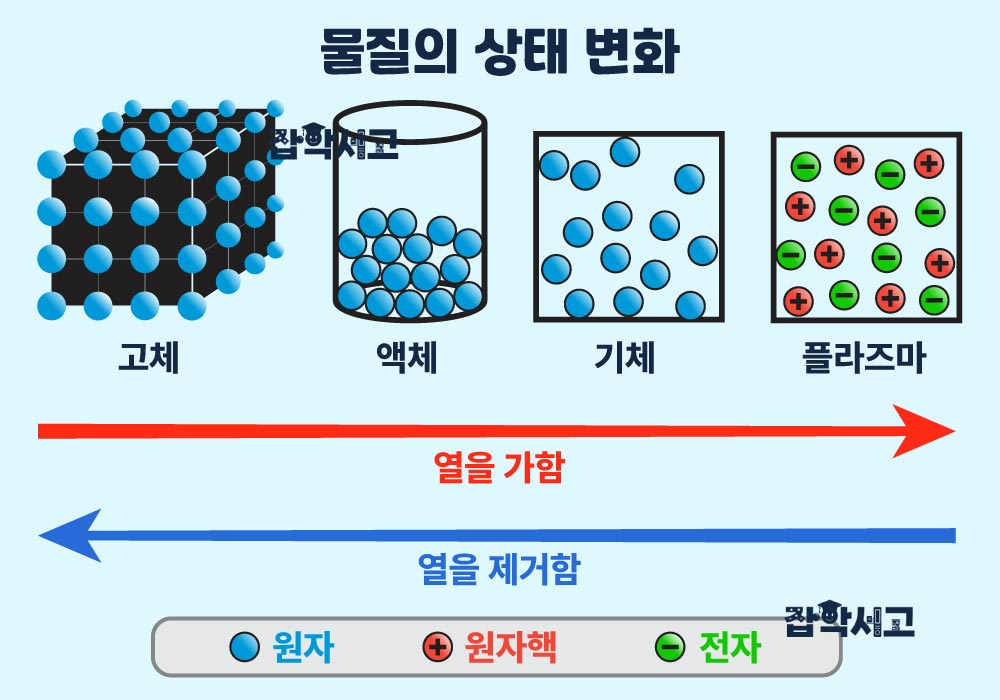
The Concept of Plasma and the Principles of Its Formation
Plasma refers to a state in which gaseous matter receives a very large amount of energy and becomes ionized, separating into electrons and ions. When matter receives sufficient energy, electrons separate from atomic nuclei and move freely, giving it electrical and magnetic properties while it remains electrically neutral.
Plasma is readily found in natural phenomena, with lightning and auroras being prominent examples. In space, plasma also exists inside stars such as the Sun. Plasma can also be generated artificially using high temperatures or strong electric fields. Such plasma is used in laboratories for research into various applications.
The Conductivity of Plasma: Electrical Characteristics
Plasma has excellent conductivity, allowing an electric field to make an electric current flow through it easily. This is one reason plasma plays an important role in electrical applications. For example, plasma is used in lighting devices such as fluorescent lamps and neon signs. These devices operate by ionizing gas to allow an electric current to flow, thereby emitting light.
Plasma also plays an important role in semiconductor manufacturing processes. Plasma etching technology is used to manufacture semiconductor chips precisely and is essential for forming fine circuits at the nanoscale.
Plasma and Magnetic Fields: At the Center of Nuclear Fusion Research
Plasma can interact strongly with magnetic fields, a characteristic essential to nuclear fusion research using plasma. Nuclear fusion reactions require extremely high temperatures and pressures. By using magnetic fields to confine and stabilize plasma, fusion can be induced while high temperatures are maintained. This research is opening up possibilities for a future source of clean energy.
Plasma controlled by magnetic fields plays an important role not only in nuclear fusion research but also in space science, satellite protection, and research into spacecraft propulsion. In particular, technology that stabilizes plasma through magnetic fields is expected to make a major contribution to future space exploration.
A Scientific Understanding of Plasma: Complex Theories and Models
Various scientific theories and models have been developed to explain the complex behavior of plasma. Electromagnetism, fluid mechanics, statistical mechanics, and other disciplines are combined to describe the motion and interactions of plasma, helping scientists understand and control its various phenomena. There are two main plasma models, broadly divided into equilibrium and nonequilibrium states. Equilibrium plasma describes plasma behavior at a constant energy state, while nonequilibrium plasma describes its behavior under changing conditions.
These theoretical models, combined with experiments, provide a foundation for plasma physics research and contribute to the development of plasma control technology.
Applications of Plasma: Uses in Everyday Life and Industry
Plasma is not only an important research topic in astronomy and high-energy physics but is also widely used in everyday life. Various devices, including plasma TVs, plasma cutters, and plasma treatment systems, are based on plasma technology. Plasma TVs produce excellent picture quality by using the principle of gas emitting light during an electrical discharge, while plasma cutters use high-temperature plasma to enable precise metal cutting.
In industry, plasma is also widely used in semiconductor manufacturing, materials processing, and surface treatment. In particular, plasma treatment technology is useful for removing surface contaminants or modifying material surfaces to improve adhesion.
Advances in Plasma Technology and Examples of Modern Applications

Advances in Plasma Technology
Plasma technology has advanced rapidly over the past several decades and is driving important innovations in various fields. Its use is particularly essential in industry. Plasma technology plays a central role in advanced operations such as semiconductor manufacturing, precision processing, and surface treatment.
Plasma etching technology is essential to semiconductor chip manufacturing. Plasma is used to process fine circuits precisely, enabling the production of high-purity semiconductor chips at the nanoscale. This provides an important foundation for advances in cutting-edge technologies such as electronic devices and telecommunications equipment.
The Use of Plasma in Display Technology
Plasma also played an important role in display technology. Plasma display panels (PDPs) were once celebrated as a popular display technology alongside LCDs. PDPs offered excellent brightness and wide viewing angles, making them suitable for TVs and monitors. However, their high energy consumption and expensive production costs caused them to lose ground to LCDs and OLEDs, and they are now used infrequently.
Environmental Protection and Plasma Technology
Plasma technology is also demonstrating its potential in environmental protection. Technologies that use plasma to remove air pollutants are employed to effectively eliminate harmful substances emitted from industrial sites. These technologies help reduce environmental pollution by breaking down various airborne pollutants, including fine particulate matter, organic compounds, and nitrogen oxides.
Plasma is also used in waste treatment technology, and methods are being developed to use high-temperature plasma to incinerate or recycle waste with high efficiency. This makes a major contribution to environmental conservation while also saving energy.
Energy Production and Plasma: Nuclear Fusion Technology
Plasma is attracting attention as a central component of future energy technology. Nuclear fusion energy is a technology that reproduces on Earth the fusion reactions that occur in a plasma state inside stars, and it is anticipated as a nearly limitless source of clean energy. Research is currently underway in several countries, and if this technology is commercialized, it is expected to make a major contribution to solving the world's energy problems.
Nuclear fusion research focuses on maintaining and controlling high-temperature plasma in a stable state. To achieve this, methods of plasma confinement using magnetic fields are being studied, and international cooperation, such as the ITER project, is actively underway.
Applications of Plasma in Space Exploration
Plasma also plays an important role in space exploration. Advanced propulsion systems such as ion thrusters use plasma to emit high-speed ions and generate thrust for spacecraft. This approach is more efficient than conventional propulsion methods using chemical fuels and is considered suitable for long-duration space exploration.
In particular, probes equipped with ion thrusters are attracting attention as a technology suitable for exploring distant planets or carrying out long-duration space missions. This technology is expected to play an important role in future Mars exploration and deep-space exploration.
Plasma Treatment Technology in Industry
Plasma treatment technology is widely used to modify the surfaces of various materials. Treating the surfaces of metals, glass, plastics, and other materials with plasma greatly improves adhesion, durability, and corrosion resistance, making it essential in the manufacturing processes of automobiles, aircraft, and electronic devices. Plasma treatment removes minute surface contaminants and creates surface conditions that allow new materials to bond more effectively, maximizing the efficiency of manufacturing processes.
Plasma is also applied in various specialized treatment technologies, such as antibacterial coatings and waterproofing. For example, treating the surfaces of electronic devices with plasma can increase their resistance to water and dust, extending product life.
Future Prospects for Plasma Technology
Plasma technology will continue to advance, and its potential applications across various fields are limitless. In particular, if nuclear fusion research is successfully completed, it will bring revolutionary changes to the energy industry and dramatic advances in space exploration technology. As technologies related to environmental protection develop further, plasma technology will also play an important role in building a sustainable future.
The Use of Plasma in Medicine and Industry
Plasma Sterilization: Safe Treatment of Medical Devices
Plasma is widely used as a sterilization technology in medicine. Unlike conventional chemical sterilization methods, plasma sterilizers can sterilize medical devices quickly and effectively without high temperatures or harsh chemicals. Even heat-sensitive devices and surgical instruments with complex structures can be treated safely using plasma sterilizers. This technology is very useful for sterilizing instruments routinely used in hospitals and also has the advantage of fewer adverse environmental effects than chemical methods.
Wound Healing and Skin Treatment Using Low-Temperature Plasma
Plasma is also used to treat wounds and skin conditions. In particular, low-temperature plasma can be applied directly to the skin without causing heat damage, providing effects that eliminate bacteria and reduce inflammation. These characteristics allow low-temperature plasma to help with hard-to-heal wounds, chronic skin conditions, and ordinary wound healing. Because plasma has a sterilizing effect by damaging bacterial cell walls, plasma treatment may be effective even when conventional antibiotic treatment is ineffective.
The Use of Plasma in Dentistry
Plasma is becoming increasingly widely used in dentistry. Treating tooth surfaces with plasma greatly improves adhesion, making it highly advantageous for procedures such as securing dental prostheses and whitening teeth. Plasma is also effective at removing bacteria from the mouth, helping maintain oral health. These characteristics are driving rapid advances in plasma cleaning technology for orthodontics, implants, and oral care after dental treatment.
Plasma Coating Technology: Innovation in Industrial Materials
In industry, plasma is primarily used for the surface treatment of materials. Plasma coatings can enhance durability or add special functions to various materials, including metals, ceramics, and plastics. For example, applying a plasma coating to aircraft engine components greatly improves their heat resistance, allowing them to withstand high-temperature environments. Plasma coatings can also provide various properties, including water resistance, fouling resistance, and corrosion resistance, giving them an important role in a wide range of industries, including electronic devices, automobiles, and building materials.
Plasma Cutting Technology: Precise and Efficient Cutting
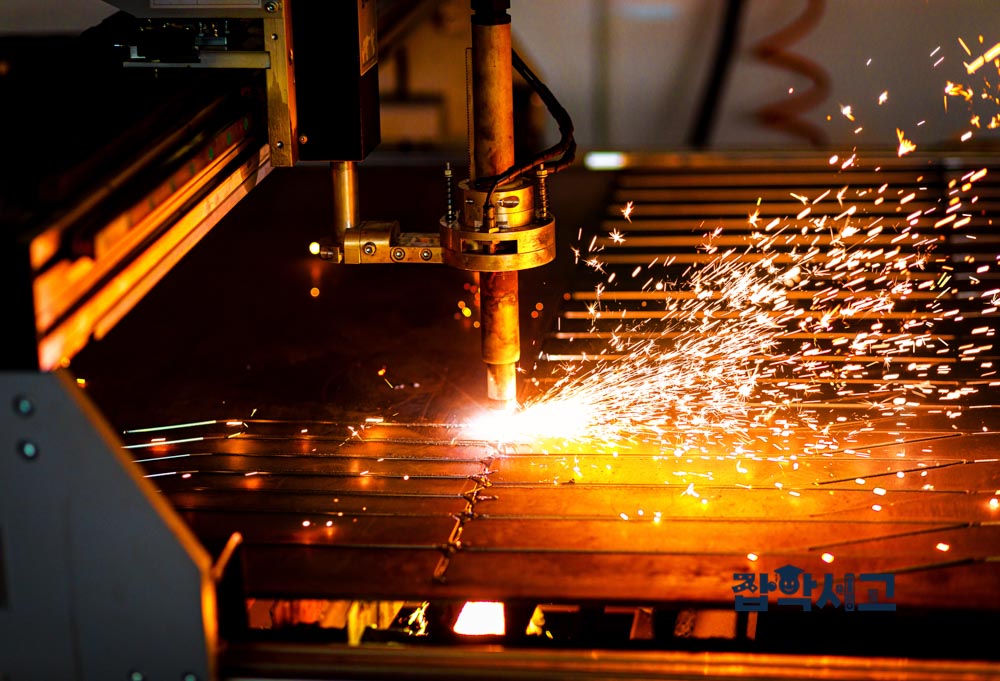
Plasma cutting technology is used to cut various materials, including metals, plastics, and ceramics, quickly and precisely. This technology is more precise than conventional mechanical cutting methods, offers fast cutting speeds, and produces high-quality cut surfaces. Plasma cutters are widely used in automobile manufacturing, shipbuilding, construction, and other industries, and are considered especially powerful tools for processing thick metal materials or materials with complex shapes. By enabling precise work while saving time and costs, this technology has become a core process in large-scale industries.
The Role of Plasma in Semiconductor and Electronic Device Manufacturing
Plasma is also an essential technology in electronic device manufacturing. In semiconductor manufacturing processes, plasma etching technology is used to process fine electronic circuits precisely. Manufacturing high-performance semiconductor chips requires precision processing at the nanometer scale, and plasma etching provides this level of precision. In addition, cleaning processes using plasma are excellent at removing fine particulate matter and impurities, greatly improving the quality and productivity of semiconductor manufacturing processes.
The Industrial Potential of Plasma Technology
Plasma technology is playing an increasingly important role in medicine and industry. In various areas of medicine, including the safe sterilization of medical devices, wound treatment, and dental care, plasma is establishing itself as an innovative technology that replaces or complements conventional methods. In industry, plasma is used as an essential technology in various processes, including materials processing, cutting, and coating, helping increase productivity and improve product quality. Plasma technology has strong potential for use in even more fields in the future, and its possibilities for further development are limitless.
Future Prospects and Potential of Plasma Research
Nuclear Fusion Energy: A Solution to Future Energy Problems
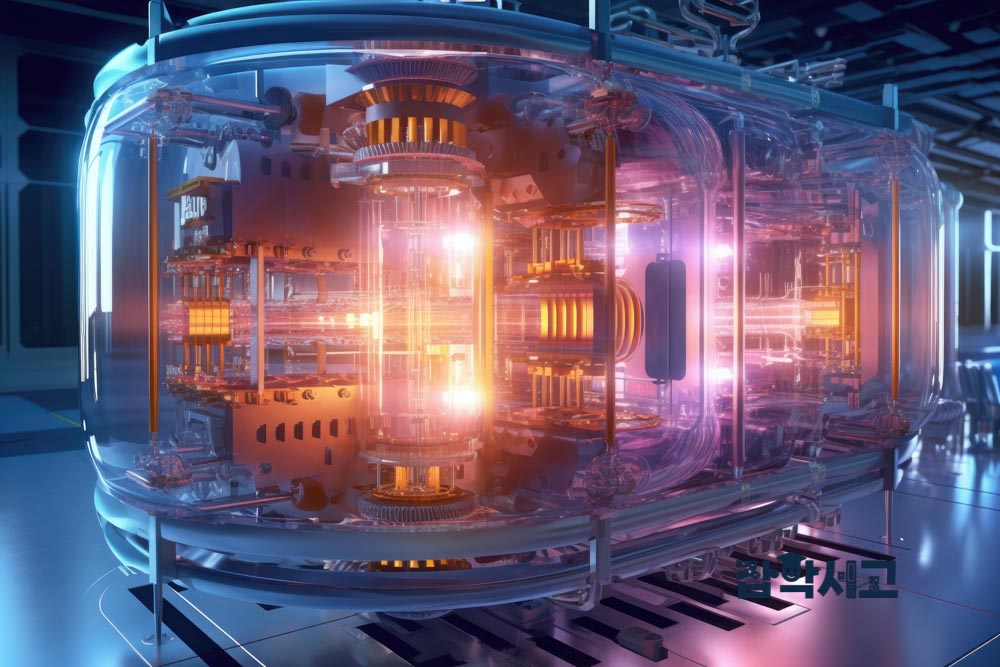
One of the most important areas of plasma research is nuclear fusion energy. Nuclear fusion is a reaction that occurs in the Sun, in which two light atoms combine to form a heavier atom, releasing an enormous amount of energy. Current methods of energy production based on fossil fuels face problems of environmental pollution and resource depletion, but nuclear fusion has the potential to provide nearly limitless energy.
Various research institutions and international projects around the world, such as the ITER (International Thermonuclear Experimental Reactor) project, aim to achieve commercial nuclear fusion power generation. Once technology for controlling and stabilizing fusion reactions occurring in a plasma state is perfected, humanity will gain access to clean and safe energy.
Developing Highly Efficient Plasma Sources
Currently, generating plasma requires a considerable amount of energy. Developing technologies to reduce this energy requirement efficiently is another important challenge in plasma research. Highly efficient plasma sources will make it possible to generate more plasma with less energy, further expanding the commercialization and range of applications of plasma technology. These advances will provide a foundation for using plasma technology more economically in various industries, including semiconductor manufacturing, environmental protection, and medicine.
Developing New Materials Using Plasma
Plasma also plays an important role in developing new materials that surpass the limitations of existing materials. Plasma can modify material surfaces or induce specific physical and chemical changes, making it an innovative tool in new materials research. For example, plasma can be used to develop superconductors, high-strength alloys, nanomaterials, and other materials. These new materials have the potential to bring major changes to electronic devices, aerospace, energy storage devices, and other areas.
Plasma Technology for Environmental Protection
Climate change and environmental pollution are among the greatest challenges facing humanity. Accordingly, plasma technology is playing an important role in environmental protection. Plasma can be used in various environmental protection technologies, including air pollutant removal, wastewater treatment, and waste incineration. In particular, plasma is effective at breaking down harmful substances in the atmosphere and converting them into chemically stable substances. These technologies will make an important contribution to reducing pollutants generated by industrial processes.
Advances in Plasma Technology in Medicine
Plasma is also establishing itself as an innovative tool in medicine. In particular, plasma has considerable potential as a noninvasive treatment method. Treatments using low-temperature plasma are showing effectiveness in wound healing, skin conditions, and antibacterial treatment. This technology can maximize treatment effectiveness while minimizing side effects for patients, and is expected to play an important role in future medicine. Unlike traditional treatment methods, treatments using plasma open up new possibilities for eliminating drug-resistant bacteria and treating difficult-to-treat diseases.
Plasma Technology in Space Exploration
Space exploration is another important application of plasma research. Ion thrusters using plasma are far more efficient than conventional methods using chemical fuels and make distant space exploration possible. Ion thrusters use electricity to accelerate plasma and propel spacecraft, and are essential systems for long-duration space exploration.
In particular, plasma-based propulsion systems will play an important role in future space projects such as Mars exploration and deep-space exploration. They are expected to be essential technologies for humanity to explore beyond the solar system and find new places to live in space.
The Limitless Possibilities of Plasma Research
Plasma research will continue to hold enormous potential. From nuclear fusion energy to environmental protection, new materials development, medicine, and space exploration, plasma technology is opening up new possibilities in various fields. These studies will play an important role in addressing the many challenges facing humanity and building a better future.
Through its electrical characteristics and properties at high temperatures, plasma plays an important role in advances in modern science and technology, demonstrating groundbreaking technological achievements in various industries and areas of medicine. A clear understanding of the basic principles and characteristics of plasma leads to the development of more advanced technologies, which can greatly improve humanity's quality of life.
Plasma technology will continue to advance and open up new possibilities. Through these advances, it will play an important role in addressing various challenges, and its impact on future society is also expected to be considerable.