
Superconductors are materials whose electrical resistance becomes 0, meaning that current can flow without energy loss. Thanks to this property, superconductors offer possibilities for innovative applications in various fields, including the power industry, medicine, and transportation, and are regarded as an important key to future technological advances.
This article examines the principles and operating mechanisms of superconductors, their historical background and major discoveries, and their various classifications and characteristics. Finally, it discusses examples of superconducting applications and their potential for future development in detail.
Basic Principles and Operating Mechanisms of Superconductors
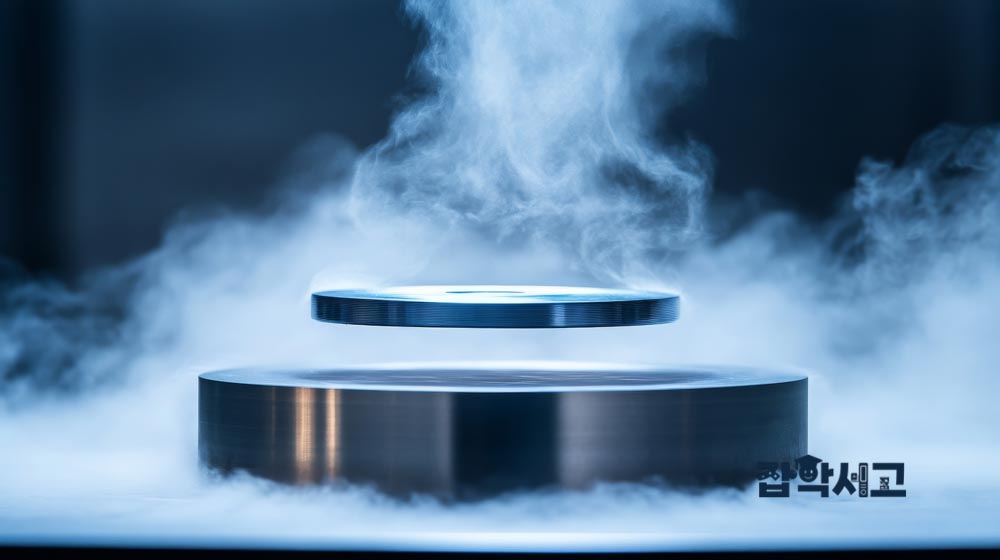
Fundamental Principles of Superconductors
Superconductors are materials in which electrical resistance disappears completely. This property means that current can flow through the material without resistance, maximizing the efficiency of power transmission. The phenomenon in which electrical resistance becomes 0 is explained by quantum mechanical principles, with electron pairs known as Cooper pairs (Couper pairs) playing a particularly important role.
Cooper pairs are states in which two electrons with opposite spins are paired, allowing the electrons to move freely without collisions. As a result, electrical resistance disappears completely within the material. Superconductors also exhibit the Meissner effect, a phenomenon in which they completely exclude external magnetic fields. These characteristics enable superconductors to produce distinctive phenomena such as magnetic levitation.
Critical Temperature and Superconductivity
Superconductivity occurs only below a specific temperature, known as the critical temperature (Tc). The critical temperature varies from material to material and is generally measured on the absolute temperature scale (K). For example, mercury becomes superconducting below 4.2 K. Although 'room-temperature superconductors' that can exhibit superconducting properties at room temperature have not yet been developed, research toward this goal is actively underway worldwide.
BCS Theory and the Mechanism of Superconductivity
BCS theory plays an important role in understanding how superconductors operate. It explains that electrons form Cooper pairs as they interact with lattice vibrations (phonons) within the material. This theory specifically explains how superconductors can transmit current without electrical resistance and is regarded as one of the central principles of superconductivity.
Classification of Superconductors
Superconductors fall into two broad categories. The first consists of conventional superconductors, which mainly exist as metals or alloys and have very low critical temperatures. The second consists of high-temperature superconductors, which are mainly made of ceramic materials and are characterized by relatively high critical temperatures. Research on high-temperature superconductors plays an important role in developing future technologies and also provides an important foundation for exploring the possibility of room-temperature superconductors.
Interdisciplinary Approaches to Superconductor Research
Superconductor research is not confined to a single discipline; it is conducted through interdisciplinary research that brings together various fields, including applied physics, materials science, and electrical engineering. This is because the knowledge and technologies of different disciplines are needed to make the most of the potential of superconductors. For example, electrical engineering research seeks to improve the efficiency of power systems using superconductors, while materials science research actively explores ways to improve the properties of high-temperature superconductors.
Potential Applications of Superconductors
Superconductors show potential for innovative applications across various industries, including power transmission, magnetic levitation trains, medical equipment (MRI), and quantum computing. In the power industry in particular, transmission systems using superconductors can help reduce energy losses. In medicine, MRI equipment incorporating superconductors enables more precise diagnoses, while in transportation, trains using the magnetic levitation properties of superconductors could become faster and safer means of travel.
Quantum computing is also one of the important applications of superconductors. Superconductors are used as a core technology in quantum computers and can help improve the efficiency and stability of quantum bits (Qubit) currently being studied.
History and Major Discoveries of Superconductors

Discovery of Superconductors and Early Research
The concept of superconductors was first discovered in 1911 by the Dutch physicist Heike Kamerlingh Onnes. He discovered that electrical resistance disappeared completely when mercury was cooled to near absolute zero (approximately -273.15°C). He named this phenomenon 'superconductivity,' marking an important event that signaled the beginning of superconductor research. This discovery demonstrated the possibility of allowing current to flow without power loss and subsequently laid the foundation for extensive research in physics.
Discovery of the Meissner Effect
In 1933, German physicists Walter Meissner and Robert Ochsenfeld discovered that superconductors completely exclude external magnetic fields from within the material. This phenomenon became known as the 'Meissner effect' and established itself as another important property of superconductors. The Meissner effect explains the phenomenon in which a superconductor supports a magnetic field through the principle of magnetic levitation, enabling applications such as magnetic levitation trains to emerge.
Proposal and Development of BCS Theory
In 1957, John Bardeen, Leon Cooper, and Robert Schrieffer proposed 'BCS theory.' BCS theory describes how electrons form Cooper pairs through interactions with lattice vibrations (phonons) in a material. It was recognized as a theory explaining how superconductivity occurs and marked an important turning point in superconductor research. The three scientists received the Nobel Prize in Physics in 1972 for this achievement. By clearly explaining how superconductors operate, BCS theory laid the foundation for modern theories of superconductivity.
Discovery of High-Temperature Superconductors
In 1986, Alex Müller and Johann Bednorz discovered a new type of superconductor. They demonstrated that a ceramic material based on lanthanum barium copper oxide (Ba-La-Cu-O) exhibited superconductivity at 35 K. This was a highly innovative discovery because the material could remain superconducting at higher temperatures than existing superconductors. They received the Nobel Prize in Physics in 1987 for discovering high-temperature superconductors, and this research opened a new chapter in superconductor research.
Advances in High-Temperature Superconductors
As the 1990s began, various high-temperature superconductors with even higher critical temperatures were discovered. In particular, yttrium barium copper oxide (YBCO) exhibits superconductivity at 92 K, allowing it to operate above the liquefaction temperature of nitrogen (77 K). These discoveries greatly expanded the possibilities for commercial applications of superconductors and created opportunities for new technologies using high-temperature superconductors to emerge.
Research on Room-Temperature Superconductors and Future Prospects
Today, superconductor research is actively underway with the discovery of room-temperature superconductors as its ultimate goal. Because room-temperature superconductors could exhibit electrical resistance of 0 at very high temperatures, they could dramatically reduce power losses and drive innovative changes across various industries, including the power industry. If room-temperature superconductors become a reality, they would have considerable potential to overcome current technological limitations and are expected to have an important impact on future science and industry.
Analysis of the Classifications and Characteristics of Various Superconductors
Main Classifications of Superconductors
Superconductors fall into two broad categories: conventional superconductors and high-temperature superconductors. Conventional superconductors exist as metals or alloys and have very low critical temperatures. Materials such as mercury, lead, and aluminum are representative examples of conventional superconductors. These materials exhibit superconductivity at temperatures close to absolute zero, limiting their practical applications.
In contrast, high-temperature superconductors are mainly composed of ceramic materials and have relatively high critical temperatures. For example, yttrium barium copper oxide (YBCO) can remain superconducting at 92 K, which is higher than the liquefaction temperature of nitrogen, 77 K. High-temperature superconductors therefore have much greater potential for practical applications than conventional superconductors.
Conventional Superconductors and BCS Theory
Conventional superconductors are explained by BCS theory. This theory describes the process in which electrons interact with lattice vibrations (phonons) within a material to form Cooper pairs (Couper pairs). Once these Cooper pairs form, electrons can pass freely through the material without colliding with one another, causing electrical resistance to disappear. However, these conventional superconductors mainly exhibit superconductivity only at extremely low temperatures, limiting their applications.
Characteristics of High-Temperature Superconductors
Unlike conventional superconductors, high-temperature superconductors have a greater likelihood of exhibiting superconductivity even at temperatures close to room temperature. In particular, their critical temperatures depend heavily on the internal structure and composition of the material. Researchers are exploring the possibility of raising the critical temperature by adjusting the proportions of specific elements or compounds. New high-temperature superconducting materials are continually being discovered based on such compositions, providing important clues that could lead to the development of room-temperature superconductors.
Magnetic Field Tolerance of Superconductors: Type 1 and Type 2 Superconductors
Superconductors are classified as Type 1 or Type 2 according to their tolerance of magnetic fields. Type 1 superconductors remain superconducting in low magnetic fields but lose their superconducting state when the critical magnetic field is exceeded. In contrast, Type 2 superconductors can retain their superconducting properties even in high magnetic fields, giving them a wider range of potential applications. By remaining superconducting in high magnetic fields, Type 2 superconductors can be widely used in the power sector and in devices that use strong magnetic fields.
Changes in Superconductor Properties under External Conditions
The properties of superconductors change according to external conditions such as temperature, pressure, and magnetic fields. Adjusting these conditions can maximize their performance and allow their use to be tailored to various applications. For example, certain superconductors can maintain a more stable superconducting state when pressure is applied or within a particular temperature range. This is an important technical factor in the practical use of superconductors and plays a central role in expanding their potential applications.
Superconductors are divided into conventional and high-temperature superconductors, with various potential applications depending on their respective characteristics and classifications. High-temperature superconductors in particular have relatively high critical temperatures and greater tolerance of strong magnetic fields, giving them greater potential for practical applications. Their performance can also be optimized according to the external environment, enabling superconductors to become an innovative technology across various industries.
Innovative Applications of Superconductors and Future Prospects

Medical Applications of Superconductors: MRI and Highly Sensitive Sensors
Superconductors play an important role in medicine, with magnetic resonance imaging (MRI) equipment serving as a representative example. MRI provides high-resolution images of the inside of the human body because it uses superconducting magnets to generate strong, uniform magnetic fields. Superconducting magnets produce very high magnetic fields with almost no power loss, making them much more efficient than conventional permanent magnets or electromagnets. This makes it possible to provide patients with more accurate diagnoses.
Superconducting quantum interference devices (SQUID) are another application of superconductors. SQUID devices can detect minute changes in magnetic fields with very high sensitivity, allowing precise measurements of biological signals such as brain waves and cardiac signals. This enables more detailed and accurate analysis of biological signals, making an important contribution to precise medical diagnosis and treatment.
Applications of Superconductors in the Power Industry
Superconductors can also bring highly significant innovations to the power industry. Superconducting cables can carry much higher currents than conventional copper cables with almost no power loss. This can greatly improve power efficiency and contribute to greater stability and reliability in the power supply. In addition, superconductors play important roles in power transformers, energy storage devices, and power filtering systems. These applications offer the possibility of reducing energy consumption and maximizing the efficiency of power grids.
Innovation in Transportation: Magnetic Levitation Trains
Superconductors are also attracting attention as an innovative technology in transportation. Magnetic levitation trains (Maglev) are a technology in which superconductors use the principle of magnetic levitation to enable rapid travel without friction with the rails. This technology is much more energy-efficient than conventional railway systems and enables high-speed travel, substantially reducing transportation times. In various countries, including Japan and China, research and development are continuing toward the commercialization of these Maglev systems.
Use of Superconductors in Quantum Computing
Quantum computing is attracting attention as a next-generation computer technology, and superconductors play an important role in this field as well. Superconductor-based qubits offer very fast computation speeds and high stability, helping maximize the performance of quantum computers. Major companies such as Google and IBM are currently focusing on developing quantum computers using superconducting qubits. If this technology is realized, it will bring innovations that surpass existing computing performance.
Room-Temperature Superconductors and Future Prospects
The greatest transformation in future technology will come from the development of room-temperature superconductors. Room-temperature superconductors will offer performance beyond current technological limitations and bring groundbreaking advances to various fields, including power transmission, medical equipment, transportation systems, and computer technology. If room-temperature superconductors are commercialized, power systems with almost no power loss could be established, maximizing energy efficiency and cost savings. This is an important key that heralds major changes in future technological innovation.
Based on their property of having electrical resistance of 0, superconductors are driving innovative changes across various industries. By understanding their principles and operating mechanisms, history and major discoveries, and various classifications and characteristics, we can more clearly anticipate the future changes this technology will bring.
In particular, practical applications of superconductors are being implemented in various fields, including the power industry, medicine, transportation, and quantum computing, and the development of room-temperature superconductors will accelerate advances in these technologies. As an important key to future technology, superconductors have the potential to transform our daily lives in innovative ways.