Optics is a field of scientific research concerned with light and vision, exploring the properties of light and its interactions in depth. Light is an essential element of our everyday lives, and the various optical technologies based on it play important roles in industries such as medicine, communications, and entertainment.
This article will provide a broad overview, beginning with the basic concepts of optics and covering the interactions between light and vision, the development of optical instruments, and various examples of optical technology applications in modern society.
Basic Concepts of Optics: Understanding the Nature and Properties of Light
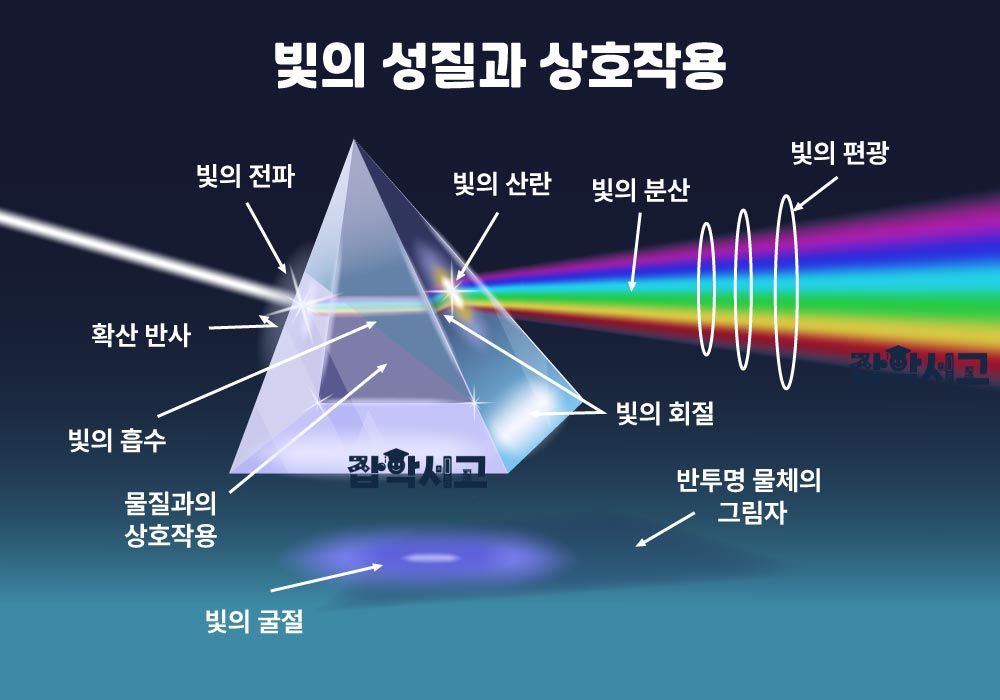
The Nature of Light: A Basic Understanding of Electromagnetic Waves
Light is a type of electromagnetic wave, a phenomenon in which electric and magnetic fields oscillate and propagate through space. This allows light to travel freely through space and provides the foundation for manipulating and using light in various ways. These electromagnetic properties of light form the basis of most optical instruments and technologies we use.
The Wave and Particle Properties of Light: The Importance of Its Dual Nature
Light has both wave and particle properties. Its wave properties produce phenomena such as interference and diffraction, which play important roles in the design and operation of optical instruments such as lenses and prisms. In terms of its particle properties, light is described as photons with quantized energy, a central concept in modern physics for explaining energy transfer and conversion. This duality is essential for understanding the various aspects of light in optical research and applications.
The Speed of Light: A Constant of Nature and the Design of Optical Instruments
In a vacuum, the speed of light is approximately 299,792,458 meters per second, the fastest speed in nature. It is a constant of nature, and the speed of light varies depending on the medium. Light slows down when passing through a medium, causing it to exhibit refraction and reflection. These changes in speed and the phenomena associated with them significantly affect the design of optical instruments such as glasses, telescopes, and microscopes.
The Spectrum of Light: Different Wavelengths and Their Applications
The spectrum of light represents the distribution of its wavelengths. It includes various ranges, such as visible light, ultraviolet light, and infrared light, with visible light referring to the range that humans can see with their eyes. Each part of the spectrum is applied in various technologies, with ultraviolet light used for sterilization and infrared light used for heat detection and night cameras. By using these properties of light, we have become able to apply light in various fields.
Polarization: The Direction of Light's Oscillation and Its Applications
Polarization is a phenomenon in which light oscillates in a particular direction. Light generally oscillates in many directions, but a polarizing filter allows only light oscillating in a specific direction to pass through. This is useful in devices such as camera lenses and sunglasses, helping reduce glare or admit only light from certain angles.
The Absorption and Emission of Light: Light Interacting with Matter
Matter can absorb or emit light of specific wavelengths. This property is very useful for analyzing the chemical composition of substances. Spectroscopy is a representative technique that uses these principles of light absorption and emission to analyze the properties of matter, and it is used in various fields, including medicine, chemistry, and astronomy.
The Interaction Between Vision and Optics: The Relationship Between the Eye and Light
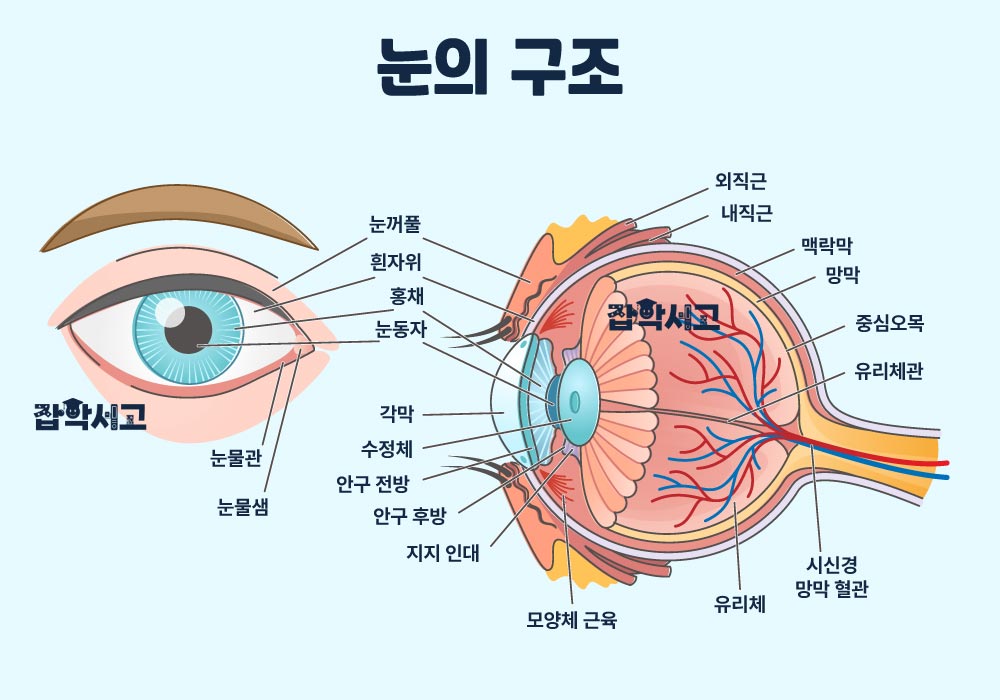
The Structure of the Eye and the Detection of Light
The eye has a complex structure that detects light and converts it into visual information. It consists of the cornea, lens, retina, and other parts, whose individual roles are closely related to optical principles. Light entering the eye is refracted as it passes through the cornea and lens, ultimately reaching the retina to generate visual information. Understanding how each part works in this process is very important for understanding the interaction between optics and vision.
The Cornea: The Beginning of the First Refraction
The cornea is a transparent membrane located at the outermost part of the eye, serving as the first stage that receives and refracts incoming light. The cornea's refractive index is fixed, helping light reach the lens correctly. The transparency of the cornea has a decisive effect on the clarity of vision, and damage to the cornea or reduced transparency can cause vision problems. The cornea is a very important part of the eye because it acts as the first filter that precisely directs light.
The Lens: Refraction for Adjusting Focus
The lens is located behind the cornea and refracts light more precisely to focus it on the retina. Its elasticity allows it to freely adjust its thickness, greatly helping it achieve different focuses when viewing distant and nearby objects. The muscles that control this process compress or relax the lens, changing its thickness to achieve focus. As people age, the lens becomes less elastic, which can cause vision problems such as presbyopia.
The Retina: Converting Light into Neural Signals
The retina is neural tissue located at the innermost part of the eye, responsible for detecting light and converting it into neural signals. The retina contains two main types of cells called rods (rod cells) and cones (cone cells): rods work primarily in dark environments, while cones recognize colors. These two types of cells distinguish the intensity and color of light to provide a variety of visual information. Thanks to the cooperation between rods and cones, we can accurately perceive visual information under various lighting conditions.
Transmitting Visual Information to the Brain
Visual information detected by the retina is transmitted to the brain through the optic nerve. During this process, information about the wavelength, intensity, and direction of light is sent to the brain, which interprets these signals to help us recognize and distinguish objects. Visual information is processed very quickly, allowing us to immediately perceive and respond to our surroundings.
Vision Correction Through Optical Technology
Various vision correction technologies have developed based on the interaction between optics and vision. Glasses and contact lenses are representative examples that improve vision by compensating for refractive abnormalities in the cornea and lens. These tools use optical principles to correct the path of light so that it focuses precisely on the retina. Furthermore, technologies such as laser vision correction surgery can treat visual impairments by reshaping the cornea. In this way, a deep understanding of the interaction between the eye and light enables the development of various optical technologies to improve vision.
Optical Instruments and Technologies: From Lenses to Lasers
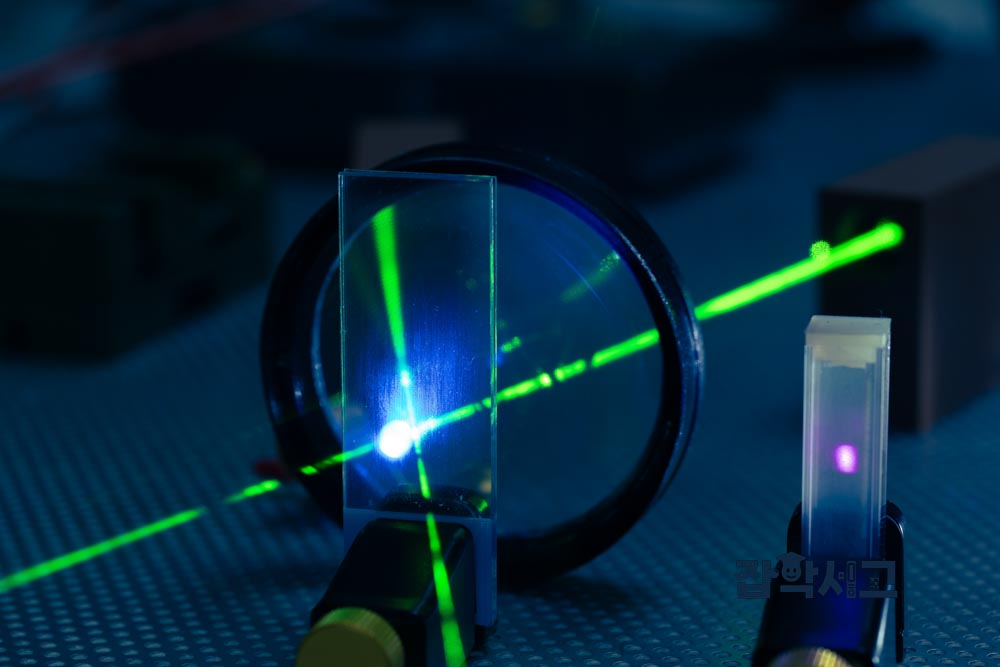
Lenses: Refracting and Concentrating Light
A lens is one of the most basic optical instruments, refracting light to form images or concentrate light in a particular direction. Lenses are mainly classified as convex or concave: convex lenses converge light, while concave lenses spread it out. These principles are applied in various devices, including cameras, glasses, microscopes, and telescopes. Camera lenses help gather light to form clear images, while glasses improve vision by correcting refractive abnormalities in the eyes.
Microscopes: Tools for Looking into the Microscopic World
A microscope is an important optical instrument that helps magnify very small objects for observation. Optical microscopes use light to form images of objects and are used to observe fine structures and cells. They are essential not only in biological research but also in materials science, and they have enabled important discoveries in the microscopic world. Electron microscopes use electrons instead of light to allow observation at even higher magnifications, making precise structural analysis at the molecular or atomic level possible.
Telescopes: A Window into the Universe
A telescope is an instrument that magnifies distant objects for observation and is widely used, primarily in astronomy. Early telescopes were developed by Galileo Galilei, and after successive advances, they are now used both on the ground and in space. Telescopes use lenses and mirrors to gather and magnify light from distant stars and planets. Through them, astronomers have become able to explore the universe more deeply and discover new stars and galaxies.
Lasers: Concentrating Light and Its Applications
A laser is a device that emits highly concentrated light, characterized by monochromaticity, high intensity, and strong directionality. These properties make lasers widely applicable in various industrial and scientific fields. For example, lasers are used in communications to transmit data through optical fibers, while in medicine they are used to cut tissue or perform surgery. They are also used for laser cutting and welding in industry, where their precision and efficiency have established them as important tools.
Holograms: Creating 3-Dimensional Images
A hologram is a technology that uses the interference patterns of laser light to store and reproduce 3-dimensional images. This technology is applied in various fields, including security, art, and entertainment, helping people experience reality more vividly. For example, holograms used on credit cards and identification cards improve security by making replication difficult. Hologram exhibitions also provide viewers with vivid 3D images, and holograms play an important role in digital art and the entertainment industry.
Optical Measuring Instruments: Analysis and Exploration Through Light
Optical instruments are also widely used for measurement and analysis. A representative example is the spectrometer. A spectrometer is an instrument that analyzes the spectrum of light to determine the chemical composition of a substance. It plays an important role in various fields, including environmental monitoring, pharmaceutical development, and materials science. By analyzing how a particular substance absorbs or emits light, a spectrometer allows its composition and condition to be determined accurately.
Applications of Optics in Modern Society
Optical Technology in Medicine: Precise Surgery and Diagnosis
Optical technology plays an essential role in modern medicine. Laser surgery, in particular, enables highly precise cutting and is used in various procedures, including vision correction, tumor removal, and skin treatment. Lasers can concentrate high-intensity light to selectively cut only the desired area, and as a minimally invasive method, they offer the advantages of shorter recovery periods after surgery and fewer side effects. This reduces the burden on patients while producing better treatment outcomes.
Optical endoscopes are also important tools that allow the inside of the body to be observed in real time. They use small cameras and optical fibers to transmit images from deep inside the body, allowing doctors to accurately diagnose areas they cannot see directly. Endoscopes are used in various forms, including gastrointestinal endoscopy and arthroscopy, and represent an innovative technology that allows the inside of the body to be examined without surgical incisions.
Optical technology also makes an important contribution to improving the performance of diagnostic equipment. High-resolution imaging technologies such as MRI and CT scans have developed based on optical principles. These technologies allow detailed structures inside the body to be observed precisely, playing a very important role in early disease detection and accurate diagnosis.
Optical Technology in Communications: Fast and Reliable Data Transmission
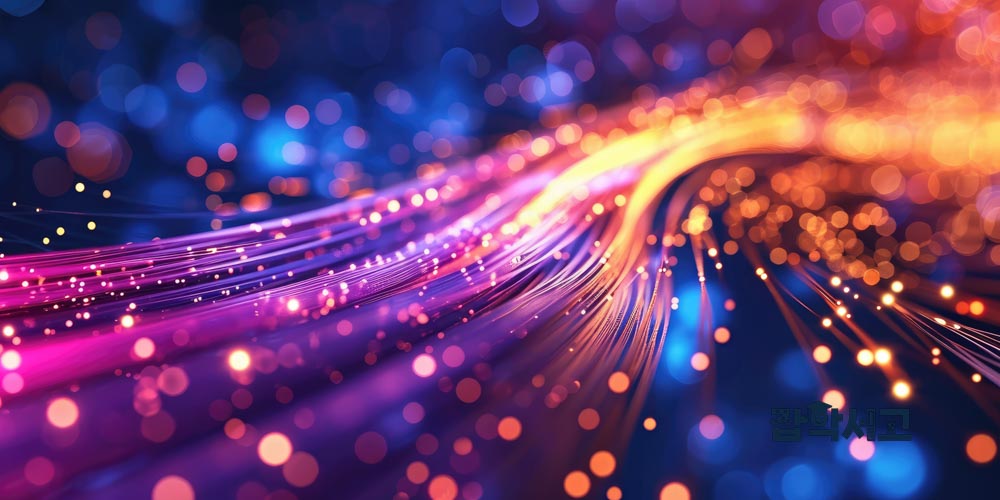
Optical technology also plays a very important role in communications. In particular, fiber-optic communication transmits data using light, allowing much more data to be processed at far higher speeds than conventional copper wires. Optical fibers use the reflection and refraction of light to transmit data over long distances without signal loss, and they provide more reliable communication because they are unaffected by electrical interference. This is essential for the expansion of global networks and the development of high-speed internet.
Advances in fiber-optic communication have enabled increases in internet speeds and data throughput, providing a foundation for the further development of various technologies, including streaming services, cloud computing, and the Internet of Things (IoT). In addition, the high bandwidth of optical fibers has the potential to continue developing as a core foundation for communications technology in the future.
Optical Technology in Environmental Monitoring and Security: Precise Data Measurement
Optical technology also plays an important role in environmental monitoring and security. A representative example is LiDAR, a technology that uses lasers to precisely measure distances and terrain and is widely used in autonomous vehicles, drones, and geographic information systems (GIS). LiDAR emits lasers to measure the distance to objects and can generate 3D terrain maps based on that information. This allows autonomous vehicles to accurately perceive their surroundings and drive safely, while drones play important roles in missions that require high precision.
LiDAR is also used for environmental monitoring, providing considerable help in detecting and analyzing air pollution, forest conditions, and other factors. In this way, optical technology is opening up important application possibilities in various fields and contributing to improvements in our lives by providing better data.
Optical Technology in Manufacturing: Precision Inspection and Quality Control
In manufacturing, optical technology is essential for quality inspection and automated production processes. In particular, non-destructive testing (NDT, Non-Destructive Testing) is a technology used to inspect product durability or check for defects, using optics to examine an object's internal condition without destroying it. It thus plays an important role in the production of products that require precise quality control, such as cars, aircraft, and electronic products.
In addition, 3D scanning technology is used to optically measure the external shape of an object and create a 3D model. This is essential for product design, customized manufacturing, and the fabrication of complex structures, and it is widely used across industries.
Optical Technology in Entertainment: Films, Games, and VR
Optical technology has also brought major innovations to the entertainment industry. For example, 3D films use special glasses to deliver two different images to the respective eyes, creating a sense of depth. This principle uses the refraction and polarization of light to provide audiences with a more vivid experience.
Virtual reality (VR) and augmented reality (AR) are also innovative forms of content based on optical technology. VR uses lenses to show virtual environments in real time, while AR is a technology that overlays virtual images onto the real environment. These provide new experiences in various fields, including gaming, education, and training, and play an important role in maximizing visual immersion.
Optical Technology in the Military and Defense: Reconnaissance and Weapon Systems
In the military and defense, optical technology is widely used for reconnaissance, surveillance, and target tracking. Night-vision devices (Night Vision) use infrared optical technology to allow objects to be observed even in dark environments, providing a tactical advantage. Reconnaissance drones also carry optical sensors to provide high-quality video in real time, helping users accurately assess battlefield conditions.
Optically guided missiles use lasers or infrared light to track targets and enable precise strikes. In this way, optical technology has become an essential tool in modern combat and is developing as a core element of military technology.
Optical Technology in Agriculture: Precision Agriculture
Optical technology also plays an important role in agriculture. Precision agriculture (Precision Agriculture) is an approach that uses optical sensors and cameras mounted on drones to monitor crop conditions in real time and provide appropriate amounts of water, fertilizer, and pesticides only where needed. This can reduce wasted resources and maximize productivity.
In addition, satellite imaging and optical sensors are used to analyze soil moisture and crop growth conditions, contributing to greater agricultural efficiency.
Optical Technology in Art and Culture: Digital Restoration and Preservation
Optical technology is also widely used in the restoration and preservation of artworks. In particular, high-resolution cameras and scanning technology can be used to digitize and preserve even the fine details of artworks. This technology helps detect minor damage or deformation in advance and restore works to their original condition.
Digital archiving also makes it possible to permanently preserve historical artifacts and old books by recording them with optical scanning technology. This is useful in museums and libraries and helps ensure that cultural heritage is safely passed on to the next generation.
As these examples show, optical technology is applied across an extremely broad range of fields, and its influence continues to expand. Advances in optical technology in each field play an essential role in improving our quality of life and solving various problems.
Optics is an important discipline that profoundly affects our lives through its in-depth exploration of light and vision. The basic principles of light, its interaction with vision, and the various benefits provided by modern optical instruments all make our lives more convenient and enriching.
Optical technology will continue to advance, guiding us toward a brighter and more prosperous future through new discoveries and innovations.