
Electromagnetism is a branch of physics that studies phenomena involving interactions between electrons and magnetic fields, providing a theoretical and experimental foundation for exploring the basic principles of electricity and magnetism. This discipline has a major influence on various technological fields, such as electrical engineering, communications, and medical devices, as well as on basic scientific research, and contributes to the development of many key technologies in modern society. The concepts addressed in electromagnetism play a very important role in understanding today's science and technology, and their range of applications continues to expand.
This material will examine the basic concepts and principles of electromagnetism and the mechanisms of interaction between electrons and magnetic fields in depth, then use this foundation to discuss major applications, research trends, and related innovative technologies in detail.
Understanding the basic concepts and principles of electromagnetism
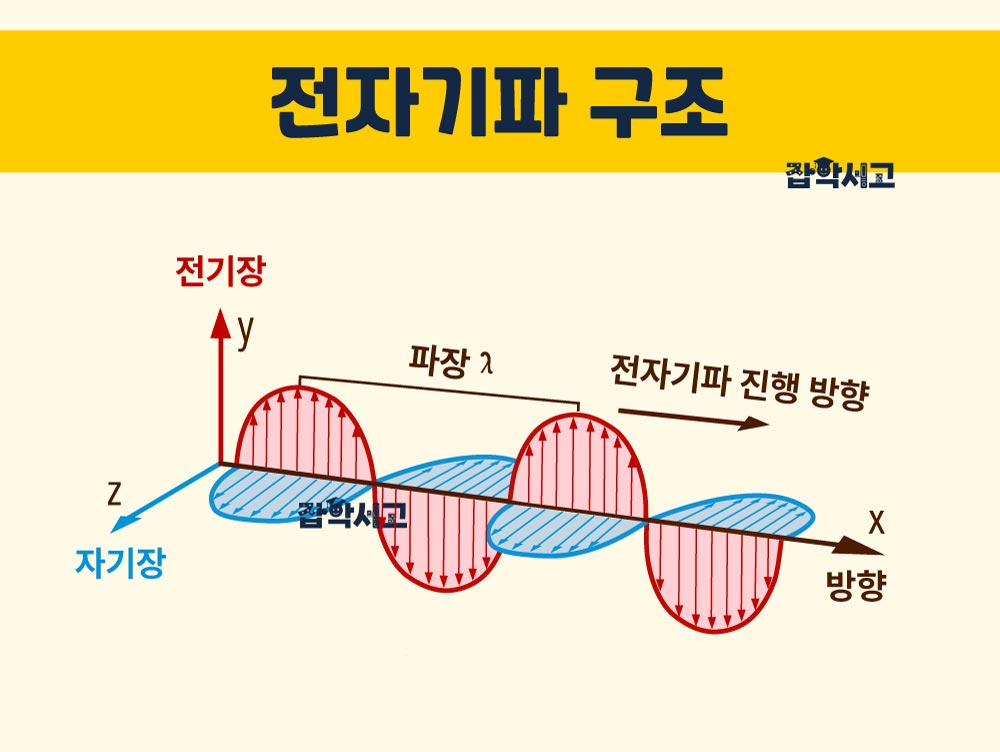
Interactions between electricity and magnetism
Electromagnetism studies interactions between electricity and magnetic fields and is based on an understanding of electron motion and the properties of electric charge. Charge creates an electric field, which produces electric forces in the space surrounding the charge. There are two types of charge, positive and negative; charges of the same type repel one another, while charges of different types attract one another. These interactions between charges are a fundamental concept of electric fields and are essential for explaining electrical phenomena.
Magnetic fields are generated by moving charges, which closely connects them with electrical phenomena. A stationary charge generates only an electric field, but a moving charge also generates a magnetic field. As a result, electrical and magnetic phenomena are interdependent and form the foundation of electromagnetism.
Maxwell's equations: the theoretical foundation of electromagnetism
Maxwell's equations, which provide the theoretical foundation of electromagnetism, consist of four fundamental equations that describe the generation and interaction of electric and magnetic fields. These equations mathematically express how electric and magnetic fields can generate one another as they change over time, demonstrating how electromagnetic waves arise. Electromagnetic waves propagate in wave form, as light does, and play an important role in electromagnetic phenomena.
Maxwell's equations provide a unified explanation of electrical and magnetic phenomena and play an important role in research on electromagnetism. They allow interactions between electricity and magnetism to be analyzed more precisely and enable electromagnetic principles to be applied in various fields.
Coulomb's law and the Biot-Savart law
Coulomb's law describes the electric force acting between two charges, expressing a force that is inversely proportional to the magnitude of the charges and the square of the distance between them. This law plays an important role in understanding the basic principles of electric fields and mathematically expresses interactions between charges.
The Biot-Savart law describes the magnetic field generated around a current-carrying wire. By describing the strength and direction of the magnetic field that arises when current flows, this law is essential for understanding how magnetic fields are generated. It can be used to explain electromagnetic induction and the operating principles of electrical devices.
Electromagnetic induction and Faraday's law
Electromagnetic induction is the phenomenon in which a changing magnetic field induces an electric field, and it is a very important concept in electromagnetism. Faraday's law mathematically expresses this induction phenomenon and plays an important role in explaining the principles of electrical devices such as generators. According to Faraday's law, a magnetic field that changes over time can induce an electric current, providing a principle for generating electrical energy.
Electrical devices such as generators and transformers are designed based on this principle, enabling electrical energy to be produced and transmitted efficiently. Electromagnetic induction plays a central role in the conversion and transmission of electrical energy and forms the foundation of modern power systems.
Applications and importance of electromagnetism
Understanding the basic concepts and principles of electromagnetism is essential for the advancement of modern science and technology. The various physical phenomena arising from interactions between electricity and magnetism play important roles in fields such as electrical engineering, communications, and medical devices. For example, wireless communication systems that use the principles of electromagnetic waves form a core part of modern society's infrastructure, while medical devices that use magnetic fields make innovative contributions to diagnosis and treatment.
Electromagnetism also occupies an important place in basic scientific research and is applied in fields such as space exploration and particle physics. Understanding and applying the principles of electromagnetism in these diverse fields is an important factor in driving technological progress and innovation.
Mechanisms of interaction between electrons and magnetic fields
Electron charge and the generation of magnetic fields
Electrons inherently carry a negative charge, and this charge generates electric and magnetic fields when it moves or remains stationary. A stationary charge creates only an electric field, but a moving charge generates a magnetic field. The formation of a magnetic field around a current-carrying wire is a representative example of magnetic field generation caused by moving charges. This phenomenon is explained by the Biot-Savart law, which shows that a magnetic field spreading in circles around the wire is formed.
The Lorentz force and electron motion
A moving electron experiences the Lorentz force within a magnetic field. The Lorentz force is determined by the electron's velocity and the strength and direction of the magnetic field, and it is a main cause of curved or helical electron motion. This force plays an important role in explaining how charges move within magnetic fields and is one of the core principles of electromagnetism. In particular, accounting for the Lorentz force is essential when analyzing the motion of charges within a magnetic field.
Electromagnetic induction and Faraday's law
Electromagnetic induction refers to the phenomenon in which a changing magnetic field induces an electric field. Faraday's law is an important theory that quantitatively describes the induced voltage produced by a changing magnetic field. Electrical devices such as generators and transformers operate based on this principle, with a changing magnetic field inducing an electric field within a conductor and causing current to flow. According to Lenz's law, this induced current flows in a direction that opposes the change in the magnetic field, making it possible to efficiently convert and control electrical energy.
Propagation of electromagnetic waves
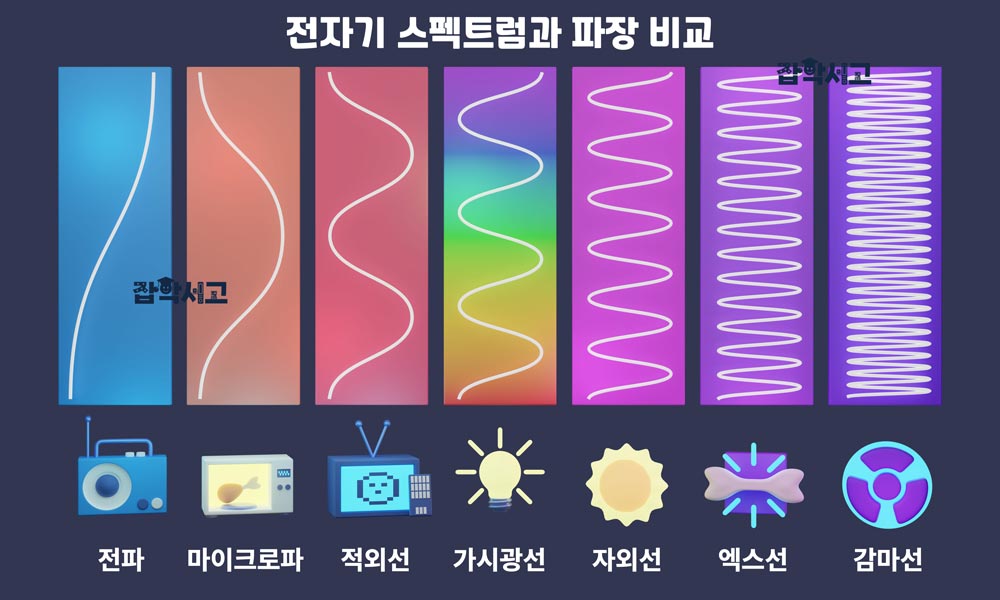
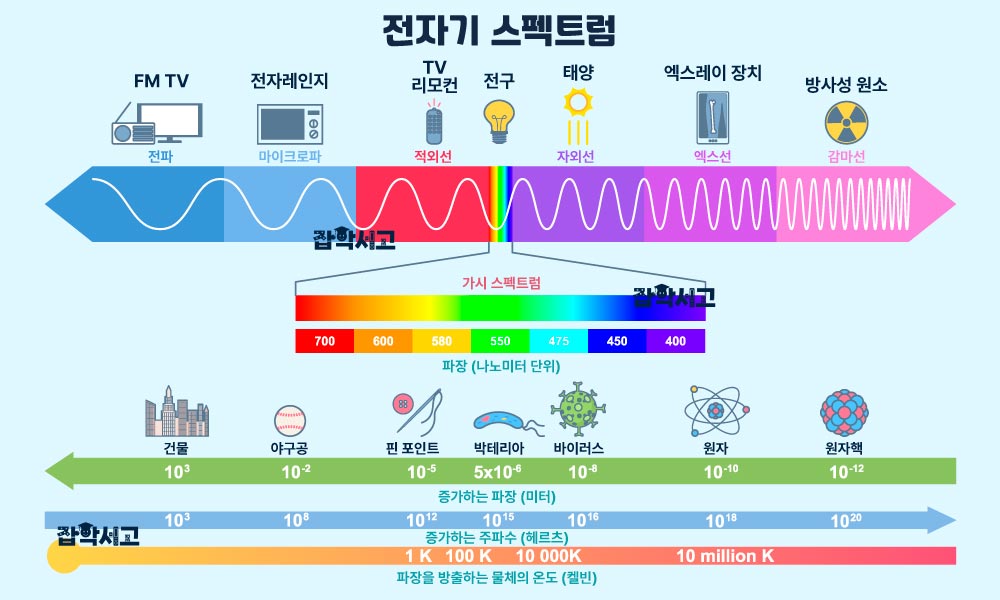
Electromagnetic waves occur when electric and magnetic fields generate one another and propagate through space. Maxwell's equations are an important mathematical tool for explaining the principles of electromagnetic wave propagation, showing that electromagnetic waves arise as electric and magnetic fields change over time and induce one another. Electromagnetic waves exist in various forms, including light, radio waves, and X-rays, each with particular frequencies and wavelengths and a variety of uses. Electromagnetic waves play essential roles in fields such as communications, medicine, and scientific research.
Electromagnetic interactions and chemical bonds
Electromagnetic interactions also play an important role in the bonding of atoms and molecules. The electric attraction between electrons and atomic nuclei determines the electron configuration of atoms, which greatly influences molecular structure and the formation of chemical bonds. These interactions determine the stability and properties of molecules and can also explain how chemical reactions occur. Magnetic interactions also act as a factor determining the magnetic properties of materials and are essential for understanding the properties of magnetic materials.
The importance of interactions between electrons and magnetic fields
The mechanisms of interaction between electrons and magnetic fields provide an important foundation for explaining various physical phenomena, and many applied technologies are being developed on this basis. For example, communication technologies, medical imaging equipment, and power systems that apply electromagnetic principles constitute important parts of modern science and technology. Understanding electromagnetism is a key to further advancing these technologies and enabling new innovations.
Exploring the major applications of electromagnetism
Power generation and distribution systems
The principles of electromagnetism play a central role in power generation and distribution systems. Generators are devices that use electromagnetic induction to convert mechanical energy into electrical energy and are used for most electricity generation. During generation, mechanical rotation produces electric current through electromagnetic induction, thereby generating power. The power produced in this way is supplied to homes and industrial facilities through transformers. Transformers adjust voltage to minimize power losses and play an important role in transmitting power efficiently, even over long distances.
Transformers are devices that raise or lower voltage to reduce power losses during transmission, allowing energy to be transmitted efficiently at high voltage and then adjusted to the voltage required for use in each region. These power generation and distribution systems provide an important foundation for maintaining a smooth supply of electricity to meet demand in modern society.
Advances in communication technology
Applications of electromagnetism are also very important in communication technology. Various electromagnetic waves, including radio waves, microwaves, infrared radiation, visible light, and X-rays, are used as communication media, with different applications depending on their frequencies. Wireless communication, in particular, transmits data through the propagation of electromagnetic waves and is applied in key communication technologies such as mobile communications, satellite communications, Wi-Fi, and Bluetooth.
Mobile communication devices use electromagnetic waves to transmit and receive signals over long distances, delivering voice, video, and data in real time through this process. Electromagnetic waves are also applied in location-based services such as GPS, providing accurate location information through satellite signals. Through these communication technologies, technological advances based on the principles of electromagnetism are greatly improving connectivity in modern society.
Applications of electromagnetism in medicine
Electromagnetism also plays an important role in medicine. Magnetic resonance imaging (MRI) is a representative example. MRI uses powerful magnetic fields and high-frequency electromagnetic waves to obtain images of the inside of the human body, enabling noninvasive diagnosis and driving innovation in medical diagnosis. MRI provides high-resolution images and can accurately diagnose various conditions, including tumors, strokes, and nervous system disorders.
Radiation therapy using electromagnetic waves is also an important treatment for cancer, working by using high-energy electromagnetic waves to destroy tumor cells. It is an effective treatment that can selectively destroy cancer cells while causing minimal damage to surrounding healthy tissue. These medical technologies based on the principles of electromagnetism greatly improve the accuracy and efficiency of patient diagnosis and treatment.
Electromagnetism in sensor technology
Electromagnetism is also applied in various sensor technologies. Sensors that use the principle of electromagnetic induction are used in metal detectors, electricity meters, and other devices, enabling accurate and reliable measurements. Metal detectors use electromagnetic induction to detect metal objects and are widely used in security screening, construction sites, and military applications.
Sensors that use magnetic fields are used in the navigation systems of autonomous vehicles and in vehicle location tracking, providing highly precise data. By responding sensitively to environmental changes and collecting data in real time, these sensors play important roles in various industries. Electromagnetic sensors are driving innovation in manufacturing, medical devices, and the automotive industry.
Energy storage and conversion technologies
Electromagnetism also plays an important role in energy storage and conversion technologies. For example, battery systems in electric vehicles use the principles of electromagnetism to store and convert electrical energy efficiently. Electric vehicles store electricity received during charging and then use it for propulsion, reducing fossil fuel use and gaining recognition as an environmentally friendly means of transportation.
Solar panels are also devices that convert solar energy into electrical energy, absorbing sunlight and generating electricity through an electromagnetic conversion process. This is a sustainable energy source and an important technology that contributes to environmental protection and improved energy efficiency. The principles of electromagnetism form the core of these energy storage and conversion technologies and play an important role in the field of new and renewable energy.
Electromagnetism in basic scientific research
Electromagnetism also plays a very important role in basic scientific research. For example, particle accelerators are devices that use electromagnetic principles to accelerate high-energy particles and are essential tools for studying the origins of the universe and the fundamental structure of matter. This research explores the fundamental laws of physics and provides a driving force for new scientific discoveries.
Particle accelerators use electromagnetic fields to accelerate particles to high speeds and make them collide, allowing the fundamental properties of the universe and matter to be studied through interactions among the various particles produced in the process. This basic scientific research is among the most important research in modern physics and contributes to understanding the foundations of the universe and matter.
Research trends and innovative technologies in electromagnetism

Advances and applications of metamaterials
Metamaterials are artificially produced materials designed to have unique electromagnetic properties that cannot be found in nature. These metamaterials can freely control the path of light, contributing to the development of various innovative technologies. Representative examples include invisibility cloaks, imaging systems with ultrahigh resolution, and new optical devices that use electromagnetic waves. Metamaterials have made it possible to refract or distort light in desired directions, enabling new levels of technological application beyond existing physical limits.
Metamaterials also play an important role in developing next-generation communication technologies for high-speed data transmission. Research using electromagnetic waves in the terahertz (THz) frequency band has the potential to provide speed and efficiency beyond existing communication technologies, and metamaterials are expected to greatly improve the performance of communication equipment.
Advances in quantum electrodynamics (QED)
Quantum electrodynamics (QED) is a theory that describes interactions between electrons and photons and is the quantized form of electromagnetism. QED is a powerful theoretical tool for explaining electromagnetic phenomena in the microscopic world and is one of the important foundations of modern physics. Recent research is exploring the potential for applying QED in quantum computing and quantum communication technologies.
Quantum computing provides computational power beyond existing computer technologies, while quantum communication enables highly secure methods of data transmission. These technologies using QED will bring innovation to information processing and communications, producing major changes particularly in fields where very fast and accurate information processing and security are important.
Research and applications of high-temperature superconductors
High-temperature superconductors are a very important topic in electromagnetism research. Superconductors are materials whose electrical resistance becomes 0 below a certain temperature, suggesting the technological possibility of transmitting electric current without power losses. Recent research focuses on developing practical high-temperature superconductors, and research is actively underway to find materials that can exhibit superconductivity even at room temperature.
If room-temperature superconductors become commercially available, losses in power transmission and storage could be eliminated entirely, dramatically improving the efficiency of power grids. Important technological advances could also be expected in magnetic levitation trains, MRI equipment, and other technologies that use superconductors.
Advances in electromagnetic nanotechnology
Electromagnetism is combining with nanotechnology to open up even more innovative applications. Electromagnetic nanotechnology is a field that develops nanomaterials and nanodevices with new functions by precisely controlling electrical and magnetic properties at the nanoscale. For example, nanosensors can detect environmental changes or biological signals with high sensitivity at a very small scale, providing innovative solutions for medical diagnosis and environmental monitoring.
Nanotechnology also plays an important role in the energy sector. As highly efficient solar panels, batteries with ultrahigh density, and other technologies using nanomaterials are developed, electromagnetic nanotechnology is contributing to improved energy efficiency. Technologies that control electromagnetic interactions at the nanoscale are becoming an important foundation for developing next-generation electronic devices.
New materials research and electromagnetism
Research on new materials based on electromagnetism is also very active. Graphene is a representative new material, and its unique electromagnetic properties and strength have attracted attention as a key material for next-generation electronic devices. Graphene has exceptionally high electron mobility, which can be used to develop ultrafast transistors and transparent electronic devices.
Research on 2-dimensional materials also provides technologies that allow interactions with electromagnetic waves to be controlled more precisely, enabling new technological innovations in communication devices, sensors, energy conversion devices, and other applications based on electromagnetic waves. These new materials further expand the potential applications of electromagnetism and will become key elements in the advancement of next-generation science and technology.
Electromagnetism is an essential discipline for understanding interactions between electricity and magnetism and applying them in everyday life. Understanding the mechanisms of interaction between electrons and magnetic fields based on the basic concepts and principles of electromagnetism provides a foundation for the advancement of modern science and technology. Recognizing the importance of electromagnetism in various applications is essential, and it will play an even more important role in future technological development.
Through ongoing research and advances in innovative technologies, the possibilities of electromagnetism are also expanding without limit, and this discipline is expected to continue driving innovative changes in various fields. Sustained research and education in electromagnetism will lead the technological development of future society, making it possible to build a better future.