Classical mechanics is an important foundational field of physics that explains the relationship between the motion of objects and the forces acting on them. Developed on the basis of Isaac Newton's laws of motion in the 17th century, classical mechanics has contributed greatly to advances in modern science and technology and continues to be used in practical applications across various fields.
This material will begin with the basic concepts of classical mechanics and then explore its historical background, Newton's laws of motion and examples of their application, an understanding of the law of conservation of energy and momentum, and specific examples of how classical mechanics is applied today.
Basic Concepts and Historical Background of Classical Mechanics
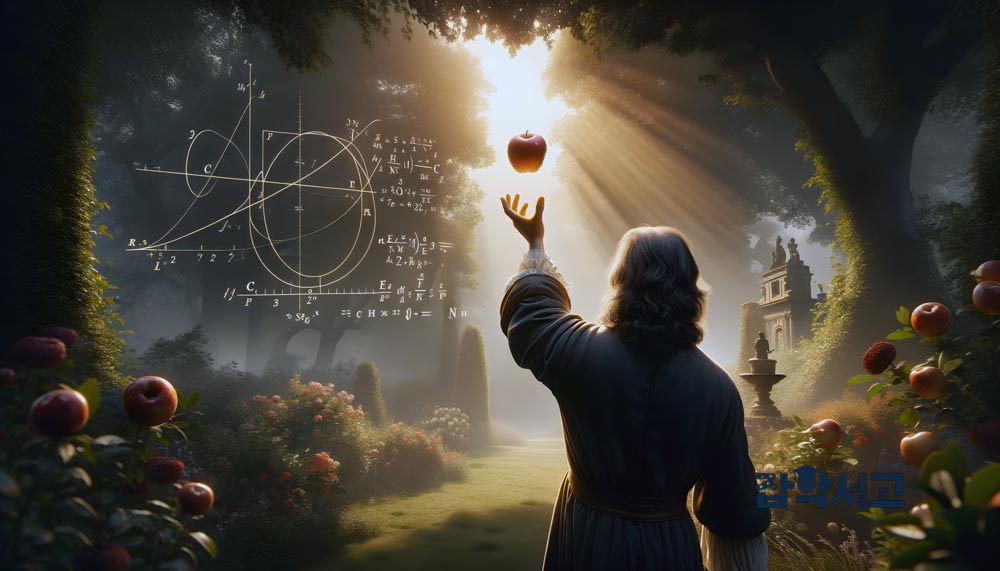
Basic Concepts and Historical Background of Classical Mechanics
Classical mechanics is a foundational field of physics that studies the interaction between the motion of objects and the forces acting on them. It is primarily based on Newton's laws of motion and has a wide range of applications, from the motion of celestial bodies to the operating principles of everyday machines. The principles of classical mechanics play an important role in various fields, including astronomy, mechanical engineering, and architecture.
The history of classical mechanics dates back to ancient Greece. Aristotle proposed an early theory of the motion of objects, but its interpretation differed from facts established later. Aristotle argued that a force must act continuously for an object to keep moving, but this claim was later refuted by Galileo and Newton.
In the early 17th century, Galileo Galilei revised Aristotle's theory through experiments on free fall and inertia. He introduced the concept of inertia, explaining that all objects fall at the same speed under gravity and that objects can move even in the absence of external forces. This marked an important turning point in the development of classical mechanics.
Building on Galileo's research, Isaac Newton laid the foundations of classical mechanics by publishing his book Principia in 1687. Newton's laws of motion and law of universal gravitation became fundamental principles of physics, making it possible to explain a variety of phenomena, from the motion of planets to collisions between objects in everyday life.
Later, in the 19th century, Hamilton and Lagrange further developed classical mechanics. They established its mathematical foundations and proposed theories that are still widely used in engineering and physics today. Classical mechanics continues to play an important role even in the era of modern physics, which has seen the emergence of quantum mechanics and relativity.
Understanding the Law of Conservation of Energy and Momentum
Another important concept in classical mechanics is the conservation of energy and momentum. According to the law of conservation of energy, energy can change form or move between objects, but it cannot be newly created or destroyed. For example, when a car's brakes are applied, kinetic energy is converted into thermal energy, but the energy does not disappear.
The law of conservation of momentum explains that momentum always remains constant during collisions between objects. For example, when two balls collide, the sum of their momenta does not change before and after the collision. This principle is used to explain various collisions and explosions.
Modern Applications of Classical Mechanics
Classical mechanics continues to play an important role in many fields today. It is essential to the design and analysis of machines in mechanical engineering, the principles of aircraft and spacecraft flight in aeronautical engineering, and the control of robot motion in robotics. It is also used in sports science to optimize athletes' movements and in astronomy to predict planetary orbits and the trajectories of artificial satellites.
Newton's Laws of Motion and Examples of Their Application

Overview of Newton's Laws of Motion
Newton's laws of motion consist of three fundamental principles that form the foundation of classical mechanics. These laws explain the motion of objects and the forces acting on them, playing an essential role in physics as well as various fields of scientific application.
First Law: The Law of Inertia
The first law is the law of inertia, which states that an object tends to remain at rest or in uniform motion in a straight line unless an external force acts on it. Developed from Galileo's research, this concept explains the tendency of objects to maintain their motion on their own. For example, this law explains why a stationary desk stays where it is until someone pushes it and why a moving object does not suddenly stop. The law of inertia is an important concept that explains phenomena commonly experienced in everyday life.
Second Law: The Law of Acceleration
The second law is the law of acceleration, which states that the force acting on an object is proportional to its mass and that its acceleration is proportional to that force. It is expressed mathematically as F=ma, meaning that the force (F) applied to an object equals the product of its mass (m) and acceleration (a). This law is essential for accurately predicting and analyzing the motion of objects. For example, a car requires a greater force to accelerate more quickly, and a truck with a large mass requires more force to accelerate than a small car. In this way, the law of acceleration plays a very important role in mathematically analyzing and predicting the motion of objects.
Third Law: The Law of Action and Reaction
The third law is the law of action and reaction, which states that when one object exerts a force on another, the other object also exerts a force of equal magnitude in the opposite direction. This is a phenomenon readily encountered in everyday life: when we push a wall, the wall also exerts a force that pushes us. Another example is a rocket launch, where the law of action and reaction applies: when the rocket burns fuel and exerts a downward force, the reaction causes the rocket to rise upward. This law is an essential principle for understanding interactions between objects and provides a fundamental concept of motion.
Examples of Applications of Newton's Laws of Motion
Newton's laws of motion have practical applications in a very wide range of real situations. For example, when a car accelerates, the driver can use the second law to calculate the required force. During a rocket launch, the law of action and reaction can also explain how the rocket gains thrust. These laws are used in many fields, including machine design, architecture, and aerospace technology.
Applications of Newton's Laws in Astronomy
Newton's laws of motion also play a very important role in astronomy. They are used to predict planetary motion and calculate the orbits of artificial satellites, providing a foundation for modern technologies such as GPS systems. In particular, Newton's law of universal gravitation explains the magnitude of the gravitational force acting between two objects, making it possible to predict the paths planets follow around the Sun. These theories are essential for accurate calculations of satellite orbits and for space exploration.
Newton's laws of motion explain the basic concepts of physics and have wide-ranging applications, from everyday life to astronomical phenomena. These laws are very useful for understanding and explaining machine design, rocket launches, space exploration, and the motion of everyday objects. As core principles of classical mechanics, Newton's laws of motion will continue to play an essential role in advances in science and technology.
Understanding the Law of Conservation of Energy and Momentum

The Concept of the Law of Conservation of Energy
The law of conservation of energy is one of the most important concepts in classical mechanics. It states that energy within a closed system is neither newly created nor destroyed, but only changes form. It is also closely related to the 1st law of thermodynamics and provides a foundation for explaining various phenomena throughout physics. In other words, energy within a system can be converted from potential energy to kinetic energy or to other forms of energy, but its total amount always remains constant.
Energy can be broadly divided into two types. Kinetic energy is determined by the speed at which an object moves, with faster-moving objects having more energy. Potential energy, on the other hand, is determined by the height at which an object is located. An object at a greater height has more potential energy, and when it falls from that position, this energy is converted into kinetic energy. In this process, energy is not destroyed but converted from one form to another.
Practical Applications of the Law of Conservation of Energy
The law of conservation of energy can be observed in many everyday phenomena. A representative example is the motion of a roller coaster. When a roller coaster reaches a high point on the track, it has its maximum potential energy. As it then descends, potential energy is converted into kinetic energy, which determines the roller coaster's speed. Although the roller coaster's speed and position keep changing, the total energy within the entire system remains constant, as explained by the law of conservation of energy.
Another example is the motion of a pendulum. A pendulum has its greatest potential energy when it reaches its highest point, and as it descends, potential energy is converted into kinetic energy. By repeating this process, the pendulum continues to move, while its total energy is conserved.
The Concept and Conservation of Momentum
Momentum is defined as the product of an object's mass and velocity, and it increases as the object moves faster or has a greater mass. In classical mechanics, the law of conservation of momentum, which states that the total momentum within a system remains constant, plays an important role. When objects interact, such as during a collision, this law applies as the principle that momentum is the same before and after the collision.
The law of conservation of momentum is particularly useful in collision situations. For example, when two objects collide, their total momentum does not change before and after the collision. This makes it possible to predict the objects' velocities or directions after the collision. In car accidents, this law can be used to analyze the speed at the time of the accident or the severity of the collision, helping clarify responsibility or develop plans to repair the damage.
Practical Applications of the Law of Conservation of Momentum
The law of conservation of momentum plays an important role in explaining physical interactions. For example, calculating the momentum of each of two colliding balls shows that the total momentum is the same before and after the collision. This also has useful applications in sports science: when analyzing athletes' movements or the trajectories of balls, the principle of conservation of momentum can be used to develop effective game strategies.
The law of conservation of momentum also applies to spacecraft launches in space and calculations of satellite orbits. The principle by which a spacecraft burns fuel and moves forward by gaining thrust in the opposite direction is explained through the conservation of momentum. This law provides the foundation for very important calculations in space exploration and satellite launches.
The laws of conservation of energy and momentum are among the most important principles in classical mechanics and play an essential role in understanding and predicting natural phenomena. These laws, which state that energy is not destroyed but only changes form and that momentum remains constant, allow us to explain various physical phenomena. They are used in a variety of applied fields, including mechanical engineering, sports science, and astronomy, and remain a core foundation for technological development and scientific research.
Modern Applications and Examples of Classical Mechanics

Modern Applications of Classical Mechanics
As a foundation of modern science and technology, classical mechanics has practical applications in many fields. Its principles are applied in diverse areas, including mechanical engineering, aeronautics, sports science, robotics, and astronomy, contributing to making our everyday lives more convenient and efficient.
Classical Mechanics in Mechanical Engineering
Classical mechanics provides core principles for mechanical engineering and is used in the design and analysis of various machines and structures. Complex mechanical systems, such as those involved in the design of car engines, mechanical equipment, and buildings, are all created on the basis of the principles of classical mechanics. For example, in car design, classical mechanics is essential to the process of transmitting engine power and analyzing vehicle stability. In building design, the principles of classical mechanics are also an important consideration for maintaining structural loads and balance. Classical mechanics enables the analysis of building safety and durability to optimize designs.
Aircraft Design and Classical Mechanics
In aircraft design, classical mechanics and fluid mechanics are combined to explain the principles of flight and derive optimal designs. The shape of an aircraft's wings, its center of gravity, and its engine thrust are all analyzed according to the laws of classical mechanics. Newton's laws of motion, in particular, are essential for predicting and controlling an aircraft's behavior during takeoff, landing, and flight. This makes it possible to maximize aircraft stability, speed, and fuel efficiency and plays an important role in ensuring passenger safety.
Classical Mechanics in Sports Science
Classical mechanics also plays an important role in sports science. It helps maximize performance by analyzing athletes' movements and techniques, making it possible to prevent injuries and improve athletic performance. For example, in baseball, when a pitcher throws a ball, its speed and spin can be analyzed to study the optimal pitching method. Classical mechanics is also applied to the analysis of golf swings, kicking movements in soccer, and running form in track and field, helping athletes optimize their techniques.
Classical Mechanics in Robotics
In robotics, classical mechanics is essential for controlling robots' movement and balance. When robots perform tasks, Newton's laws of motion and the law of conservation of energy are used to control actions such as lifting or moving objects. For example, when an industrial robot accurately lifts and moves a heavy object, it must calculate the object's weight and movement path and control the corresponding forces. These principles enable stable and efficient robot operation in various fields, including manufacturing, medical robotics, and service robotics.
Classical Mechanics in Astronomy
Classical mechanics also plays an important role in astronomy. Its principles are applied to predict and control planetary orbits and the movements of artificial satellites. Newton's law of universal gravitation allows astronomers to accurately predict planetary positions and, on the basis of this principle, study the structure of the universe and interactions between planets. Calculating satellite orbits to enable reliable communications and Earth observation is also a technology based on classical mechanics. These technologies are essential in many fields, including GPS, satellite communications, and weather observation.
Classical mechanics is essential to various fields of modern science and technology, and its importance will remain unchanged in the future. Innovative technological advances based on its principles are taking place in many fields, including mechanical engineering, aeronautics, sports science, robotics, and astronomy, making our lives safer and more convenient. These wide-ranging examples of its applications demonstrate once again the practicality and importance of classical mechanics.
As a core principle of physics, classical mechanics plays an important role in advances in science and technology, from its historical origins to its modern applications. Principles such as Newton's laws of motion, the law of conservation of energy, and the law of conservation of momentum allow us to understand and predict natural phenomena more clearly.
These principles of classical mechanics have practical applications in a variety of fields, including mechanical engineering, aerospace engineering, sports science, robotics, and astronomy, and will continue to contribute to new technologies and areas of research. The importance of classical mechanics will remain unchanged in the future.