
Relativity is a groundbreaking theory that fundamentally changed the paradigm of physics. Proposed by Albert Einstein, it challenged traditional concepts of time and space. Relativity includes revolutionary ideas that time is not absolute and that gravity can be explained as the curvature of spacetime.
This article will examine the main concepts of relativity and its historical background, and explain the essential ideas of special and general relativity in detail. It will also analyze the theory's influence on modern science and discuss its importance through examples of its applications.
The Basic Concepts and Historical Background of Relativity
The Birth and Historical Background of Relativity
Relativity, proposed by Albert Einstein in the early 20th century, fundamentally changed the basic concepts of physics. Until then, physics had been grounded in Newton's classical mechanics, whose laws assumed that the universe operates within absolute time and space. However, in the late 19th century, as James Clerk Maxwell's electromagnetic theory explained the speed of light and the properties of electromagnetic waves, limitations in what existing Newtonian mechanics could explain began to emerge.
In particular, the fact that the speed of light is always constant regardless of an observer's motion presented a major challenge to the physics community. Various theoretical approaches were attempted, but none provided a clear answer. In these circumstances, Einstein sought to solve the problem by starting with the assumptions that time and space are not absolute and that the speed of light is constant in all inertial frames.
Special Relativity: The Relativity of Time and Space
In 1905, Einstein published his theory of special relativity, completely overturning established ways of thinking in physics. Special relativity is fundamentally based on the fact that the speed of light is always constant. This theory produced two important consequences: time dilation and length contraction. These are revolutionary concepts stating that as speed increases, time passes more slowly and objects become shorter.
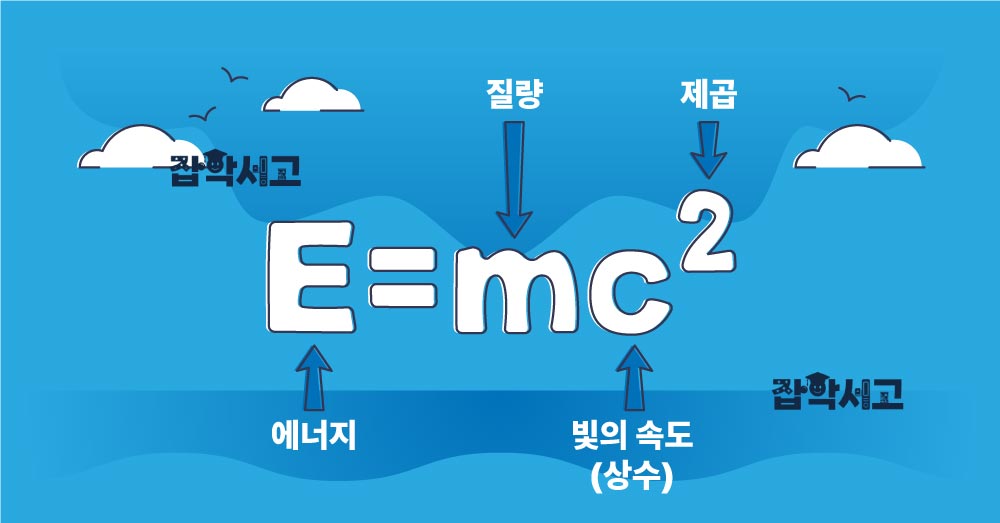
Special relativity also yielded the formula E=mc², which explains the relationship between mass and energy. This formula indicated that energy is proportional to mass and that even a very small mass can produce an enormous amount of energy. It became the theoretical foundation for modern technologies such as nuclear power generation and had a tremendous impact across science and industry.
General Relativity: A New Interpretation of Gravity
In 1915, Einstein once again brought a revolution to physics. General relativity replaces Newton's theory of gravity by explaining gravity as the curvature of spacetime. Newton's theory described gravity as a force between two objects, whereas general relativity introduced the idea that gravitational phenomena occur because mass curves spacetime. In other words, an object with a large mass distorts the surrounding spacetime, and this distorted spacetime influences the motion of objects.
This theory successfully explained gravitational lensing, in which even light bends under the influence of gravity, and predicted modern astronomical discoveries such as the existence of black holes. In addition, the distortion of spacetime caused by Earth's gravity must be taken into account for GPS satellite systems to operate accurately, making this one of the practical applications of general relativity.
The Influence of Relativity and Its Applications in Modern Science
Relativity has gone beyond a theoretical discovery to profoundly influence many areas of modern science and technology. GPS systems can function properly only if they accurately calculate the time delay caused by Earth's gravity, something that would be impossible without relativity. Experiments involving high-energy particles in particle accelerators must also account for the concept of time dilation in relativity to obtain accurate results.
The importance of relativity is also evident in space exploration and black hole research. The existence and properties of black holes were predicted through general relativity, and these predictions are being verified through observations. Research on gravitational waves has also yielded the scientific achievement of observing ripples in spacetime, just as Einstein predicted.
The Key to a Fundamental Understanding of the Universe
Relativity completely transformed our existing understanding of time, space, and gravity. Special and general relativity each presented a new paradigm for physics in a different way, becoming driving forces behind the development of modern science and technology. The importance of relativity has been demonstrated through a variety of applications, including GPS systems, space exploration, particle accelerators, and black hole research.
Special Relativity: A New Understanding of Time and Space
The Speed of Light and the Laws of Inertial Frames: The Starting Point of Special Relativity
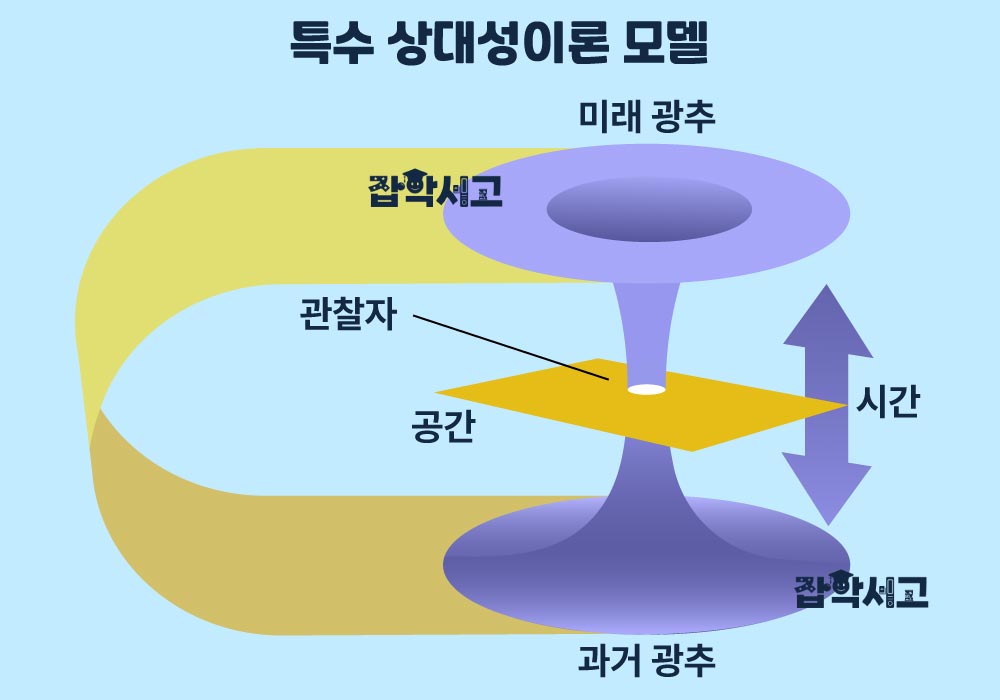
Special relativity rests on two basic assumptions. First, the speed of light is constant and unchanging in all inertial frames. This means that both moving and stationary observers measure the same speed of light. Second, the laws of physics apply equally in all inertial frames. These two assumptions completely rejected the concepts of absolute time and space in Newtonian mechanics and presented a new physical paradigm.
These assumptions were revolutionary ideas at the time, and physicists had to accept the conclusion that time and space were no longer absolute. Based on this new perspective, special relativity redefined physics and became an essential foundation for understanding the physical world beyond traditional notions.
Time Dilation: The Core of Relativity
One of the most important consequences of special relativity is time dilation. This means that time passes more slowly in a moving inertial frame. For example, when a spacecraft moves close to the speed of light, time aboard the spacecraft passes more slowly than time on Earth. This phenomenon is also well known through the 'twin paradox.' It describes a situation in which a twin who returns from high-speed space travel comes back younger than the twin who remained on Earth.
This phenomenon of time dilation has also been demonstrated experimentally. Particles moving extremely rapidly in cosmic rays or particle accelerators also exist longer than the lifetimes expected on Earth, providing another example of time dilation. Through experimental verification, this has become an important factor in further strengthening the credibility of special relativity.
Length Contraction: Changes with Speed
Another important consequence is length contraction. This refers to the phenomenon in which a rapidly moving object appears shorter to a stationary observer. The effect is particularly pronounced for objects moving at speeds close to the speed of light. For example, a spacecraft traveling at a very high speed appears to have a shorter length when viewed from Earth.
This length contraction has also been demonstrated experimentally and has become a central concept in relativity. Such concepts go beyond theory to serve as important elements in explaining physical phenomena.
Mass–Energy Equivalence: E=mc²
Another major achievement of special relativity is the principle of mass–energy equivalence. This is the concept that mass and energy can be converted into each other, expressed by the equation E=mc². The equation means that mass can be converted into energy and energy into mass, and shows that mass is a form of stored energy.
This principle became a foundation for modern physics and energy technologies such as nuclear energy, and plays an important role in explaining nuclear fission and fusion reactions. In other words, this formula, which shows that a small mass of matter can release an enormous amount of energy, made a decisive contribution to scientific and technological progress.
Connections with Electromagnetic Theory
Special relativity is also closely related to electromagnetic theory. The understanding that light is an electromagnetic wave originated in Maxwell's electromagnetic theory, but special relativity clarified and developed it further. Electromagnetic waves can travel through a vacuum without a medium, and special relativity plays an important role in explaining various phenomena involving the speed of light. It is an essential theory for understanding how electromagnetic waves behave in space.
Applications in Modern Science and Technology
Special relativity is more than a theoretical discovery; it has practical applications in various areas of modern science and technology. GPS systems are a representative example: the time dilation that occurs as satellites orbit Earth at high speeds must be calculated accurately for the system to function properly. In addition, experiments involving high-energy particles in particle accelerators must apply the concepts of time dilation and length contraction from relativity.
The concepts of special relativity are also essential in space exploration, nuclear energy, and particle physics, and play important roles in fields ranging from physics to engineering and information and communications technology. Special relativity is a theory that lies at the foundation of modern science and technology and at the center of their applications.
General Relativity: The Interaction Between Gravity and Spacetime
A New Interpretation of Gravity: The Relationship Between Spacetime Curvature and Gravity
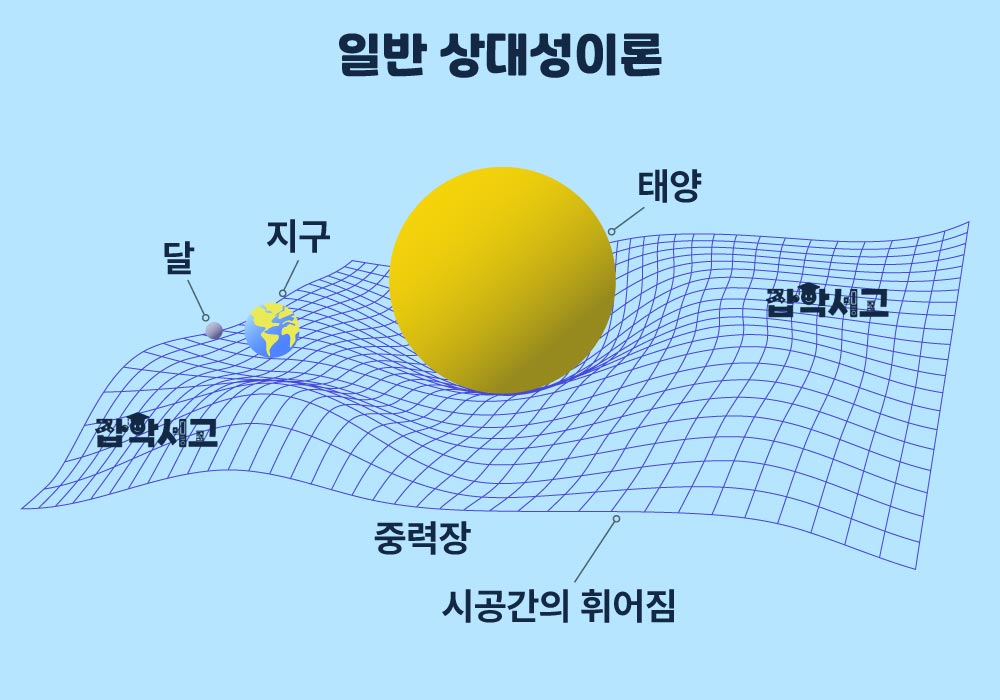
General relativity explains gravity as the curvature of spacetime itself, rather than simply viewing it as a force between objects. Einstein argued that objects with mass curve spacetime, causing gravitational phenomena. In other words, gravity appears as the natural result of objects following curved paths through spacetime. This approach is fundamentally different from Newton's law of gravity and enabled a deeper understanding of how the universe works.
For example, a massive celestial body such as the Sun strongly curves the surrounding spacetime, causing the planets orbiting it to follow curved paths rather than straight lines. This explanation is expressed mathematically through Einstein's field equations, making it clear that gravity originates in the structure of spacetime.
The Equivalence Principle: Unifying Gravity and Acceleration
One of the important concepts in general relativity is the equivalence principle. This principle states that gravity and acceleration cannot be distinguished. Simply put, acceleration affects spacetime in the same way as gravity.
This principle is well illustrated by the elevator experiment. When an elevator moves upward with constant acceleration, a person inside feels exactly the same force as being pressed down by gravity on Earth. This example shows that acceleration and gravity are not different from each other and explains the principle that these two forces affect spacetime in the same way.
The Curvature of Spacetime: The Origin of Gravity
One of the most innovative concepts in general relativity is the curvature of spacetime. Einstein argued that objects with large masses bend spacetime. As a result, other objects move along this curved spacetime. This presented a new way of understanding gravity.
For example, a celestial body with a large mass, such as the Sun, strongly curves the surrounding spacetime, and planets such as Earth orbit along this curvature as a result. The degree to which spacetime curves is proportional to mass and its associated energy, and this relationship is expressed mathematically through the field equations.
Gravitational Lensing: The Bending of Light
Gravitational lensing is one of the important predictions of general relativity. It occurs when a celestial body with an enormous mass strongly curves the surrounding spacetime, causing even light to follow a curved path. As a result, light from a celestial body behind it bends, appearing distorted or as multiple images.
This phenomenon plays an important role in observations of the universe, and gravitational lensing has been confirmed through various astronomical observations. It is a practical application of general relativity and provides strong evidence of the theory's validity.
Black Holes: Extreme Distortion of Spacetime
General relativity plays an important role in predicting the existence of black holes. A black hole is a celestial body in which an enormous mass is concentrated extremely densely in a small space, bending spacetime so severely that even light cannot escape.
Black holes initially existed only in theory, but their reality has recently been confirmed through various observations. Spacetime is extremely distorted around black holes, and this environment can be explained only by general relativity. The formation of black holes, their structure, and their event horizons can all be understood through Einstein's theory.
Cosmology and General Relativity
The expansion of the universe and the Big Bang theory are also based on general relativity. Einstein's theory suggested that the universe is expanding rather than remaining static, becoming a foundation for modern cosmology. As the universe expands, galaxies move farther apart, making it possible to explore the origins of the universe.
General relativity is also used to explain the rate of cosmic expansion and the structure of the universe, serving as an important tool for astronomers to make predictions about the universe's size, age, and future.
The Importance of General Relativity
General relativity provides a deep understanding of gravity, spacetime, and the structure of the universe. Beyond an academic discovery, it provides foundations for space exploration, black hole research, and cosmology, and is applied in various modern scientific technologies. Research on the universe continues to advance on this theoretical foundation, and general relativity stands at the center of these investigations.
The Influence of Relativity on Modern Science and Examples of Its Applications

GPS Systems and the Application of Relativity
Relativity plays an essential role in GPS systems. GPS provides location information through satellites orbiting Earth, and serious errors occur in this process if relativity is not applied. GPS satellites move at very high speeds and are outside Earth's gravitational field, under weaker gravity. In these circumstances, time dilation and spacetime distortion occur, producing a time difference between observers on Earth and the satellites. Unless this difference is corrected using the formulas of relativity, errors of up to tens of kilometers can accumulate each day. Therefore, the principles of relativity must be applied for GPS systems to operate accurately.
Relativity in Space Exploration
Relativity also plays a very important role in space exploration. When a spacecraft travels at high speeds or passes through a strong gravitational field, calculations that account for the time dilation and spacetime curvature predicted by relativity are essential. For example, when a spacecraft moves at speeds close to the speed of light or passes through the gravitational field of a massive planet, time passes differently than on Earth. A failure to understand this phenomenon accurately can cause the spacecraft's navigation and mission to fail. Astronauts' life support systems also require adjustments that account for time dilation. Therefore, precise calculations based on relativity are essential for successful missions in space exploration.
Particle Accelerators and Relativity
Relativity also serves as a crucial theoretical foundation for particle accelerators. Particle accelerators accelerate very small particles to speeds close to the speed of light, and the time dilation and increase in mass predicted by relativity occur during this process. As particles approach the speed of light, time passes more slowly and their mass increases. Unless these relativistic effects are calculated accurately, experimental results can contain major errors. Therefore, precise calculations based on relativity are essential in particle accelerator experiments and form an important foundation for particle physics research.
Relativity in Black Hole and Gravitational Wave Research
Relativity also plays an important role in black hole research. A black hole contains a very large mass concentrated in a small space, causing the surrounding spacetime to curve extremely strongly. Because of this spacetime curvature, even light cannot escape the black hole, which is explained through general relativity. The formation and behavior of black holes can be predicted through Einstein's field equations, and the observed appearance of black holes agrees with the theory.
Gravitational waves are also ripples in spacetime produced when two massive celestial bodies, such as black holes or neutron stars, collide. First observed in 2015, gravitational waves are among the phenomena Einstein predicted through general relativity, and their detection once again demonstrated the important position of relativity in physics. Research on gravitational waves opened a new chapter in detecting and analyzing extreme phenomena in the universe.
Cosmology and Relativity
Relativity is an essential theoretical foundation for modern cosmology. Both the Big Bang theory and models of cosmic expansion are based on general relativity. The universe formed as time and space expanded, and this expansion is explained by Einstein's equations. Understanding the age, size, and structure of the universe requires precise calculations that apply relativity.
For example, the speed at which galaxies move apart as the universe expands is calculated through relativity, and these calculations play an important role in observing cosmic expansion. Relativity is also essential for understanding the universe's initial state and its present structure.
The Importance and Future Prospects of Relativity
Relativity has established itself as a central theory in physics and has a major influence on the development of modern science and technology. Its applications in GPS systems, space exploration, particle accelerators, black hole research, and cosmology clearly demonstrate its importance. These applications show that relativity goes beyond a theoretical discovery to make important contributions to practical technology and scientific progress.
Relativity fundamentally transformed the existing understanding of time, space, and gravity, opening new horizons in physics. Einstein's special and general theories of relativity each presented an innovative paradigm for physics in an original way, making major contributions to the development of modern science and technology. The application of relativity has been demonstrated in various fields, including GPS systems, space exploration, particle accelerators, and black hole research, and its importance is increasingly emphasized.
These theoretical achievements serve as a key to understanding the nature of the universe and will continue to drive scientific and technological development. Our understanding of the universe based on relativity will continue to expand, and further innovative discoveries and advances are expected in the future.