
Modern science plays a central role in understanding the various phenomena we encounter in everyday life and developing new technologies based on that understanding. Among its theories, quantum mechanics has remained a key driver of innovation in science and technology since its emergence in the early 20th century.
This material examines the history and basic concepts of quantum mechanics, the wave function and the uncertainty principle, and applications of quantum tunneling and spin phenomena in depth, while also exploring the influence of quantum mechanics on modern technology in detail.
Understanding the History and Basic Concepts of Quantum Mechanics
The Birth and Early History of Quantum Mechanics
The history of quantum mechanics dates back to the early 1900s. This was a period when phenomena that could not be explained by classical physics began to be observed, marking an important turning point that led to the emergence of quantum mechanics. In 1900, Max Planck introduced the concept that energy exists in discrete units called quanta to explain the problem of blackbody radiation. Through this work, he established the concept of quantization: energy is not distributed continuously and can exist only at specific values. Planck's research was a revolutionary discovery that broke the framework of classical physics and laid the foundation for quantum mechanics.
Later, in 1905, Albert Einstein demonstrated that light can possess particle properties while explaining the photoelectric effect. This introduced a new perspective in which light could be both a wave and a particle. Einstein's research is regarded as an important discovery that accelerated the development of quantum mechanics.
Bohr's Atomic Model and Its Limitations
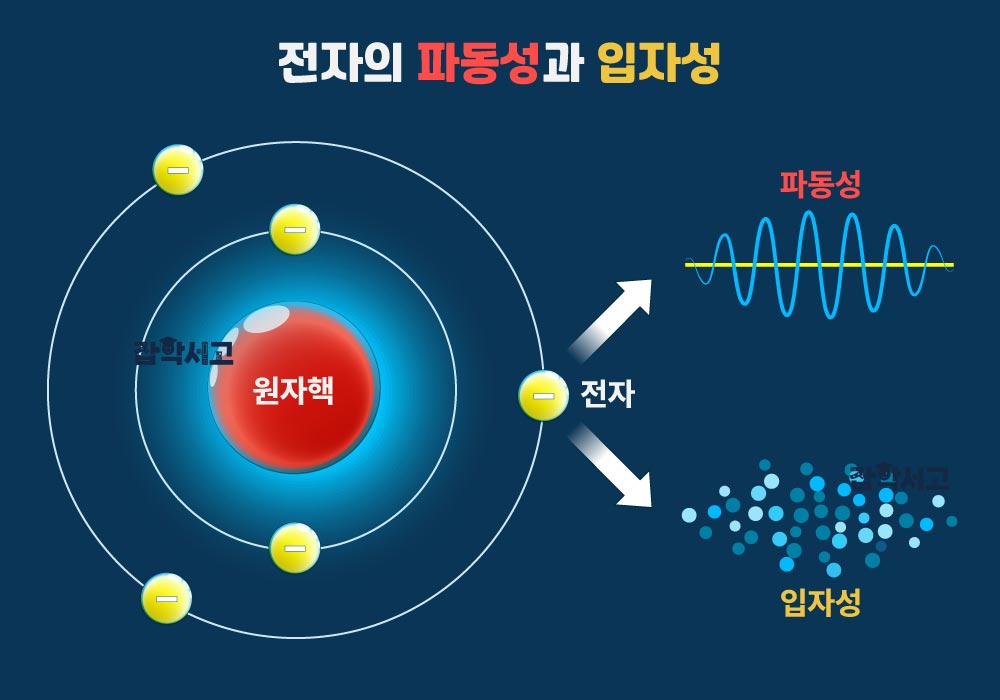
Quantum mechanics developed further through Niels Bohr's atomic model. In 1913, Bohr proposed a theory in which electrons orbit the atomic nucleus along fixed paths, with energy emitted or absorbed in discrete amounts when electrons move between those orbits. This theory successfully explained the spectrum of the hydrogen atom and established the concept of quantized energy levels. However, Bohr's model had limitations when applied to atoms with multiple electrons or to molecules, creating a need for a more sophisticated theory to address them.
The Emergence of Matrix Mechanics and Wave Mechanics
By 1925, quantum mechanics had developed into two major theories: Werner Heisenberg's matrix mechanics and Erwin Schrödinger's wave mechanics. Heisenberg proposed a new mathematical framework to replace the equations of classical mechanics, allowing the motion of electrons to be described more accurately.
In the same year, Schrödinger published a wave equation that plays a central role in quantum mechanics. By introducing the wave function, Schrödinger's equation became an important tool for explaining physical phenomena in the microscopic world. Schrödinger's wave equation and Heisenberg's matrix mechanics became the two principal formulations of quantum mechanics, forming the foundation of modern quantum theory.
A Core Concept of Quantum Mechanics: Particle–Wave Duality
One of the basic concepts of quantum mechanics is the duality of particles and waves. This means that particles can behave like waves and, conversely, waves can behave like particles. This duality has been clearly confirmed through experiments involving electrons and light and has become an important feature of quantum mechanics. A representative example is the formation of wave-like interference patterns by particles in experiments where electrons or light pass through two slits. The results of these experiments clearly demonstrated particle–wave duality.
The Uncertainty Principle and Quantum Entanglement
The uncertainty principle proposed by Heisenberg is a very important concept in quantum mechanics. It states that a particle's position and momentum cannot both be measured precisely at the same time. This principle explains the probabilistic characteristics of the microscopic world and differs greatly from the deterministic worldview of classical physics. It is one of the reasons quantum mechanics introduced a new paradigm that goes beyond existing concepts in physics.
Quantum entanglement is also a very intriguing phenomenon in quantum mechanics, in which two or more particles are so strongly connected that the state of one particle immediately affects the state of another, even when they are physically far apart. This phenomenon cannot be explained by classical physics and has become one of the fundamental principles of quantum mechanics.
Applications of Quantum Mechanics and Its Influence on Modern Technology
Quantum mechanics is not limited to theoretical research; it is an important body of scientific knowledge established through various experimental validations. Today, quantum mechanics makes important contributions to the development of modern technologies, including semiconductor technology, lasers, computer memory, and medical devices such as MRI systems. In particular, quantum computing is a future technology based on the principles of quantum mechanics and is expected to offer computational capabilities on an entirely different level from conventional computers. Quantum cryptography is another application of quantum mechanics that will bring major innovations to information security.
The Importance of the Wave Function and the Uncertainty Principle

The Role and Importance of the Wave Function
The wave function is a key tool in quantum mechanics for describing the state of a particle. Given as a solution to the Schrödinger equation, the wave function is used to calculate the probability that a particle exists within a particular region of space. This marks an important difference from classical physics, where a particle's position or momentum can be known precisely, because quantum mechanics allows a particle's state to be described only probabilistically.
The square of the wave function represents probability density, indicating the probability of finding a particle at a particular position within a given region of space. For example, although we cannot know exactly where an electron will be within an atom, we can calculate the probability of finding it in a particular region. This probabilistic approach is essential for explaining the distribution of electrons inside atoms and, further, for understanding important physical phenomena such as chemical bonding.
The Importance and Application of the Uncertainty Principle
The uncertainty principle is another core concept of quantum mechanics, stating that a particle's position and momentum cannot both be measured precisely at the same time. Proposed by Heisenberg, this principle is closely related to the wave properties of particles. The more precisely a particle's position is known, the greater the uncertainty in its momentum; conversely, the more precisely its momentum is measured, the greater the uncertainty in its position.
This concept clearly shows that, unlike the deterministic world we experience in everyday life, everything in the microscopic world is determined probabilistically. The uncertainty principle plays an important role in explaining the inherent characteristics of the microscopic world and also makes major contributions to the development of modern technologies such as semiconductors and lasers.
Experimental Validation of the Wave Function and the Uncertainty Principle
The wave function and the uncertainty principle in quantum mechanics are theories that have been validated through experiments. A representative example is the double-slit experiment using individual electrons or photons. In this experiment, particles behave like waves and form interference patterns, providing important evidence that the concept of the wave function and the uncertainty principle apply in practice.
In this experiment, particles passing through the slits behave as though they travel along several paths simultaneously, much like waves, resulting in an interference pattern. This phenomenon produces results that cannot be explained by classical physics, making it one of the representative experiments demonstrating the basic principles of quantum mechanics.
The Influence of the Wave Function and the Uncertainty Principle
As core concepts of quantum mechanics, the wave function and the uncertainty principle provide important theoretical foundations for various fields of physics and chemistry. In particular, they are essential for understanding the movement of electrons in electronic devices such as semiconductors, the principles of light emission in lasers, and interactions between atoms and molecules. These quantum mechanical concepts serve as important driving forces behind the development of modern science and technology.
In conclusion, the wave function and the uncertainty principle are essential foundational concepts in quantum mechanics that allow us to explain the complex physical phenomena of the microscopic world. These concepts play important roles in various applications of modern science and technology and will continue to influence scientific and technological innovation.
Examples of Applications of Quantum Tunneling and Spin Phenomena

The Concept and Applications of Quantum Tunneling
Quantum tunneling is a phenomenon in which a particle moves beyond an energy barrier, and it is one of the distinctive features of quantum mechanics that classical physics cannot explain. It means that a particle can pass through a barrier despite having insufficient energy, and it plays a very important role in modern technology. A representative example is the scanning tunneling microscope (STM). An STM is an instrument that uses the tunneling of electrons at a metal surface to observe material surfaces with atomic-level resolution. This technology allows researchers to directly analyze the structure of materials at the atomic scale.
Quantum tunneling is also one of the core principles of semiconductor devices, playing a particularly important role in storage devices such as flash memory. In flash memory, electrons tunnel through an insulating layer and are stored in a floating gate, enabling high data density and fast read/write speeds. These applications have made major contributions to the development of data storage devices.
The Role of Spin Phenomena and Applications of Spintronics
Spin is an intrinsic quantum property possessed by electrons in quantum mechanics and is closely related to magnetism. Spintronics, a technology that uses electron spin, stores and processes information using both the charge and the spin of electrons, offering greater efficiency and performance than conventional electronic devices.
Magnetic memory (MRAM) is a representative application of spintronics. MRAM stores data based on the direction of electron spin and offers advantages over DRAM or flash memory, such as nonvolatility, high speed, and high durability. Spintronics also plays an important role in quantum computing. Quantum bits, or qubits, can use the spin states of electrons, allowing the computational performance of quantum computers to be maximized.
Medical Applications of Quantum Tunneling and Spin Phenomena
Quantum tunneling and spin phenomena are also widely used in medicine. For example, quantum dots use quantum tunneling to emit light at specific wavelengths and are used in disease diagnosis and treatment. In particular, quantum dots are useful for detecting specific targets such as cancer cells, enabling precise diagnosis and treatment that incorporate nanotechnology.
Spin resonance imaging (SRI) is also a technology that uses changes in the spin states of electrons to provide high-resolution images, enabling more precise diagnoses than MRI. This technology is particularly useful for obtaining detailed images of complex structures such as the brain and makes important contributions to the early detection and accurate diagnosis of diseases.
The Future of Quantum Tunneling and Spin Phenomena
Quantum tunneling and spin phenomena are the most important areas among the applications of quantum mechanics and have become key elements driving the development of modern technology. These phenomena enable the development of innovative technologies across various industries, including electronics, medicine, and quantum computing. Technologies that use quantum tunneling and spin phenomena will continue to advance, becoming more deeply integrated into our everyday lives and contributing to improvements in quality of life.
Analyzing the Influence of Quantum Mechanics on Modern Technology

Quantum Mechanics and the Development of Semiconductor Technology
Quantum mechanics has played an important role in the development of semiconductor devices, a core technology of modern electronics. Transistors are the basic building blocks of semiconductor devices and were designed by applying the principles of quantum mechanics. Transistors are essential devices that enable the operation of most electronics we use in everyday life, including computers, smartphones, and tablets. The operation of transistors is based on quantum mechanical phenomena such as quantum tunneling, in which electrons move across energy barriers, enabling high-speed processing in electronic devices. Quantum mechanics helps these devices deliver high performance even at small sizes.
The Relationship Between Laser Technology and Quantum Mechanics
The laser is another important application of quantum mechanics and is a device that generates intense light at a specific wavelength. The operating principle of lasers is based on quantum transitions, which describe the movement of electrons between specific energy levels when they absorb or release energy. Laser technology is widely used in various fields, including medicine, communications, and industry, and plays a particularly important role in high-speed data transmission through optical fibers in communications. Because lasers can produce highly precise, focused light, medical lasers offer high precision in surgery and diagnosis, while industrial lasers are used for fine machining and cutting.
The Role of Quantum Mechanics in Nanotechnology
Quantum mechanics also makes a key contribution to the development of nanotechnology. Nanotechnology manipulates the properties of materials at the atomic or molecular level to achieve desired functions, with quantum size effects playing an important role. Nanoparticles can exhibit new physical and chemical properties based on their quantum mechanical characteristics, enabling innovative applications in various fields. For example, nanoparticles are used as drug delivery systems in medicine, helping make disease treatment more effective. Nanotechnology also plays an important role in energy storage devices and environmental protection technologies.
The Revolutionary Potential of Quantum Computing
Quantum computing is one of the most closely watched applications of quantum mechanics and processes information differently from conventional computers. Conventional computers process information using bits consisting of 0 and 1, whereas quantum computers use quantum bits, or qubits, that can have multiple states simultaneously. This characteristic allows quantum computers to solve complex problems much faster than conventional computers. Quantum computing has the potential to bring revolutionary changes to various fields, including codebreaking, drug development, and materials science, and is currently being actively researched by laboratories and companies around the world.
Applications of Quantum Mechanics in Medical Technology
Applications of quantum mechanics are also driving remarkable advances in medicine. Quantum nanoparticles such as quantum dots target cancer cells, enabling highly precise diagnosis and treatment. This allows tumors and cancer cells to be detected more effectively and has increased the possibility of detecting and treating particular diseases at an early stage. Quantum imaging technology also offers higher resolution and accuracy than MRI or CT, allowing more detailed diagnoses. In particular, quantum sensors are very useful for detecting and analyzing subtle biological signals and make important contributions to neuroscience and biological data analysis.
Changes in Modern Technology Brought About by Quantum Mechanics
In conclusion, quantum mechanics plays a very important role in the development of modern technology, with its influence extending across various fields, including semiconductors, lasers, nanotechnology, quantum computing, and medical technology. These technologies are making our lives more convenient and safer while providing important foundations that will guide future scientific and technological development. Technological innovation based on quantum mechanics will continue and is expected to bring major changes to future life and across industry.
Quantum mechanics is an important theory that forms the foundation of modern science and technology and enables innovative applications in various fields. In this material, we have examined in depth the history of quantum mechanics, its basic concepts, the wave function and the uncertainty principle, applications of quantum tunneling and spin phenomena, and its influence on modern technology.
Quantum mechanics is not limited to theoretical research; it is scientific knowledge established through experimental validation, providing a basis for anticipating more advanced technologies and applications in the future. Understanding quantum mechanics and applying it will continue to drive innovation in science and technology.