When you watch a host who comes on at the same time every evening, it can feel as if they are talking straight to you, and hearing what your favorite YouTuber has been up to can lift your mood as if you had just heard news from a friend. Yet that person knows neither your face nor your name. This sense of “knowing each other” that exists only across the screen is called Parasocial Interaction.
Put simply, parasocial interaction means “a kind of exchange, closer to an illusion, in which we feel a face-to-face closeness with media figures such as broadcasters, actors, or creators, even though the relationship runs only one way and the other side has no mutual obligation.” Donald Horton and R. Richard Wohl gave it this name in 1956 when they published “Mass Communication and Para-Social Interaction” in the journal Psychiatry.
In this piece we will look in turn at where the concept began and how interaction differs from relationship, at examples from everyday life, and at its benefits and risks along with a sensible way to handle it.
Closeness Across the Screen: Parasocial Interaction
What Is Parasocial Interaction?

Horton and Wohl observed that when radio and television performers staged their shows as if speaking directly to viewers, audiences responded much as they would in a real face-to-face relationship. What sets this relationship apart is that the performer controls the stage while the viewer can change the channel at any moment, so there is almost no mutual responsibility or effort involved.
Later research often explains the experience in the “moment” of viewing separately from the bond that remains over time. The distinction most commonly used is as follows.
- Parasocial Interaction: a temporary process that, in the very moment of viewing, gives a sense that you and the figure are “aware of each other.”
- Parasocial Relationship: the emotional bond and interest that carry on even after viewing ends.

Around 2016, Jayson Dibble and his colleagues laid out this distinction together with a critique of measurement tools, pointing out that commonly used scales sometimes capture the long-term bond (the relationship) more than the interaction. If Uses and Gratifications asks “why do we choose that medium,” the parasocial concept focuses on “what kind of pseudo-interpersonal bond do we feel with that figure.”
How Closeness Builds Up, and How It Breaks

Research explaining parasocial bonds often speaks of cognitive, emotional, and behavioral layers. Rather than treating this as a fixed “three-stage model” from a particular scholar, it is safer to understand it as a flow that emerges through repeated viewing.
(1) Cognitive awareness
We become familiar with the person’s face, way of speaking, and tastes, and form a picture of “that person is like this.”
(2) Emotional attachment
Feelings such as joy, worry, and support arise, and we start wondering how they are doing.
(3) Behavioral loyalty
This can lead to actions that take up our time or defend the person, such as subscribing, watching, commenting, and standing up for them.
When a program ends or a host leaves, an emptiness similar to a real breakup can appear. Jonathan Cohen studied the reactions people have when their relationship with a favorite TV character is cut off, calling it a “Parasocial Breakup,” and later studies went on to show that scandals weaken existing bonds. David Giles systematically summarized the phenomenon in a 2002 literature review.
Understanding Parasocial Interaction Through Easy Examples
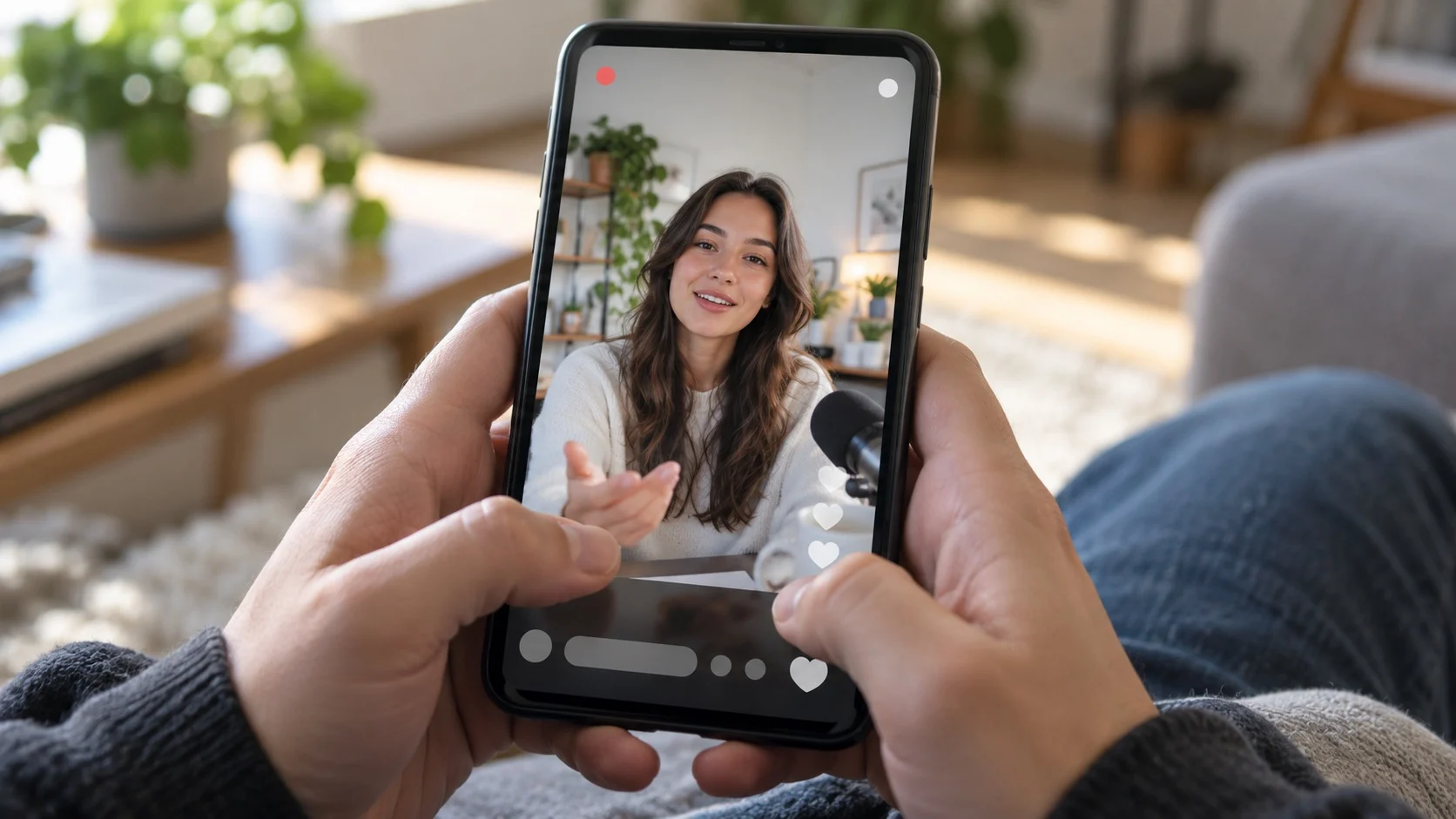
[Example 1] News anchors and talk show hosts
An anchor or host we see face to face at the same time every day easily comes to feel like “someone who talks to me.” This kind of direct address and eye-contact staging is exactly the classic scene Horton and Wohl paid attention to.
[Example 2] YouTubers, streamers, and influencers
Vlogs and live streams show everyday spaces and speak “as if talking to a friend.” Replying to comments or calling out fans’ nicknames can make it look as if there is mutuality, but since it is one-to-many communication open to thousands or tens of thousands of people at once, it remains one-sided at its core. It is worth keeping in mind that a friendly tone is not the same as a real personal relationship.
(1) Companionship and identity
It can ease loneliness and serve as a mirror for confirming our own tastes and values.
(2) Learning and information
We can also gain knowledge by following the explanations of expert creators.
(3) Overinvestment and vulnerability to marketing
Taking recommendations and sponsorships as “a friend’s advice,” or confusing a one-sided bond with a relationship where both people know each other, can lead to greater hurt and waste.
A Sensible Attitude and Balance

Parasocial interaction itself is not a pathological phenomenon but a natural experience created by media. Problems arise when we put that illusion on the same level as real, mutual relationships, or when we pour excessive time and emotion into a single figure. A balanced attitude protects both our enjoyment and ourselves.
(1) Accept that it is one-sided
Remember that the other person may not know you as an individual.
(2) Separate feelings from spending
Don’t automatically tie liking someone to buying from them or defending them.
(3) Nurture offline relationships too
Don’t try to meet your social needs through on-screen companionship alone.
(4) See farewells and disappointment as normal reactions
Don’t treat the emptiness that follows a show ending, a host leaving, or a controversy as merely something strange.
Parasocial interaction is a one-sided exchange in which we feel a face-to-face closeness with media figures but share no mutual obligation. It can offer companionship and learning, yet it can also leave us prone to overinvestment and marketing.
Enjoying your friends on the screen while keeping clear boundaries around those relationships: that is the first step toward healthy media consumption.