This time, we will explore the types of advertising used to run campaigns online and the characteristics of each. In the early days of online advertising, banner ads were the main form used, but as media developed, online advertising became more diverse.
Even a rough count yields more than 10 types of online advertising, and this material will organize and introduce the most representative types.
 What Is Online Advertising!?
The characteristics and advantages of online advertising include cost efficiency, measurable effectiveness, media reach, interactivity, and entertainment value. Advertising campaigns can be run at a much lower cost than traditional mass media advertising, and their effectiveness can be checked immediately through statistics.
In addition, the rapid growth in internet users accessing the internet through PCs and mobile devices has given online advertising a reach comparable to that of traditional media.
Another major characteristic is the advantage of interactivity, which allows users to communicate with one another. If users have questions, they can receive the answers they want immediately, giving them satisfaction, and if an advertisement is used as a piece of content, entertainment elements can be added to make it less off-putting.
Let us now look at the types of online advertising that have these characteristics.
Internet Banner Advertising
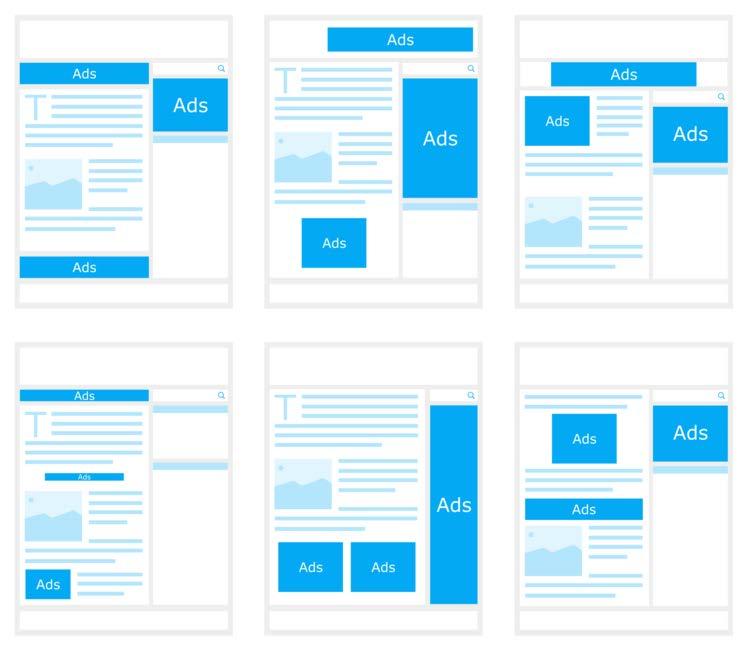 Banner Advertising / Text Advertising / Rich Media Advertising
Banner advertising refers to advertising that involves creating and placing an image that occupies a specific space on a website. It is called a banner because it takes the form of a long rectangle, like a hanging banner.
Early banner ads were limited to simply displaying still images, but advances in production techniques have made it possible to place moving images, such as videos or GIFs. These images contain hyperlinks that take users to the advertiser's desired page when clicked.
However, because these ads are displayed only in a particular area of a website, they have limitations in conveying all the desired information, and because they often do not provide the information users want, their click-through rates tend to be lower than those of search ads that users deliberately seek out.
Text Advertising
Like banner advertising, text advertising connects users to an advertiser's website through hyperlinks, but its defining feature is that it uses only text rather than images. It conveys information through short phrases of about 20–50 characters and feels less like advertising than banner ads, making it relatively less off-putting.
Above all, its advertising rates are among the lowest, making it suitable for campaigns that need to run on a small budget.
Rich Media Advertising
Rich media advertising is a type of banner advertising that incorporates advanced technologies such as JavaScript and DHTML. It was given the name Rich because it makes conventional banner advertising richer.
One characteristic of rich media advertising is the incorporation of technology that changes an image when the mouse is placed over it. It incorporates multimedia elements such as video, audio, and animation, and these features give it higher click-through rates, attention, and recall than conventional banner advertising.
Search Advertising (Keyword Advertising)
 What Are Search Advertising and Contextual Advertising?
Search advertising consists of ads displayed when a user searches for a particular keyword on a portal website. When a user searches for a keyword that an advertiser has purchased through bidding, the advertisement is displayed in the most visible location.
The defining characteristic and advantage of this advertising is that it is highly effective because the ad is shown when the user is already interested in that keyword. In effect, it can be seen as a process of converting potential customers into actual customers.
Search advertising offers the advantages of managing ads and segmenting markets in real time, but the workload increases as the number of keywords being managed grows. It also has the problem that highly competitive keywords carry high advertising rates, potentially leading to substantial advertising expenditure.
Contextual Advertising (Context-Based Advertising)
Contextual advertising is also a type of search advertising, but it differs in that it displays ads suited to the content of the webpage. It further complements search advertising and offers relatively high engagement because it shows personalized content related to each user's interests.
Interstitial Advertising
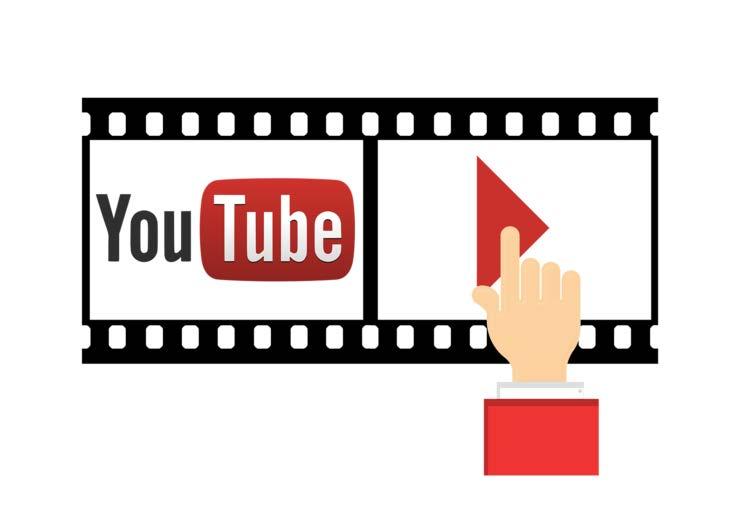 Interstitial Ads That Appear Automatically at Intervals
Interstitial advertising is modeled on the ads broadcast between programs in traditional media such as TV and radio and refers to ads displayed while moving between webpages. The ad turns on automatically while the page is changing and turns off automatically when it ends. Because it appears briefly during the waiting period, it has the advantage of attracting a great deal of attention.
However, these ads are considered ineffective on webpages in Korea, where internet speeds have advanced considerably. By contrast, ads displayed between video content, such as on YouTube, are where interstitial advertising is used most effectively and can currently be considered the representative example of this type of advertising.
Affiliate Advertising
 Affiliate Advertising and Online PR
Affiliate advertising commonly refers to arrangements in which operators of blogs or online communities partner with advertisers to display ads. It takes various forms, including displaying a banner in a particular area or incorporating advertising into blog content.
As the number of marketing agencies has grown considerably, these agencies frequently act as intermediaries connecting advertisers and bloggers. Marketing agencies also often bring together already active blogs and operate them through direct partnerships with advertisers.
Online PR
Online PR refers to activities that publish promotional articles through press releases or partnerships with news outlets. Small companies may distribute press releases directly, while large companies or public institutions may post press releases on their websites, which reporters may then visit and use to publish articles.
Viral Advertising
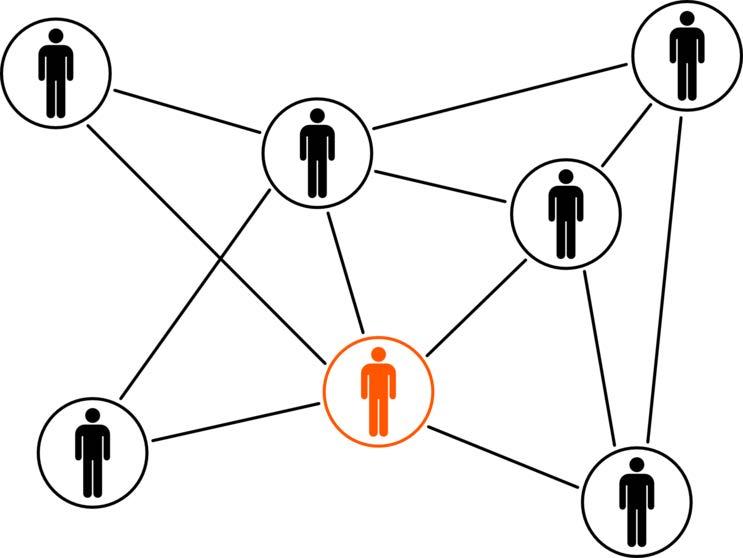 Viral Advertising That Spreads Through Word of Mouth
Viral advertising is an advertising technique that encourages consumers to spread word of mouth themselves on the internet. It is called Viral because word of mouth spreads quickly, like a virus.
Because consumers do the marketing rather than advertisers, it has the advantages of high credibility and rapid spread. It also has the characteristic of low advertising costs.
However, word of mouth can spread negative information as well as positive information, and advertisers have difficulty controlling it directly.
In particular, as mentioned earlier in the discussion of affiliate advertising, there are now far too many cases of marketing agencies intervening to carry out deliberate advertising, and because most consumers are already aware of this, we should not forget that negative perceptions of viral advertising are widespread.
Email Advertising
 Email Advertising and SMS Advertising
Email advertising is one of the traditional forms of advertising from the early days of the internet. It involves sending emails containing the information to be advertised to email addresses obtained through the collection of personal information (with consent).
Although the sheer volume of indiscriminate email advertising, along with SMS advertising, creates the risk of these messages being regarded as spam and ignored, sending them to a company's own members offers the advantage of precise targeting and analysis.
SMS/MMS Advertising
SMS advertising refers to advertising that sends short texts of around 40 characters through mobile phone messages, while MMS advertising, unlike SMS, sends images, videos, and larger amounts of text through mobile phone messages.
These ads offer the advantage of delivering advertising to selected target audiences, provided that consent to receive text messages has been obtained, but because the technique is used so indiscriminately, recipients tend to perceive the messages as spam.
MMS is somewhat less likely to be perceived as spam than SMS because it delivers richer information, such as images and videos.
Social Media (SNS) Advertising
 Advertising Through Social Media (SNS)
Social media advertising, or SNS advertising, delivers information that an advertiser wishes to communicate through social networking services (SNS), which have been actively used in recent years. Through features such as sharing and likes, it has the advantage of very strong reach and influence, much like viral advertising.
In addition, the growing number of mobile device users makes it possible to monitor the status of advertising in real time. Platforms such as Facebook and YouTube have well-organized systems for analyzing ads in addition to their advertising functions, making it easy to analyze advertising effectiveness and characteristics.
We have now examined the types of online advertising and the characteristics of each. The techniques introduced in this material are commonly accessible forms of online advertising, and as more than 20 years have now passed since the internet became widespread, traditional and new techniques coexist.
In addition, because it is impossible to know exactly how these techniques will continue to change in response to the rapidly changing media environment, advertising techniques should also be updated periodically.