Our thinking is influenced by various factors. Among them, confirmation bias is one of the important factors that significantly shape how we process information and make decisions.
Confirmation bias is the tendency to seek confirmation of beliefs or hypotheses we already hold, and it is deeply embedded in our daily lives and decision-making processes. This article examines confirmation bias from several angles, covering its concept, examples in everyday life, its effects on decision-making, and ways to overcome it.
What Is Confirmation Bias? An Invisible Trap in Our Thinking
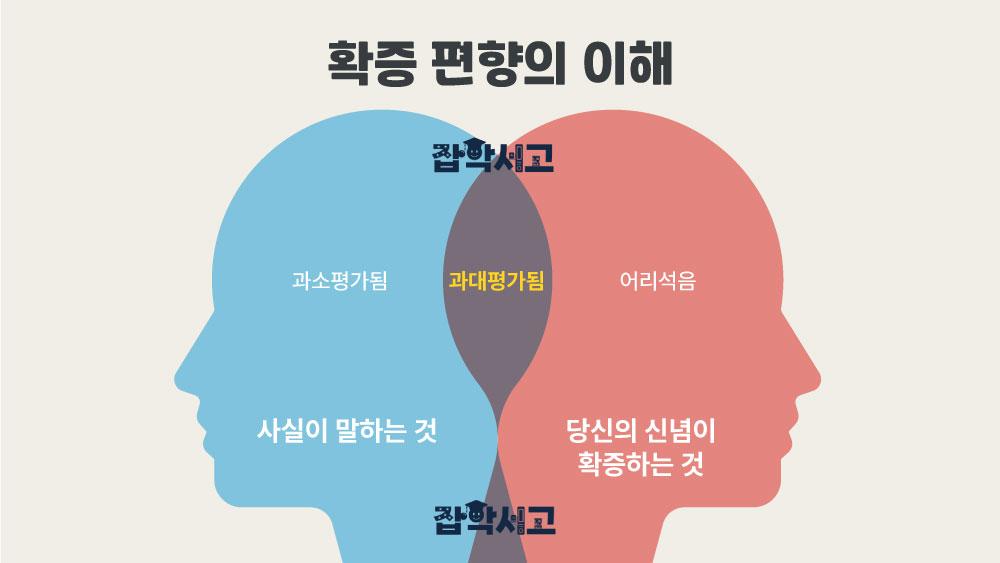 Conceptual Diagram of Confirmation Bias
The Definition of Confirmation Bias
Confirmation bias is a widely studied concept in psychology that refers to an individual's tendency to seek confirmation of beliefs or hypotheses they already hold. For example, someone who has a positive opinion about a particular topic tends to seek more positive information about that topic and ignore negative information. This has a significant influence on our thinking and often causes us to lose objectivity.
Information-Processing Shortcuts and Confirmation Bias
Confirmation bias is an inevitable part of how we process information. The human brain uses various shortcuts (heuristics) to process vast amounts of information efficiently, and confirmation bias arises in this process. These shortcuts can sometimes be useful, but they also carry a substantial risk of leading to incorrect conclusions.
Confirmation Bias in Political Issues
Confirmation bias can appear in various situations. For example, people with strong opinions about political issues tend to trust information from people who share their views more and ignore information from those with opposing views. This tendency deepens social divisions and makes objective, balanced discussion more difficult.
Confirmation Bias in Scientific Research
Confirmation bias can also be a major problem in scientific research. If researchers tend to seek confirmation of the hypotheses they have formulated, bias can arise in their interpretation of data or design of experiments. This reduces the reliability of research findings and can lead to incorrect conclusions.
Confirmation Bias in Economic Decision-Making
Another example of confirmation bias can be found in economic decision-making. Investors tend to seek more positive information and ignore negative information to reinforce their belief that the assets they have already invested in will perform well. This can lead to poor investment decisions and financial losses.
The Consequences of Confirmation Bias and Ways to Overcome It
In conclusion, confirmation bias is deeply embedded in our thinking and decision-making, often putting us at risk of losing objectivity and reaching incorrect conclusions. Understanding and recognizing it is very important. To overcome confirmation bias, we need to embrace diverse perspectives and develop the habit of deliberately examining opposing views.
Analyzing Examples of Confirmation Bias in Our Daily Lives
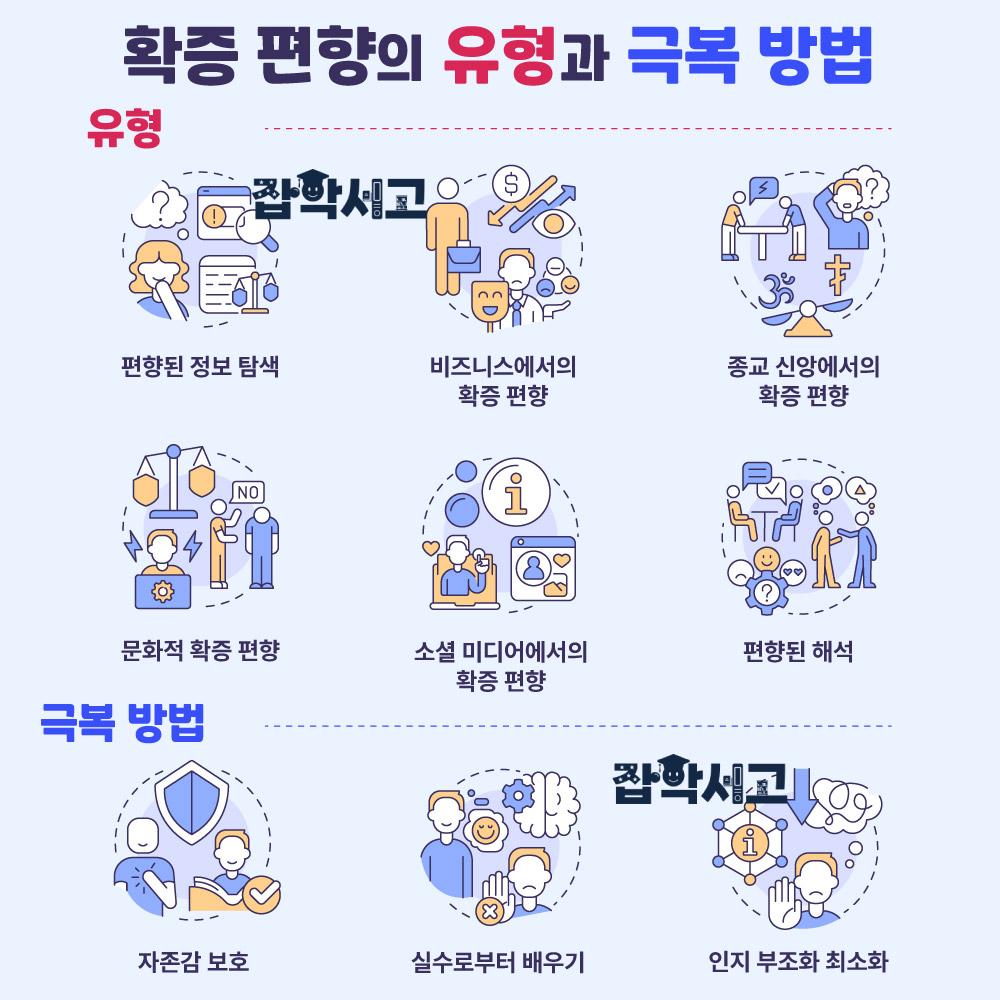 Types of Confirmation Bias and Ways to Overcome It
Confirmation Bias on Social Media
Confirmation bias can be found throughout our daily lives. For example, social media is a breeding ground for confirmation bias. On platforms such as social media, algorithms provide content tailored to users' interests, which reinforces the opinions users already hold. As a result, people interact only with others who think similarly, strengthening their biased perspectives.
News Consumption and Confirmation Bias
Confirmation bias also appears in news consumption. People tend to use news sources that represent the political positions they already support more frequently. This continually exposes them to biased information about particular issues and leads them to reject opposing views. This tendency can deepen political polarization and fuel social conflict.
The Effects of Confirmation Bias in the Workplace
Confirmation bias can also be a serious problem in the workplace. For example, if a particular idea is initially received positively in a team project, subsequent discussions tend to focus primarily on sharing information that supports that idea. This leads to insufficient critical examination of the initial idea, even though better alternatives may exist.
Confirmation Bias in Medicine
Confirmation bias can also be a major problem in medicine. After making a particular diagnosis, doctors tend to conduct additional tests only in ways that confirm that diagnosis or give importance only to information from the patient's symptoms that fits the diagnosis. This can lead to an incorrect diagnosis or treatment plan and risks worsening the patient's health.
Education and Confirmation Bias
Confirmation bias is also a notable problem in education. Students tend to study in ways that reinforce information they already know or beliefs they already hold. This can interfere with new learning and become an obstacle to acquiring a broad range of knowledge. Teachers, too, may tend to use their preferred teaching methods or educational theories more often and ignore other approaches.
Interpersonal Relationships and Confirmation Bias
Confirmation bias also affects individuals' interpersonal relationships. People prefer others who have similar interests and values and tend to avoid relationships with people who hold different opinions. This reduces the diversity of social networks and undermines the ability to understand and accept different perspectives.
Consumer Behavior and Confirmation Bias
Confirmation bias also appears in consumer behavior. For example, consumers who prefer a particular brand tend to seek only positive reviews of that brand and ignore negative reviews. This can lead to poor purchasing decisions. They also tend to seek only positive information to justify the products or services they have purchased.
Sports Fandom and Confirmation Bias
Confirmation bias is also prominent in sports fandom. Fans tend to accept only positive information about the teams or athletes they support and ignore or underestimate negative information. This makes objective analysis of games difficult and reinforces biased perspectives.
Confirmation Bias in Legal Judgments
Confirmation bias can also cause problems in legal judgments. For example, after forming an initial judgment about a case, jurors or judges tend to give greater weight to evidence that supports that judgment and ignore opposing evidence. This can stand in the way of a fair verdict.
The Effects of Confirmation Bias on Decision-Making
 How Does Confirmation Bias Affect Decision-Making?
Ignoring Information and Making Poor Decisions
Confirmation bias can cause us to ignore important information and make poor decisions. For example, someone planning to start a business who becomes convinced that their idea will succeed may overlook its weaknesses and neglect important market research or risk assessment. This can ultimately lead to business failure.
Problems in Group Decision-Making
Confirmation bias can be an even greater problem in group decision-making. If a particular opinion becomes dominant within a group at an early stage, subsequent discussions are likely to proceed only in ways that support that opinion. This excludes alternative opinions and results in insufficient critical examination, increasing the likelihood of reaching an incorrect conclusion.
Hindering Innovation and Creativity
Confirmation bias can hinder innovation and creativity. This is because it strengthens the tendency to stick with existing methods that have been successful and reject new ideas. This prevents organizations or individuals from responding effectively to changing circumstances and can hinder long-term growth.
Difficulties in Risk Management
Confirmation bias makes risk management difficult. It strengthens the tendency to underestimate or ignore particular risks, which can lead to financial losses or serious consequences. For example, investors in financial markets who fall into confirmation bias may suffer substantial losses because of excessive confidence in a particular asset.
Effects on Personal Health
Confirmation bias can also affect personal health. If people tend to seek confirmation of beliefs they already hold about their health, they become more likely to trust incorrect health information and act on it. This can prevent them from receiving appropriate treatment or cause them to continue unhealthy habits.
Effects on Education and Learning
Confirmation bias also affects education and learning. Because students study only in ways that reinforce information they already know or beliefs they already hold, they miss opportunities to learn new knowledge or perspectives. This limits the depth and breadth of learning and undermines comprehensive and critical thinking skills.
Overcoming Confirmation Bias: Methods for Objective Thinking
 When caught up in confirmation bias, you lose sight of what is around you.
Recognizing Confirmation Bias
To overcome confirmation bias, it is important first to recognize the possibility that you may be caught in this bias. This begins with critically examining your beliefs and hypotheses and adopting an attitude that embraces diverse perspectives. For example, you need to make an effort to seek information that contradicts your beliefs and evaluate it objectively.
Verifying Information Sources
It is important to verify the sources of information. You should check whether the information comes from a reliable source and whether it is objective and fair. This plays an important role in assessing the reliability of information encountered on the internet and social media in particular.
Exploring Diverse Perspectives
It is important to explore diverse perspectives. This can be done through various media, including books, articles, and documentaries. You also need to understand and accept diverse perspectives through conversations with people who hold beliefs different from your own.
Developing Critical Thinking Skills
It is important to develop critical thinking skills. This can be achieved through education, which should focus on helping students learn about diverse perspectives and develop the ability to evaluate them critically. Critical thinking can be an important tool for overcoming confirmation bias.
Recognizing and Controlling Emotions
It is important to recognize and control your emotions. Emotions can significantly influence our judgment, and strong emotions in particular can reinforce confirmation bias. You therefore need to recognize your emotions and understand how they affect your judgment.
Minimizing the Influence of Algorithms
It is important to minimize the influence of algorithms. This can be done by limiting personalized content provided by social media and search engines and seeking information from a variety of sources. You also need to make an effort to deliberately explore different perspectives to break out of filter bubbles.
Putting These Methods into Practice Through Examples
We can examine specific ways to overcome confirmation bias through several examples. For instance, when consuming news, you need to obtain information through a variety of media outlets instead of relying on just one. It is also important to actively gather diverse opinions during workplace meetings and create a culture that considers opposing views.
Continuous Learning and Self-Improvement
Finally, although overcoming confirmation bias completely is difficult, we can gradually reduce it through continuous learning and self-improvement. This can be achieved through reading, discussion, and participation in educational programs, and it is important to remain aware that you are continually learning.
Confirmation bias is an important problem deeply embedded in our thinking and decision-making processes. Recognizing it and overcoming it effectively can greatly benefit both individuals and organizations.
We should take in diverse information critically, use objective data, and reduce confirmation bias through continuous learning and feedback. Through these efforts, we will be able to develop a more balanced perspective and make sound decisions.