Learning refers to the process of acquiring or changing knowledge, skills, attitudes, responses, and other attributes through an individual's experiences and changes in their environment. Psychology explores how the various principles and mechanisms of learning influence human behavior and cognition.
In this material, we will examine the concept of learning from a psychological perspective and explore key concepts and principles such as acquisition, conditioning, extinction, punishment, and reinforcement.
These principles play an important role in understanding how we learn new information or skills and how we maintain or change previously learned behaviors.
What Is Learning in Psychology?
 Learning is a concept that everyone needs.
Learning is a central topic in psychology and is essential to understanding behavioral changes in humans and animals. It is an ongoing process that arises through an individual's life experiences and interactions.
It is a basic mechanism through which humans or animals adapt to their environments, integrate new information, and change existing patterns of behavior.
Learning occurs continuously through an individual's life and interactions, playing an important role in determining how they understand and respond to the world.
Psychology studies the various forms and principles of learning, seeking to understand human behavior and development through this research.
Acquisition
 Acquisition: Storing Knowledge or Skills in Memory
Acquisition is the initial stage of the learning process, during which an individual recognizes and understands new information or skills and stores that information in memory.
It also includes the process by which an individual first encounters new knowledge or skills and integrates them into their existing knowledge structure.
This is important for enabling learners to process and understand new information, store it in memory, and retrieve it later.
Some examples of acquisition are as follows.
Vocabulary Acquisition
Acquiring vocabulary as part of language learning is a good example. For example, when a young child first learns the word "apple" and its meaning, the child stores images and sounds associated with the word, as well as the shape and taste of an apple and other details, in memory.
Acquisition of Mathematical Formulas
A student learning a new mathematical formula is also an example of acquisition. For example, when a student learns and understands the formula for finding the solutions of a quadratic equation, they store the formula in memory and can use it later to solve quadratic equation problems.
Acquisition of Driving Skills
While learning to drive, drivers acquire basic driving skills and rules. For example, a driver learns that pressing the brake is how to stop the vehicle and stores this information in memory.
Acquisition of Musical Instrument Playing Skills
The process by which an individual learns how to play a new musical instrument is also an example of acquisition. For example, a person learning the piano learns which key represents which note and how to move their fingers, storing this information in memory.
Acquisition is a core learning process that enables individuals to integrate new information or skills into their knowledge structures and use them.
Conditioning
Conditioning is a type of learning that refers to the process of forming a connection between a specific stimulus and a response. Conditioning is divided into classical conditioning and operant conditioning, each of which establishes the relationship between stimuli and responses in a different way.
Classical Conditioning (Classical Conditioning)
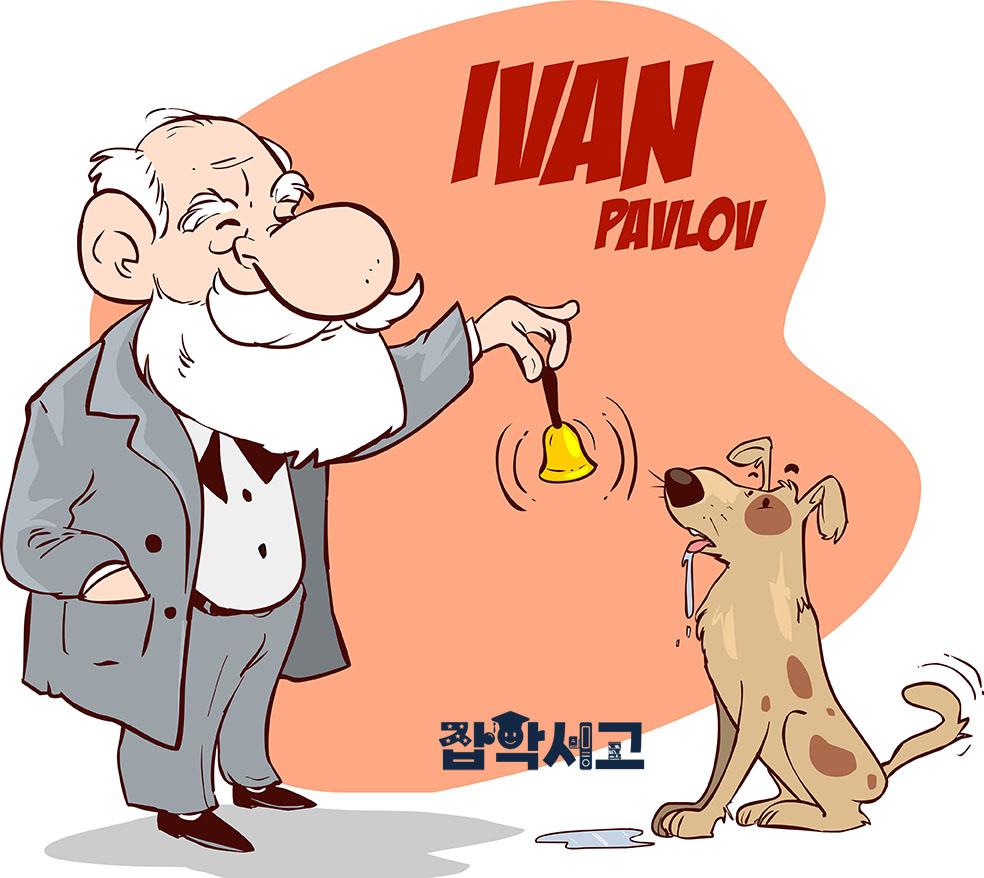 A Representative Experiment in Classical Conditioning: Pavlov's Dog Experiment
Classical conditioning is a form of learning that regulates unconscious or reflexive responses. It is a process of associating a stimulus that naturally elicits a response with a stimulus that originally does not elicit that response, so that the new stimulus also elicits the same response.
Pavlov's dog experiment is a prominent example of the most famous psychological theories associated with this.
What Is Pavlov's Dog Experiment?
The Russian psychologist Ivan Pavlov conducted an experiment in which he rang a bell every time he presented food to a dog. Originally, the dog salivated when it saw food but did not respond to the sound of the bell.
However, through repeated trials, Pavlov linked the sound of the bell with the presentation of food, and eventually the dog began to salivate simply upon hearing the bell.
Operant Conditioning (Operant Conditioning)
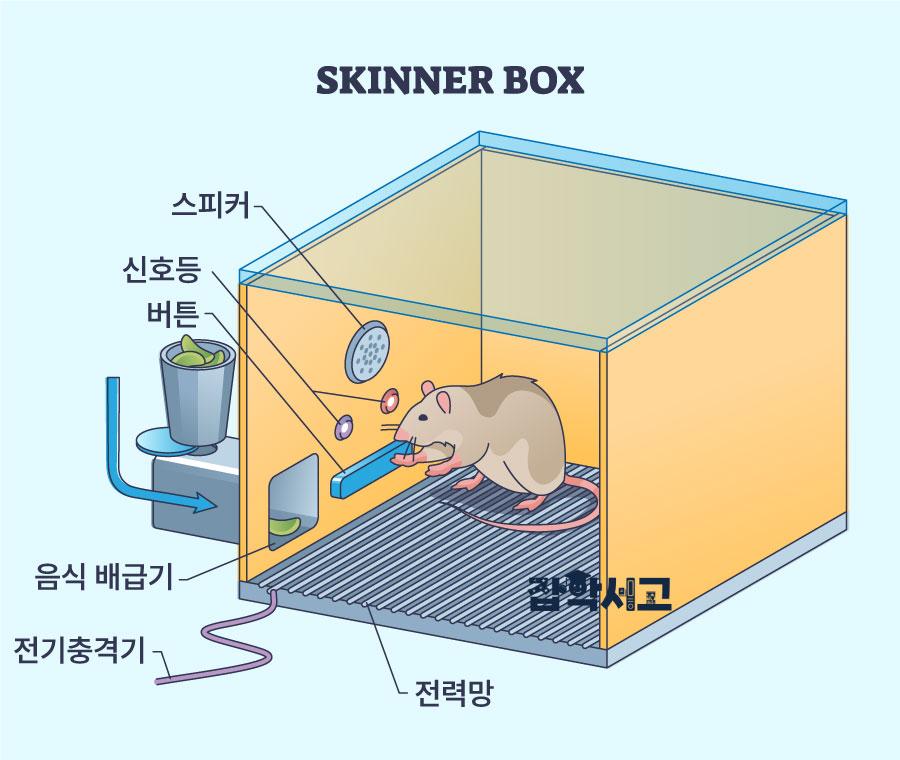 A Representative Experiment in Operant Conditioning: The Skinner Box Experiment
Operant conditioning is a form of learning that regulates conscious behavior and involves a process in which the frequency of a behavior increases or decreases depending on its consequences. In operant conditioning, rewards or punishments are used to strengthen or weaken specific behaviors.
The Skinner box experiment can serve as an example of an operant conditioning experiment for comparison with classical conditioning.
What Is the Skinner Box Experiment?
In an experiment using rats, the psychologist B.F. Skinner demonstrated operant conditioning by providing food whenever a rat pressed a lever, thereby reinforcing the lever-pressing behavior. In this experiment, the rat received a reward when it pressed the lever, so its lever-pressing behavior increased.
Conditioning plays an important role in understanding the relationship between specific stimuli and responses and in predicting and regulating behavior on that basis. These principles of conditioning are applied in various fields, including education, behavior modification therapy, and animal training.
Extinction
 Extinction Is Important When There Are Memories You Want to Eliminate
Extinction is an important concept in learning theory and refers to the process by which a previously learned response weakens or disappears over time. Extinction is used particularly to eliminate conditioned responses.
It can be applied to both classical conditioning and operant conditioning and is used to eliminate responses when they are no longer useful or appropriate.
Extinction in Classical Conditioning
Returning to Pavlov's dog experiment mentioned earlier, the sound of the bell was associated with food, and the dog responded to the bell by salivating.
However, if the bell is rung repeatedly without presenting food, the dog eventually stops responding to the bell by salivating. This process is called extinction.
Extinction in Operant Conditioning
In the Skinner box experiment, the rat received food every time it pressed the lever, which reinforced its lever-pressing behavior.
However, if food is not provided when the rat presses the lever, the rat eventually presses the lever less and less. This reduction in behavior is also an example of extinction.
Extinction in Behavior Therapy
In behavior therapy, extinction techniques can be used to reduce specific fear or anxiety responses.
For example, this may involve exposing a subject displaying a fear response to a fear-inducing stimulus while ensuring that a frightening outcome does not occur, thereby weakening the fear response.
Extinction is important for weakening or eliminating learned responses, allowing the subject to learn more adaptive and appropriate behaviors. It also helps modify unnecessary or undesirable behaviors and learn new or desirable behaviors.
Punishment
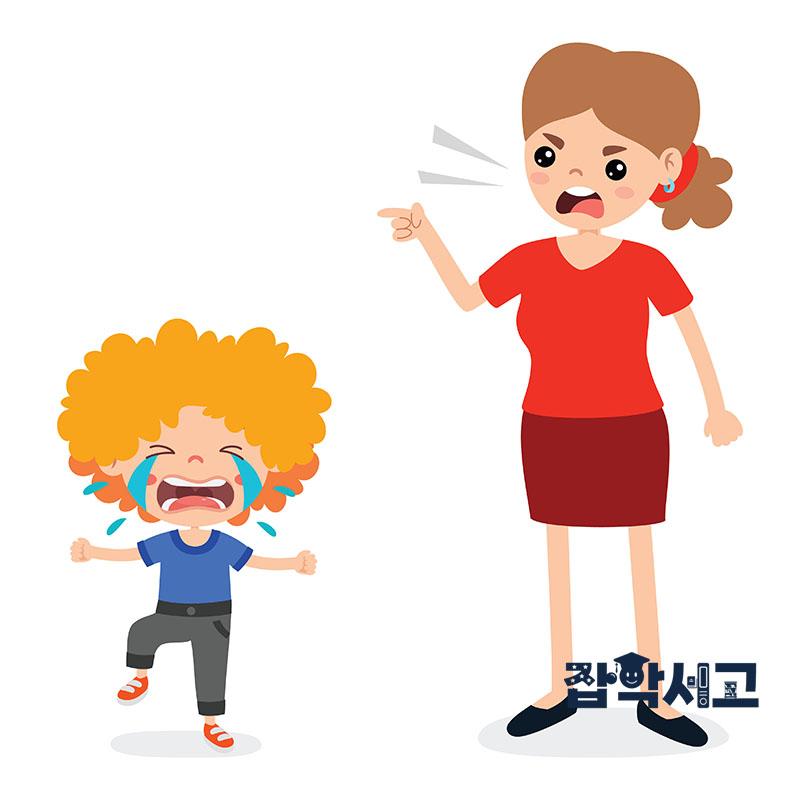 Punishment to Suppress Specific Behaviors
Punishment is a learning process used to decrease or suppress behavior. Within the framework of operant conditioning, punishment reduces the frequency of a specific behavior through negative consequences.
Punishment is broadly divided into two types: positive punishment (positive punishment) and negative punishment (negative punishment).
Positive Punishment
Positive punishment reduces an undesirable behavior by adding an unpleasant stimulus when that behavior occurs.
As an example of positive punishment, if a young child ignores their parents' warnings and continues to use bad language, the parents may impose a penalty on the child. In this way, the child learns that using bad language leads to unpleasant consequences and may reduce that behavior.
Negative Punishment
Negative punishment reduces an undesirable behavior by removing a pleasurable stimulus when that behavior occurs.
As an example of negative punishment, if a teenager has not cleaned their room before going out with friends, their parents may confiscate the teenager's mobile phone. In this way, the teenager learns that failing to clean their room means losing something they like (their mobile phone), making them more likely to clean their room next time.
Punishment is effective in reducing the frequency of a specific behavior, but excessive punishment can cause anxiety, fear, or resistance, and providing a positive learning environment may be more desirable. Therefore, punishment should be carefully considered and applied, and, when possible, it is advisable to use other learning strategies such as reinforcement (reinforcement).
Reinforcement
 Praise Can Make Even a Whale Dance.
Reinforcement is a learning process that makes a specific behavior occur more frequently. Reinforcement is used to increase the frequency of a desirable behavior by providing positive consequences for that behavior.
Like punishment, reinforcement is divided into two types: positive reinforcement (positive reinforcement) and negative reinforcement (negative reinforcement).
Positive Reinforcement
Positive reinforcement strengthens a desirable behavior by providing a positive stimulus when that behavior is displayed.
As an example of positive reinforcement, if a teacher promises a student a reward for receiving a high score on a test, the student is more likely to study harder and receive a high score. Here, the reward acts as a positive stimulus that reinforces the student's studying behavior.
Negative Reinforcement
Negative reinforcement strengthens a desirable behavior by removing an unpleasant stimulus when that behavior is displayed.
As an example of negative reinforcement, when you have a headache, taking medication can relieve it. Because taking medication reduces the unpleasant headache, the behavior of taking medication is reinforced whenever a headache occurs in the future.
Reinforcement plays an important role in increasing the frequency of behavior and helps individuals or animals learn and maintain desirable behaviors.
Reinforcement is also used in various fields, including education, behavior therapy, animal training, and organizational management, making it possible to encourage specific behaviors, learn new skills, and improve performance.
We have now examined the concepts and principles of learning addressed in psychology (acquisition, conditioning, extinction, punishment, and reinforcement). The various principles and concepts of learning profoundly influence our daily lives and learning experiences.
Research on learning in psychology plays an important role in various fields, including education, therapy, and organizational management, and through this research, we will be able to gain insights into how we can learn more effectively and improve our behavior and thinking.