
This time, I will look at non-probability sampling, a topic covered in statistics. Non-probability sampling is one of the various methods used to collect data in statistics.
Non-probability sampling is the process of selecting a sample that represents a particular group in a survey or experiment, and this kind of sampling uses non-probability sampling methods rather than probabilistic ones.
These methods are distinguished from probability sampling, and non-probability sampling is generally used with convenience and cost-effectiveness in mind.
In this resource, we will look at the concept and types of non-probability sampling, as well as the strengths and weaknesses of each.
The Concept and Types of Non-Probability Sampling
 The concept and types of non-probability sampling
Non-probability sampling is one of the methods for selecting part of a population as a sample for statistical analysis.
Unlike probability sampling, which selects samples probabilistically, this method means selecting samples based on the researcher's judgment or convenience.
It has the advantage of allowing an appropriate sample to be selected in consideration of the characteristics of the target group.
Non-probability sampling can be divided into various types, including convenience sampling, judgment (purposive) sampling, quota sampling, volunteer sampling, and snowball sampling.
Convenience Sampling
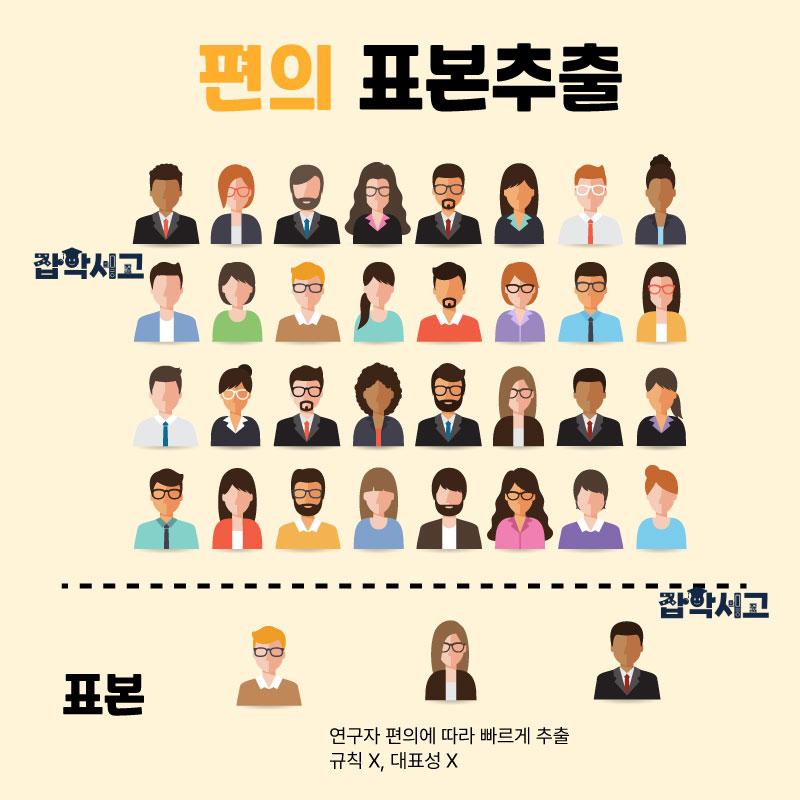 Selection focused on easily accessible subjects
Convenience sampling is the simplest non-probability sampling method, in which the researcher selects the sample in whatever way is convenient.
For example, choosing people who are easy to reach through an online survey and using them as respondents for a study is one example of convenience sampling.
This method makes the sampling process quick and easy, but caution is needed because the sample may be less representative.
Judgment (Purposive) Sampling
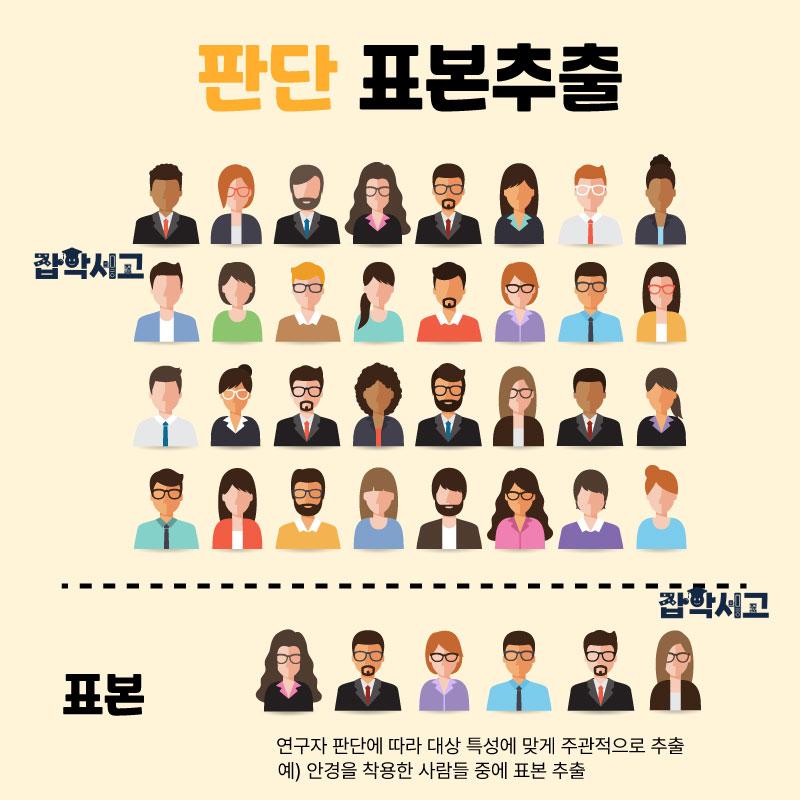 Subjective selection based on characteristics
Judgment sampling is a method of selecting a sample based on the researcher's subjective judgment. Its defining feature is that the researcher selects the sample by taking specific factors or characteristics into account.
The researcher considers the characteristics of the target group and selects a sample that fits the purpose of the study. This method requires the researcher's expert judgment, and by taking the characteristics of the target group into account it can try to improve representativeness to some degree, but it cannot guarantee representativeness the way probability sampling can.
For example, a researcher drawing a sample from a particular group in order to study that group's characteristics is one example of judgment sampling. The image above shows a sample selected on the assumption that the survey targets people who wear glasses.
This method also requires caution, because the sample is selected according to the researcher's subjective view.
Quota Sampling
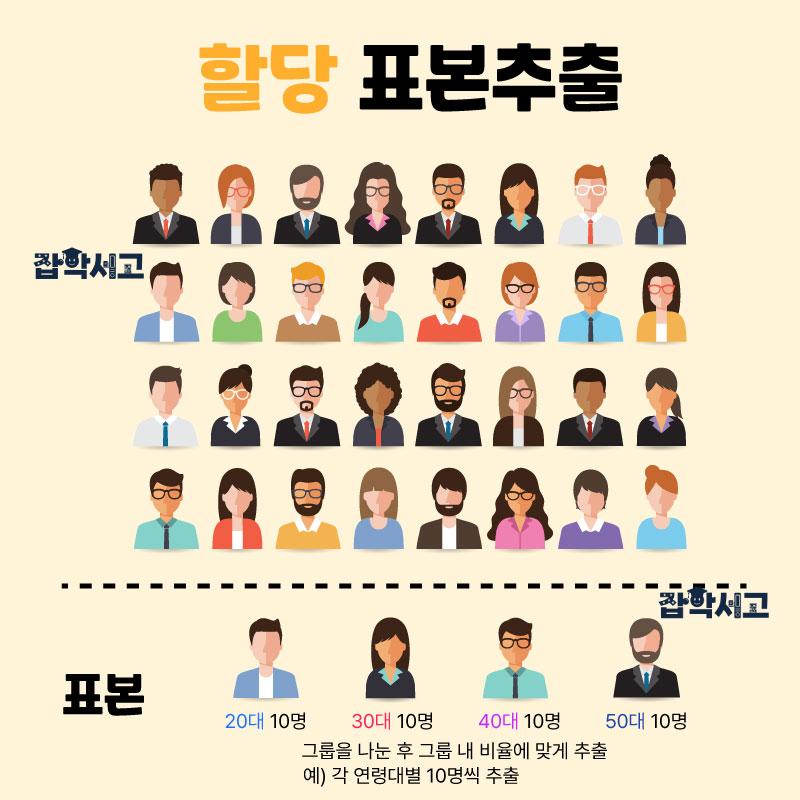 Drawing a fixed proportion from each group
Quota sampling is a method of dividing the population into similar groups and then drawing a sample from each group. Groups with particular characteristics are distinguished, and a sample is selected from each group in proportion.
Because this method selects the sample in consideration of the characteristics of the population, it can try to improve representativeness to some degree, but it cannot guarantee representativeness the way probability sampling can.
For example, dividing the population by age and then drawing a sample from each age group is one case of quota sampling.
Volunteer Sampling
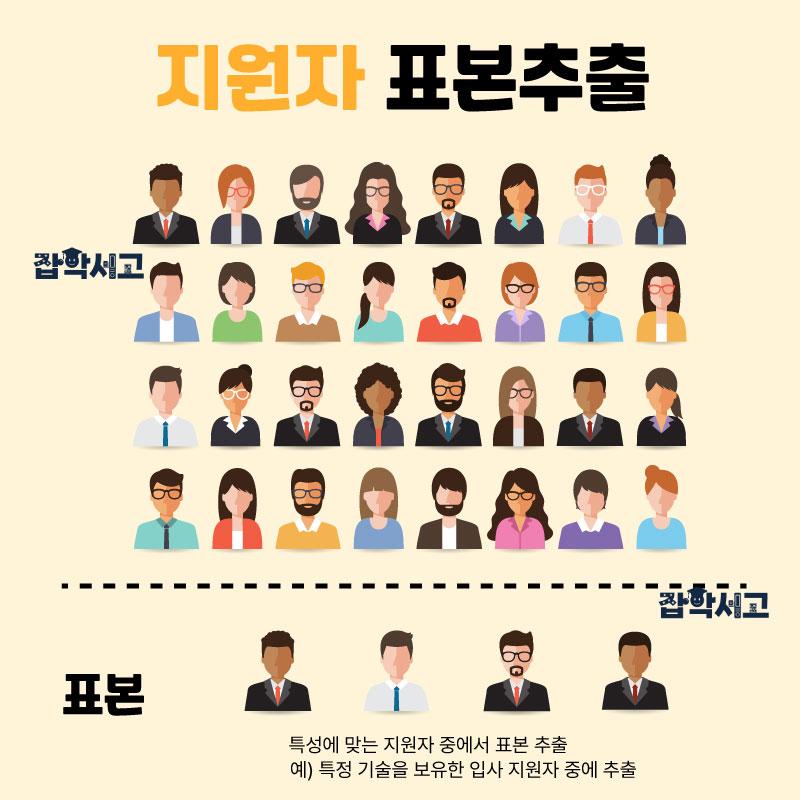 Drawing from people who volunteered on their own
Volunteer sampling is a sampling method mainly used when the study subjects are applicants or volunteers.
For example, drawing a sample from among applicants who applied for a particular position in a hiring process falls into this category.
The example image above shows a case in which Company A, planning to hire in order to form a new project team, wants to select only applicants who have a particular skill and interview them.
This method has the advantage of making it relatively easy to gather a sample that fits the purpose of the survey or experiment, but because the sample consists only of people who volunteered, it cannot guarantee representativeness the way probability sampling can.
However, it may fail to reflect the diversity of the applicants, and as a result there is a chance of missing applicants who have important characteristics or abilities that were left out.
Snowball Sampling
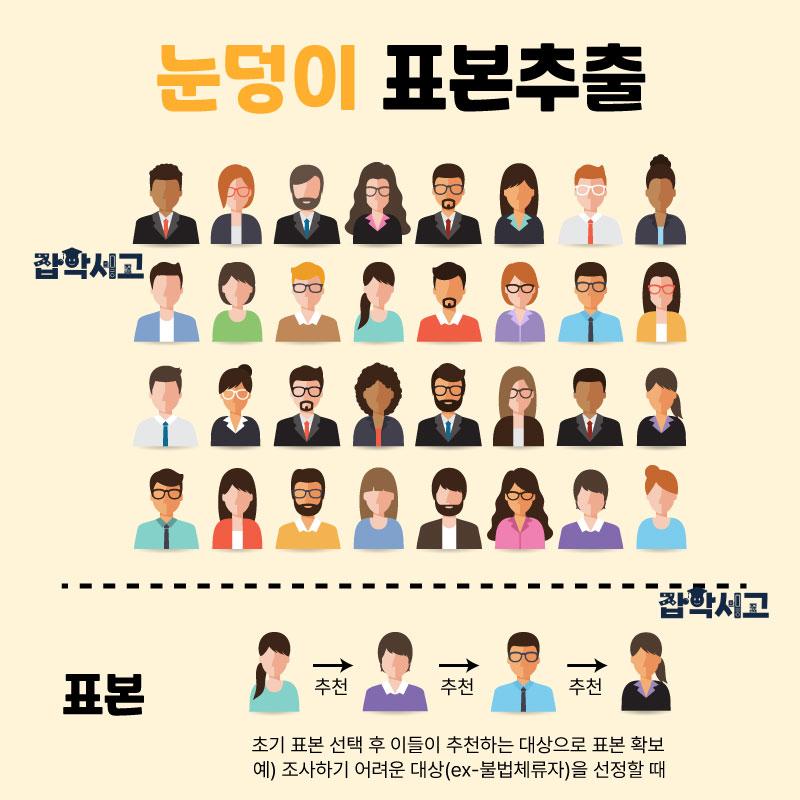 Useful for selecting hard-to-reach subjects
Snowball sampling is a method of selecting an initial sample and then obtaining additional samples through that sample.
This method is generally used when a particular group within the population is small. It is a non-probability sampling method that is especially useful when the study subjects are hidden or hard to reach.
For example, when conducting a survey of undocumented immigrants, selecting an initial sample from among members of a particular group and then obtaining additional samples through their referrals can be given as an example of snowball sampling.
That concludes our look at the concept and types of non-probability sampling. Non-probability sampling is one of the important methods used to collect data in statistics.
In this resource, we looked at the various types of non-probability sampling, including convenience sampling, judgment sampling, quota sampling, volunteer sampling, and snowball sampling.
Each method has the advantage of allowing an appropriate sample to be selected in consideration of the characteristics of the target group. However, convenience sampling selects the sample based on accessibility and convenience, and judgment sampling based on the researcher's subjective judgment, so it is difficult to guarantee that the sample is representative.
Therefore, it is important to choose a suitable non-probability sampling method in consideration of the purpose of the study and the characteristics of the target group. These non-probability sampling methods can be a great help in collecting the appropriate data needed for statistical analysis.
<Useful Related Resources>
 An Easy Guide to Probability Sampling (Read more)