Statistics has become an important tool for solving a wide range of problems. In particular, the null hypothesis and the alternative hypothesis are core elements of statistical analysis, playing an essential role in clearly structuring research questions and drawing reliable conclusions from data.
In this article, we take an in-depth look at the null and alternative hypotheses, two key concepts in statistics, and examine how they are applied in real-world data analysis.
Statistics Overview: Definitions and Importance of the Null and Alternative Hypotheses
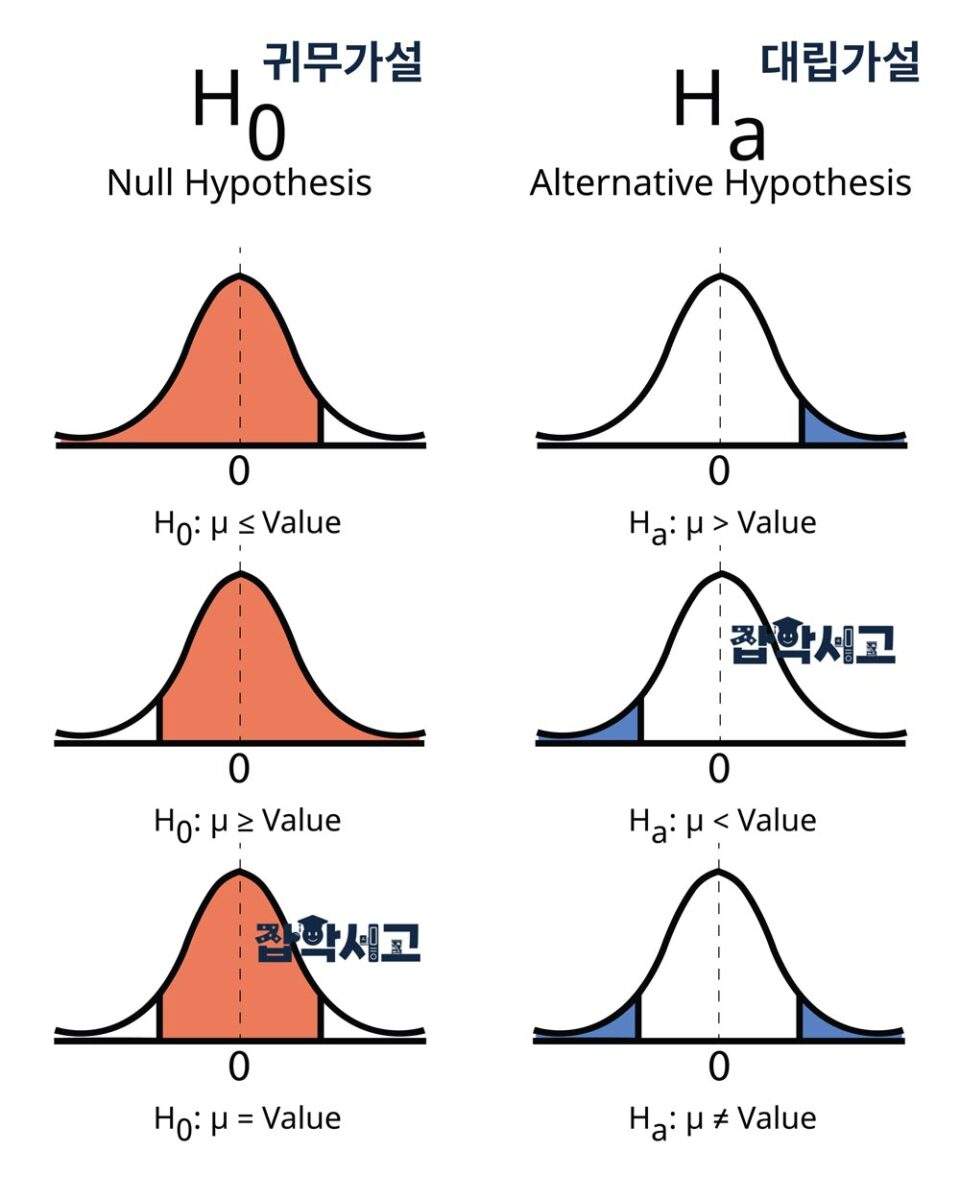
The null hypothesis (H0) and the alternative hypothesis (H1) are among the most basic and important concepts in statistics, and they play a key role in clearly setting the direction and purpose of a study. The null hypothesis generally assumes "no change" or "no effect" and is the default hypothesis a researcher sets up first. It serves as the benchmark for comparison with the alternative hypothesis, the one the researcher wants to test. For example, the hypothesis that a new drug is no more effective than an existing drug could be the null hypothesis.
The alternative hypothesis, on the other hand, is the opposite of the null hypothesis: it is the claim the researcher hopes to support. It is what the researcher actually wants to test, such as the hypothesis that a new drug is more effective than an existing one. For the alternative hypothesis to be accepted, there must be strong statistical evidence sufficient to reject the null hypothesis.
The role of the null and alternative hypotheses in research
The null and alternative hypotheses provide the basic framework of a study and the starting point for data analysis and interpretation. In statistical testing, the null hypothesis takes a conservative position and is retained until there is enough evidence to reject it. This works as a safeguard against drawing false conclusions. The alternative hypothesis, by contrast, is the hypothesis the researcher actually wants to test, so supporting it requires sufficient data and appropriate statistical methods.
The importance of statistical power and significance level
Statistical power is the probability of correctly rejecting the null hypothesis when it is false, and the significance level set by the researcher is the maximum probability of error allowed when rejecting the null hypothesis. These two concepts are very important in statistical tests aimed at supporting the alternative hypothesis. The higher the power, the more likely the researcher is to gather enough evidence to support the alternative hypothesis.
The process of setting up the null and alternative hypotheses
Setting up the null and alternative hypotheses is an important step that determines the direction of a study. In this process, researchers must clearly understand the problem they want to address and formulate precise hypotheses based on that understanding. The clearer the hypotheses, the more reliable and valid the research results. Researchers therefore need a careful and systematic approach to formulating hypotheses.
Application in real data analysis
The null and alternative hypotheses are not merely theoretical concepts; they are used frequently in actual data analysis. Through these hypotheses, researchers can judge whether their research questions are supported by the data. This is at the heart of the scientific method and essential to making data-driven decisions.
The null and alternative hypotheses in research and papers
Finally, the null and alternative hypotheses also play an important role when writing research reports or papers. By clearly distinguishing the two and systematically presenting analysis results based on them, researchers can make their work more credible. Clear hypotheses and the analysis that follows from them strengthen the logical structure of a study and help convey the validity of its results effectively to readers.
In this way, the null and alternative hypotheses are indispensable elements of statistical analysis and important tools that help researchers draw reliable conclusions from data.
Basics of Hypothesis Testing: How to Set Up the Null and Alternative Hypotheses
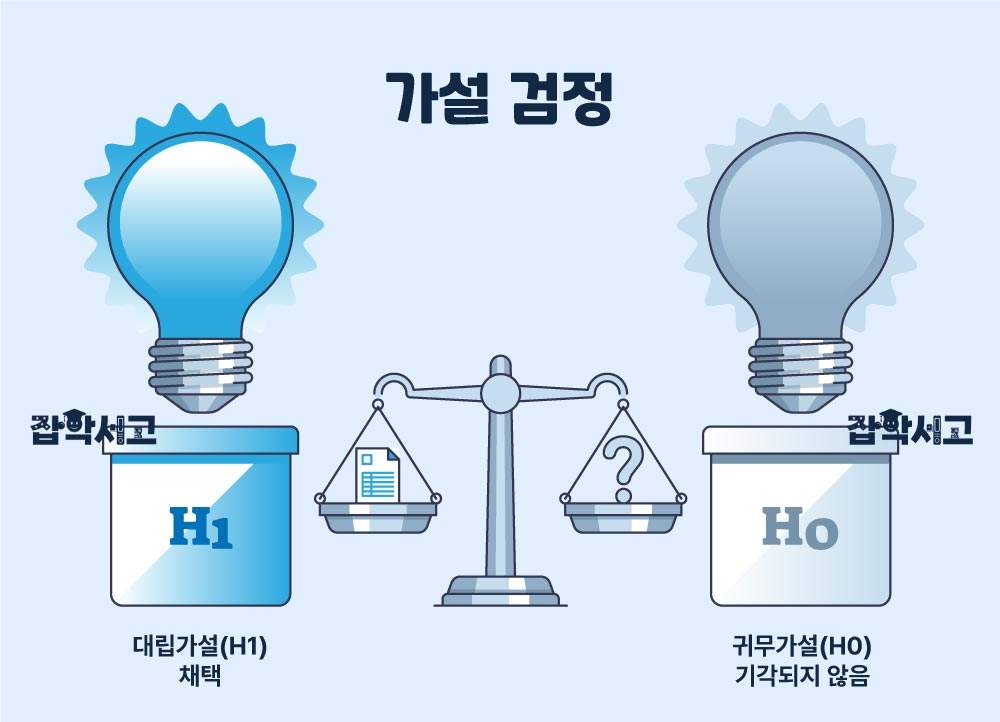
Hypothesis testing is a statistical process for determining whether a hypothesis set by a researcher is supported by data. The most important first step in this process is setting up the null and alternative hypotheses. The null hypothesis (H0) usually states "no change" or "no effect," meaning the default state that appears when there is no experimental treatment or change. For example, the hypothesis that a particular education program has no effect on students' grades could be set as the null hypothesis.
The role and formulation of the alternative hypothesis
The alternative hypothesis (H1) is the claim opposite to the null hypothesis and asserts that a particular change or effect exists. For example, when hypothesizing that a new education program improves students' grades, the null hypothesis is "The education program has no effect on grades," and the alternative hypothesis is "The education program has a positive effect on grades." The alternative hypothesis is the claim the researcher actually wants to test, and supporting it requires sufficient statistical evidence.
Principles of hypothesis formulation
When formulating hypotheses, researchers should consider not only their own subjective judgment but also existing research findings and the theoretical background. This is important for making the hypotheses more valid and ensuring the reliability of the analysis results. When a certain effect has been verified in previous research or there is a sufficient theoretical basis, more specific and clearer hypotheses can be built on it.
Setting clear, measurable hypotheses
Hypotheses should be stated in a clear and measurable form, which makes it possible to test them through statistical analysis. For example, rather than the hypothesis "Students' grades will improve," a specific and measurable hypothesis such as "Students' average grades will rise by at least 5 points after taking part in the education program" is more appropriate. Clear hypotheses make research more reliable and ensure accurate data analysis.
Collecting data and choosing analysis methods to test hypotheses
Once the hypotheses are set, researchers need to collect data to test them and choose an appropriate statistical analysis method. Data collection is a core element of research, and the quality and quantity of the data collected directly affect the reliability of the results. Choosing the right statistical method is also important, as it is essential for accurately testing the hypotheses and drawing correct conclusions.
The importance of significance level and power
The results of a hypothesis test are interpreted through two important statistical concepts: the significance level and power. The significance level is the maximum probability of error the researcher accepts when rejecting the null hypothesis, and it is usually set at 5%. Power is the probability of correctly rejecting the null hypothesis when it is false, and it is an important criterion for assessing whether the researcher can gather enough evidence to support the alternative hypothesis.
Hypothesis testing is an essential process in research, and the setup of the null and alternative hypotheses is a key factor that determines a study's direction and the reliability of its results. Setting clear, measurable hypotheses, collecting appropriate data based on them, and verifying the results through statistical analysis must all be organically connected. Throughout this process, researchers should interpret test results in light of the significance level, power, and other factors to make their research more reliable and valid.
Statistical Power: Interpreting and Using the Null and Alternative Hypotheses
Overview of statistical power
Statistical power is the ability to reject the null hypothesis when the alternative hypothesis set by the researcher is true. It is a very important concept in statistical analysis and plays a key role in evaluating the reliability and validity of research results. Power is closely related to Type I and Type II errors. A Type I error is wrongly rejecting the null hypothesis when it is true, and a Type II error is failing to reject the null hypothesis when the alternative hypothesis is true.
Factors that determine power
Power is determined mainly by sample size, significance level, and effect size. The larger the sample size or the higher the significance level, the greater the power. This suggests that researchers should choose an appropriate sample size and decide on the significance level carefully in order to secure sufficient power. For example, if the sample is too small, power drops and the chance of failing to detect a true alternative hypothesis rises, which can undermine the reliability of the study.
Interpreting and using power
Power also plays an important role in interpreting research results. High power increases the chance of detecting a true alternative hypothesis, which contributes to the reliability of the research. Researchers should therefore take power fully into account when planning data collection and analysis. For example, if a large effect size is expected, sufficient power can be achieved even with a relatively small sample and a low significance level, but if the effect size is small, a larger sample may be needed.
Power and the generalizability of research results
Power also affects how well research results can be generalized. A study with low power is more likely to miss a true alternative hypothesis, which can mean failing to find an effect that actually exists. This can seriously undermine the reliability of the results and lead to wrong conclusions. Researchers should therefore plan their sample size and study design carefully to secure sufficient power.
Ways to increase power
The most common way to increase power is to increase the sample size. A larger sample makes the statistical test more sensitive, so a true alternative hypothesis can be detected more easily. Of course, this may increase the cost and time needed to collect data, but it plays an important role in making the results more reliable. Predicting the effect size in advance and setting hypotheses based on it is another important way to increase power. This lets researchers carry out more powerful statistical analyses.
Why power matters
Power is an important criterion for researchers drawing reliable conclusions through statistical testing. A study with high power can draw reliable conclusions from its results, which can contribute to practical decision-making and policymaking. Researchers should therefore plan and carry out their study design and data analysis with power fully in mind, which allows them to maximize the reliability and validity of their research.
Practical Examples: Data Analysis Using the Null and Alternative Hypotheses

In actual data analysis, the null and alternative hypotheses play an important role in setting the direction of a study. Concrete examples show how hypotheses are formulated and tested in various fields.
Example 1: Testing the effectiveness of a diet program
Suppose a researcher wants to test the effectiveness of a new diet program. The null hypothesis is "The diet program has no effect on weight loss," and the alternative hypothesis is "The diet program has a positive effect on weight loss."
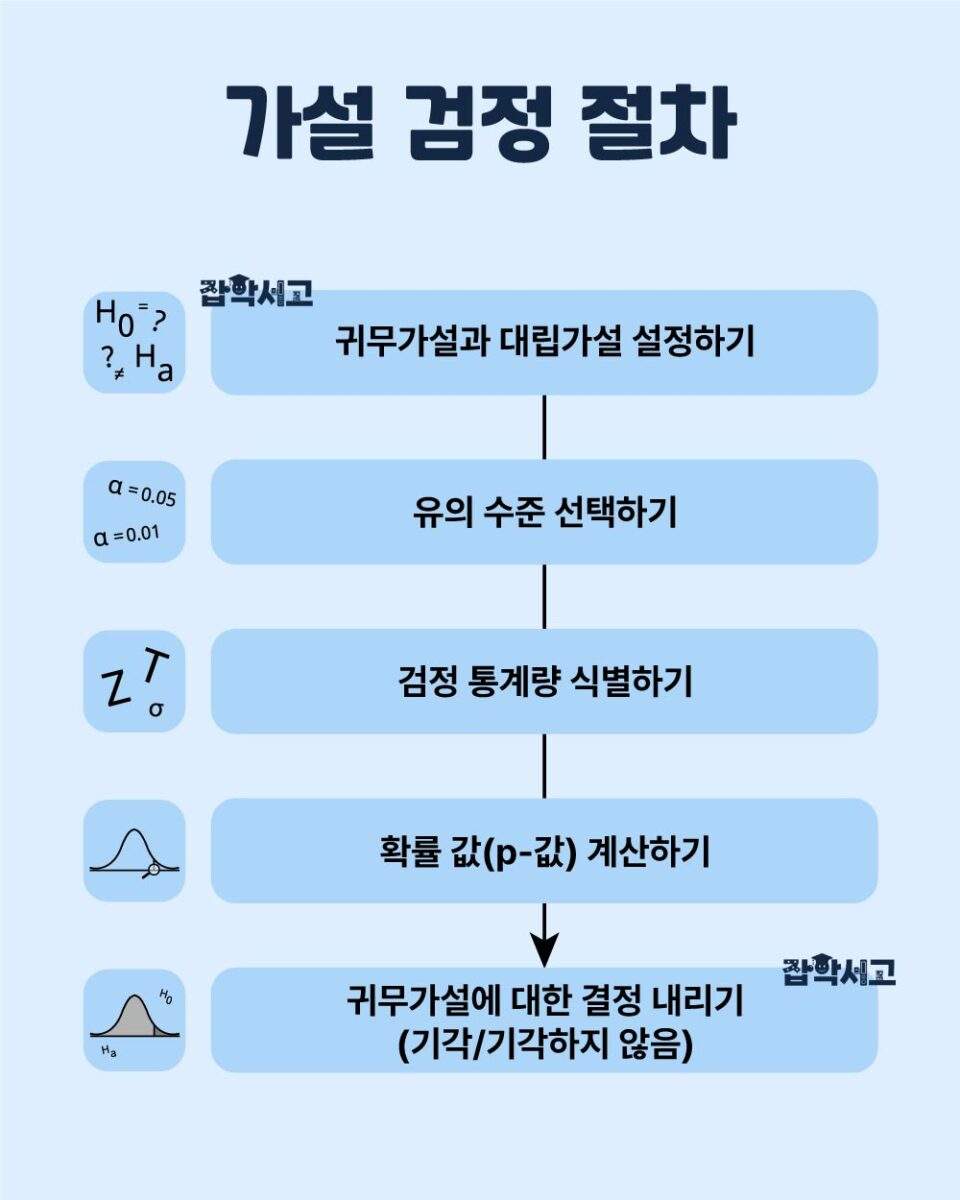
The researcher first collects a sufficient sample and analyzes the data. A t-test can be used to compare the average change in weight between program participants and non-participants. If there are several groups, analysis of variance (ANOVA) can be used to analyze the differences between them. If the analysis shows a p-value smaller than the significance level (e.g., p < 0.05), the null hypothesis can be rejected and the alternative hypothesis accepted. This leads to the conclusion that the diet program has a positive effect on weight loss.
On the other hand, if the p-value is larger than the significance level, the null hypothesis cannot be rejected, which means we cannot conclude that the diet program has a significant effect on weight loss. This process is essential for researchers to draw objective, data-based conclusions.
Example 2: Testing the effectiveness of a marketing strategy
As another example, suppose a company wants to test the effectiveness of a new marketing strategy. The null hypothesis is "The new marketing strategy has no effect on sales," and the alternative hypothesis is "The new marketing strategy increases sales."
The researcher can use an A/B test to analyze the difference in sales between two groups. An A/B test compares effects by applying the existing marketing strategy to one group and the new marketing strategy to the other. If sales in the group exposed to the new strategy increased significantly, this provides grounds for rejecting the null hypothesis and accepting the alternative hypothesis. The company then has a basis for formally adopting the new marketing strategy.
Example 3: Testing the effectiveness of an education program
In education, too, the null and alternative hypotheses are used to systematically evaluate the effectiveness of education programs. For example, when testing the effect of a new teaching method on students' academic achievement, the null hypothesis is "The new teaching method has no effect on academic achievement," and the alternative hypothesis is "The new teaching method improves academic achievement."
The researcher can set up experimental and control groups, collect various indicators of educational outcomes, and then analyze the difference between the two groups through statistical testing. If academic achievement in the experimental group rose significantly, this provides grounds for rejecting the null hypothesis and accepting the alternative hypothesis. In this way, the effectiveness of the new teaching method can be demonstrated objectively.
Putting the null and alternative hypotheses into practice
As these examples show, the null and alternative hypotheses play an important role in real research and data analysis, helping researchers draw clear and reliable conclusions from data. Researchers can choose a statistical method suited to each case and make practical decisions based on the results. Formulating and testing the null and alternative hypotheses is a fundamental process of scientific research and an important tool that makes rational, evidence-based judgments possible.
In this article, we have taken an in-depth look at the null and alternative hypotheses, core concepts in statistics. They form the foundation of statistical analysis and allow researchers to draw reliable conclusions from data.
In hypothesis testing, setting up the null and alternative hypotheses, understanding the importance of statistical power, and applying them to real data analysis are all essential to making research more reliable and valid. Researchers should therefore master these concepts and use them to conduct systematic and reliable research.