Modern society is experiencing rapid technological advances, and wearable devices stand out as an innovative technology bringing significant changes to various aspects of our lives. Beyond being simple accessories, wearable devices are revolutionizing everyday life in fields such as health management, entertainment, and productivity.
This material examines the definition of wearable devices, current market trends, their various applications, major technological innovations and advances, and their impact on future society in detail.
Definition of Wearable Devices
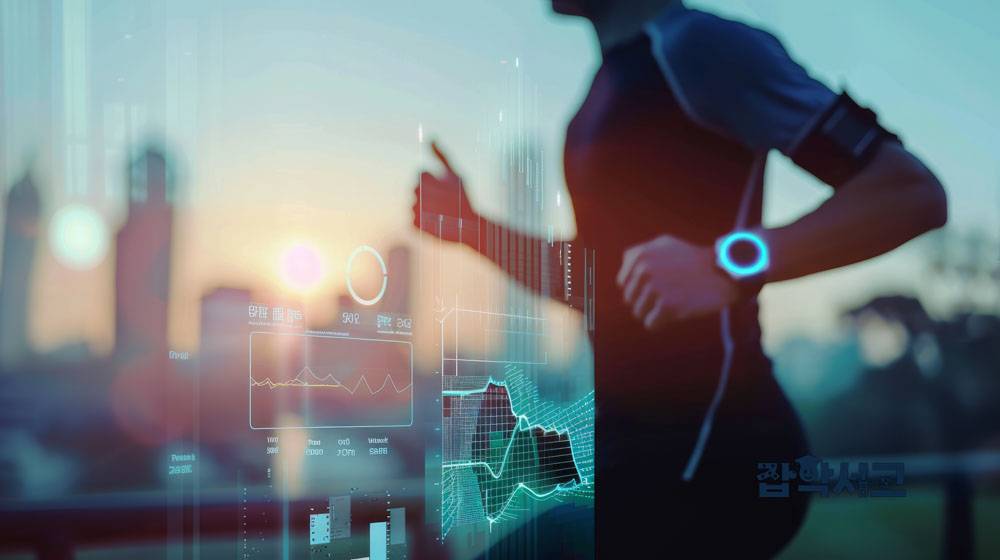 What Are Wearable Devices?
Wearable devices are electronic devices that users can wear on their bodies. These devices incorporate sensors, processors, communication modules, and other components to provide various functions, and they generally connect to smartphones to collect and analyze data. Initially, wrist-worn fitness trackers were the most representative examples, but the category has now expanded to include smartwatches, smart rings, smart glasses, and VR headsets.
Current Market Trends
The wearable device market is growing rapidly, with its size increasing substantially each year. According to reports from market research firms, the wearable device market is expected to continue expanding at double-digit growth rates over the next few years. In particular, increasing demand in health management and fitness is serving as a major driver of growth.
The Expanding User Base of Wearable Devices
Wearable device users were initially predominantly young people, but the user base has recently expanded to include middle-aged and older adults. This reflects growing interest across various age groups because wearable devices offer practical benefits such as health monitoring. In addition, more companies are introducing wearable devices to help manage their employees' health.
Market Competition and Technological Innovation
Market competition is also becoming increasingly intense. Global IT companies such as Apple, Samsung, and Huawei are leading the market, while various startups are also challenging it by launching innovative products. This competition between companies is accelerating technological innovation and bringing consumers better products and services.
Industry-Specific Applications and Business Opportunities for Wearable Devices
Advances in wearable devices are creating new business opportunities across various industries. For example, remote patient monitoring services using wearable devices are gaining momentum in the healthcare industry, while the sports industry uses them as tools to analyze and improve athletes' performance.
Overall, current market trends suggest that wearable devices will continue to grow and that their applications across various fields will expand further. Through technological innovation, wearable devices will open the way to an even more remarkable future, enabling us to enjoy healthier, smarter lives.
Diverse Applications of Wearables
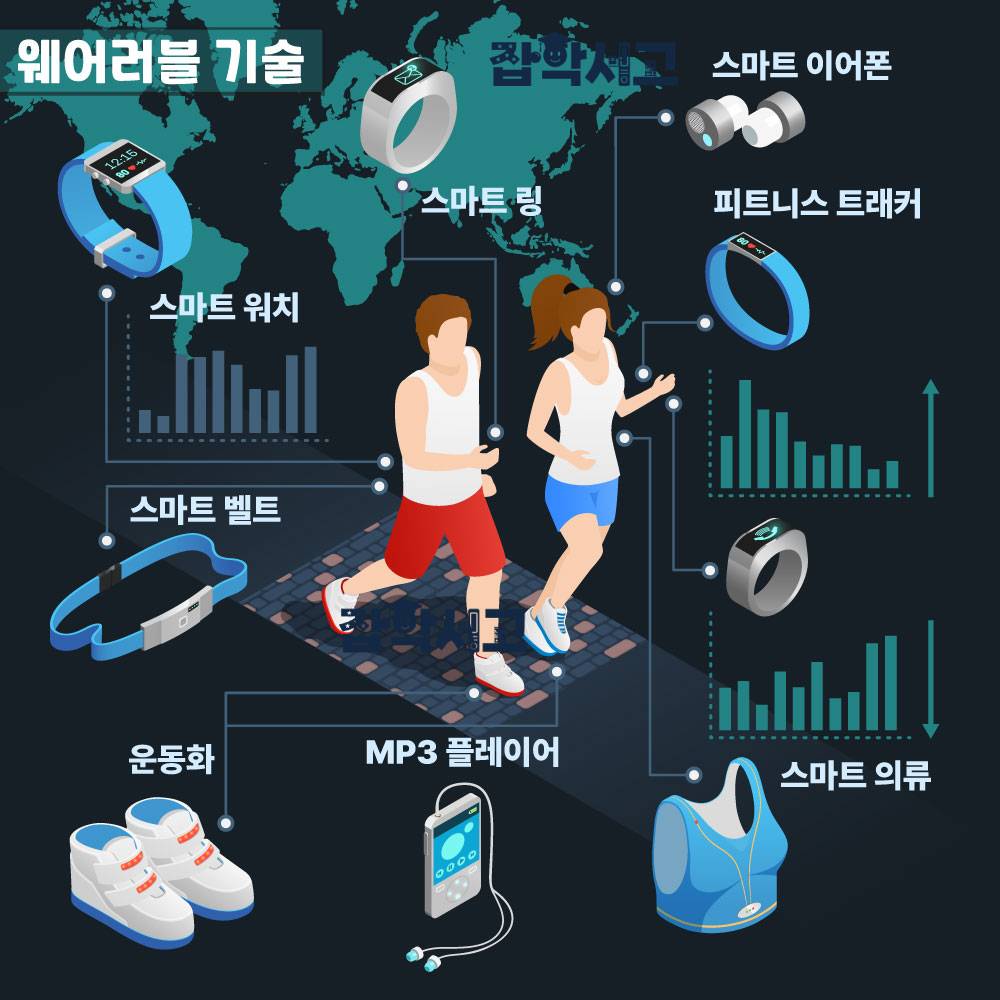 Diverse Applications of Wearable Technology
Wearable Applications in Health Management
The value of wearable devices is particularly evident in health management. Healthcare wearables assess users' health by monitoring their heart rate, blood pressure, sleep patterns, activity levels, and other measures in real time. This allows users to understand their health more accurately and quickly obtain advice from medical professionals when needed. For example, the Apple Watch's ECG function detects heart abnormalities, helping users take medical action early.
Fitness Tracking and Greater Exercise Efficiency
Wearable devices are also widely used for fitness tracking. These devices record users' exercise levels, calories burned, step counts, and other measures to help them achieve their goals. This is a great help in understanding one's exercise status and developing more efficient exercise plans, even without a personal trainer. Fitness trackers released by various brands, including Nike and Garmin, are highly popular.
Innovative Changes in Entertainment
Wearable devices are also bringing innovative changes to entertainment. Wearable devices that combine VR (virtual reality) and AR (augmented reality) technologies provide users with highly immersive experiences. For example, wearing a VR headset can make users feel as though they have entered the world of a game, while AR glasses can overlay virtual information onto the real world in real time. This enables new forms of content consumption in various fields, including games, films, and education.
Wearable Devices for Improving Productivity
Wearable devices are also contributing to improved productivity. Smart glasses increase work efficiency by providing necessary information within workers' field of view in real time. For example, workers wearing smart glasses in a logistics warehouse can check the location of the items they need without using their hands. In addition, smartwatches make routine work easier by offering functions such as email, messaging, and schedule management.
The Convergence of Fashion and Wearables
Wearable devices are also closely connected to fashion. Many users view wearable devices as fashion items, which has highlighted the importance of design. Accordingly, products offering a variety of designs and color options are being released, and collaborations with well-known fashion brands are also taking place actively.
Wearable Applications for Safety
Finally, wearable devices are also widely used for safety. They ensure the safety of children, the elderly, and the infirm through location tracking and offer functions that allow users to quickly request rescue in emergencies. This provides great reassurance to users and their families and is particularly useful in environments with a high risk of accidents.
Major Technological Innovations and Advances in Wearable Devices
 Innovative Advances in Wearable Technology
Innovations in Wearable Device Hardware
Technological innovation in wearable devices is taking place primarily in hardware and software. In hardware, advances in sensor technology play the largest role. New sensors achieve greater accuracy and lower power consumption in smaller sizes, enabling wearable devices to become more diverse and perform better. For example, optical sensors are used to measure heart rate, while accelerometers and gyroscopes analyze users' physical activity in detail.
Advances in Battery Technology and Low Power Consumption
Advances in battery technology also play an important role in improving wearable device performance. Because wearable devices are generally small, their battery capacity is limited. Technologies that improve battery efficiency and achieve low power consumption are therefore essential. Recently, high-density batteries and processors that maximize energy efficiency have been developed, dramatically extending the operating time of wearable devices.
Software Innovation: Introducing Artificial Intelligence and Machine Learning
In software, artificial intelligence (AI) and machine learning (ML) are bringing revolutionary advances to the capabilities of wearable devices. AI analyzes collected data to provide users with more personalized information, while ML algorithms learn users' patterns to deliver more accurate predictions and advice. For example, smartwatches analyze users' exercise patterns to recommend suitable exercise times and analyze their sleep patterns to offer advice on improving sleep quality.
Integrating the Internet of Things (IoT) with Wearables
Wearable devices are generating greater synergy by integrating with Internet of Things (IoT) technology. Thanks to IoT technology, wearable devices connect with other smart devices to share data and provide an integrated user experience. For example, wearable devices connected to smart home systems offer functions such as automatically turning on lights or adjusting the temperature when users enter their homes.
Security Technologies for Wearable Devices
Security technology is another important area of development for wearable devices. Security is crucial because wearable devices handle users' personal information. To address this, biometric technologies are being introduced, and data encryption is being used to prevent information leaks. For example, fingerprint and facial recognition functions are used to verify users' identities and restrict access to data.
Innovations in User Interface (UI) and User Experience (UX) Design
Finally, user interface (UI) and user experience (UX) design are also important elements of innovation in wearable devices. More intuitive, easy-to-use interfaces allow users to make use of device functions more easily. For example, advances in interface technologies such as touchscreens, voice recognition, and gesture recognition are significantly improving the user experience.
These various technological innovations and advances are greatly improving the performance and user experience of wearable devices, raising expectations for the emergence of even more advanced wearable devices in the future.
Changes Wearable Devices Will Bring to Future Society
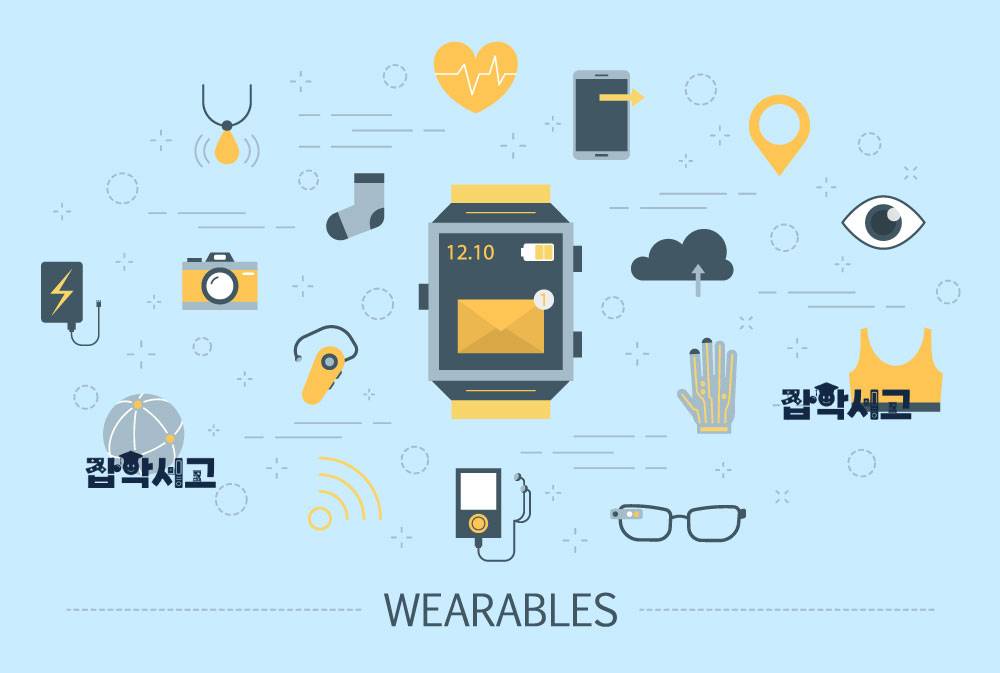 What Does the Future Hold for Wearable Devices?
Innovative Changes in Healthcare
Advances in wearable devices will bring major changes to future society. The greatest changes are expected in healthcare. Wearable devices monitor individuals' health in real time and use big data and AI to enable more sophisticated health management and disease prediction. This will greatly improve the accessibility and efficiency of medical services and increase the importance of preventive healthcare.
New Learning Experiences in Education
Wearable devices will also bring major changes to education. Educational wearable devices using VR and AR technologies provide students with highly immersive learning experiences and opportunities to develop new forms of educational content. For example, students can wear VR headsets in history classes to vividly experience important events from the past, while AR glasses in science classes will allow them to understand complex concepts visually.
New Ways of Social Interaction
Wearable devices will greatly change the way people interact socially. Wearable devices make communication between people smoother and enable new forms of social networking. For example, users can exchange messages in real time through smartwatches or participate in virtual meetings through smart glasses. This will help overcome the limitations of physical distance and build closer human relationships.
Improved Productivity and Industrial Innovation
Improved productivity is another important change that wearable devices will bring. Wearable devices will increase work efficiency and revolutionize working practices across various industries. For example, workers in factories can wear smart glasses to receive work instructions in real time, or experts in remote locations can use VR to inspect sites directly and offer advice. This will improve the safety and accuracy of work and contribute to reducing production costs.
Changes and New Trends in the Fashion Industry
Wearable devices will also have a major impact on the fashion industry. New fashion trends combining the design and functionality of wearable devices will emerge, giving consumers a wider range of choices. As well-known fashion designers introduce innovative products that incorporate technology, the concept of fashion will expand further.
Data Analysis and Personalized Experiences
Future wearable devices will be capable of collecting and analyzing more data than they can today. This will play an important role in providing personalized experiences. For example, wearable devices that offer customized services based on users' lifestyle patterns and preferences will contribute significantly to improving their quality of life.
In this way, wearable devices will revolutionize future society across various fields, and their influence will continue to expand.
Wearable devices are going beyond being simple technological tools to fundamentally change the way we live. They are driving innovative changes across various fields, from health management to entertainment, education, and improved productivity, and these changes will accelerate further in the future.
Alongside technological progress, advances in wearable devices will open the way to an even more remarkable future, enabling us to enjoy healthier, smarter, and more connected lives. To achieve this, research and development must continue, and efforts must be made to ensure that more people can enjoy the benefits of wearable devices.