Today's business environment is changing rapidly, and knowledge management (Knowledge Management, KM) is essential for maintaining competitiveness and achieving growth amid these changes. Knowledge management is a strategy that goes beyond simply managing information to systematically manage and use an organization's knowledge, promoting continuous innovation and growth.
This article aims to explore essential strategies for strengthening business competitiveness by examining the definition and importance of knowledge management, a guide to building a system, effective methods for sharing and preserving knowledge, and successful knowledge management cases.
The Definition and Importance of Knowledge Management: The Key to Business Success
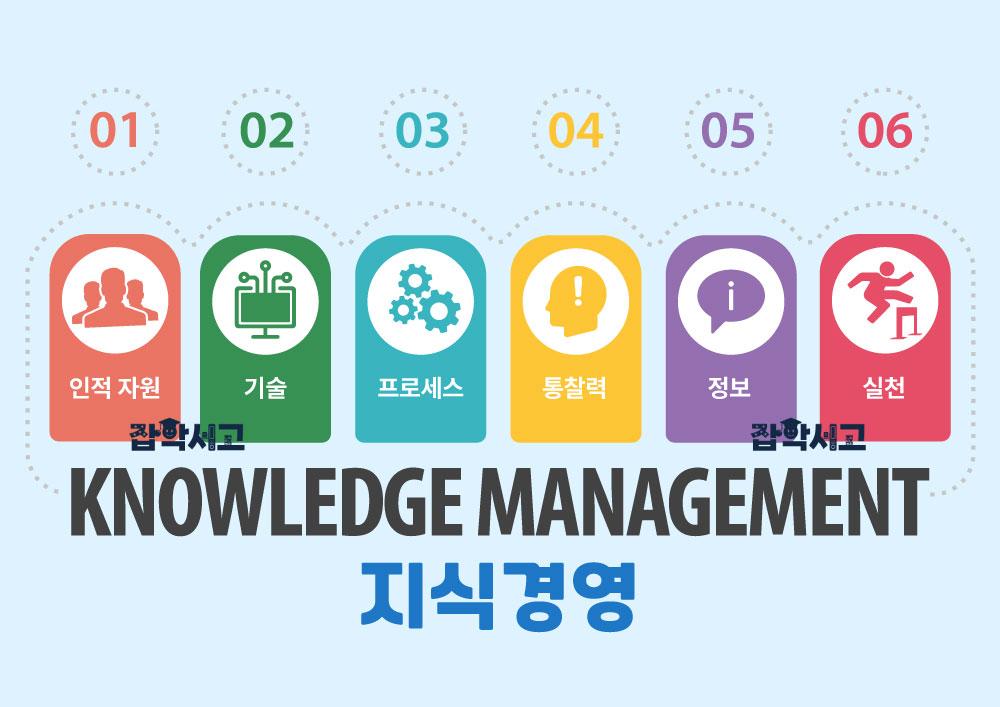 What Is Knowledge Management?
The Concept of Knowledge Management
Knowledge management is a management approach focused on achieving organizational goals by systematically managing and using knowledge within an organization. It goes beyond simply storing and managing data to encompass every process involved in creating, sharing, using, and preserving knowledge. The ultimate goal of knowledge management is to optimize knowledge within an organization to support decision-making, improve problem-solving capabilities, and promote innovation.
The Importance of Knowledge Management in Today's Business Environment
The importance of knowledge management is becoming increasingly apparent in today's business environment. Systematically managing and using knowledge within an organization is essential for responding to rapidly changing market conditions and technological advances. This plays an important role in maintaining competitiveness and seizing new opportunities. In particular, knowledge management contributes to improving organizational efficiency, reducing costs, and increasing customer satisfaction.
Success Factors in Knowledge Management
Organizational culture plays an important role in successful knowledge management. It is important to foster a culture of knowledge sharing and collaboration, which provides a foundation for members to actively exchange and use one another's knowledge. Support from technological infrastructure and systems is also essential. This makes it easier to store, retrieve, and share knowledge and enables knowledge to flow smoothly within the organization.
The Results of Adopting Knowledge Management
According to recent research, companies that have adopted knowledge management perform better than those that have not. This shows that knowledge management goes beyond being a management strategy to serve as a key element in a company's sustainable growth and development. Continuous innovation and improvement through knowledge management play an important role in strengthening a company's competitiveness and consolidating its position in the market.
The Role of Management
Active support and participation from management are essential for successfully implementing knowledge management. When management recognizes the importance of knowledge management and adopts it as a major organizational strategy, members' participation and collaboration can follow naturally. This greatly helps improve knowledge management across the entire organization.
Performance Evaluation and Continuous Improvement
Finally, it is important to evaluate the performance of knowledge management and continuously improve it. This requires establishing indicators that can measure the effectiveness of knowledge management and conducting regular evaluations. Through this evaluation process, organizations can identify the strengths and weaknesses of knowledge management and develop more effective strategies.
Building a Knowledge Management System: A Step-by-Step Guide
 What Are the Steps for Building a Knowledge Management System?
Step 1: Conduct a Knowledge Audit
The first step in building a knowledge management system is to understand the current state of knowledge within the organization. To do this, a knowledge audit (Knowledge Audit) is conducted to identify the knowledge assets that exist within the organization and evaluate how these assets are being used. A knowledge audit plays an important role in understanding knowledge flows within the organization and identifying knowledge gaps and duplication.
Step 2: Develop a Knowledge Management Strategy
The second step is to develop a knowledge management strategy. The knowledge management strategy should be designed to align with the organization's goals, allowing knowledge management to be integrated into the organization's overall strategy. This step involves establishing a vision and goals for knowledge management and developing specific plans to achieve them. It is also important to clearly define the organizational structure and roles that will support knowledge management.
Step 3: Build Technological Infrastructure
The third step is to build technological infrastructure. Appropriate technological tools and systems are needed to implement knowledge management effectively. These tools include knowledge repositories, search engines, and collaboration platforms. These systems make it easier to store, retrieve, and share knowledge, allowing members to quickly access and use the information they need.
Step 4: Foster a Knowledge-Sharing Culture
The fourth step is to foster a knowledge-sharing culture. This focuses on creating a culture that encourages members to actively share knowledge and collaborate. To achieve this, education and training programs can be provided, and incentives that promote knowledge sharing can be introduced. Successful examples of knowledge sharing are also publicized within the organization to help members recognize its importance.
Step 5: Evaluate and Improve Performance
The fifth step is to evaluate and improve knowledge management performance. This requires establishing indicators that can measure knowledge management performance and conducting regular evaluations. Through this evaluation process, organizations can identify the strengths and weaknesses of knowledge management and explore ways to improve it. It is also important to continuously improve the knowledge management system by incorporating members' feedback.
Step 6: Ensure Sustainability
Finally, it is important to ensure the sustainability of the knowledge management system. This means ensuring that knowledge management becomes an ongoing organizational management activity rather than ending as a one-time project. Achieving this requires continued support and participation from management, and it is important to continually promote the importance of knowledge management within the organization. Efforts are also needed to continuously update and improve the knowledge management system in line with organizational change and growth.
Effective Methods for Sharing and Preserving Knowledge
 What Are Effective Ways to Share Knowledge?
Systematic Documentation of Knowledge
The first effective method for sharing and preserving knowledge is to systematically document knowledge within the organization. Documentation is a process that enables knowledge to be explicitly stored and shared, helping prevent important knowledge from being omitted or forgotten. Documented knowledge is accessible to everyone and greatly helps new members of the organization learn and adapt quickly.
Using Collaboration Tools and Platforms
The second method is to actively use collaboration tools and platforms. Collaboration tools help members exchange information and collaborate in real time, enabling knowledge to flow smoothly. For example, online collaboration platforms or an intranet can be used to help members quickly access and share the information they need.
Incentives to Promote Knowledge Sharing
The third method is to introduce an incentive system that promotes knowledge sharing. A reward system is needed to encourage members to actively share their knowledge. For example, methods such as awarding points for knowledge-sharing activities or incorporating them into performance evaluations can be used. This can help members recognize the importance of knowledge sharing and encourage their active participation.
Using Various Knowledge-Sharing Formats
The fourth method is to use various knowledge-sharing formats. Knowledge can be expressed in different formats, making it easier for members to access and understand. For example, videos, podcasts, and webinars can be used to convey knowledge, allowing members to acquire it in various ways.
Continuous Updating and Maintenance of Knowledge
The fifth method is the continuous updating and maintenance of knowledge. Over time, knowledge may need to be changed or updated, requiring regular review and revision. This helps keep information and knowledge up to date and ensures the validity of knowledge assets within the organization.
Building Technological Infrastructure
Finally, it is important to build appropriate technological infrastructure for sharing and preserving knowledge. Knowledge management systems, such as knowledge repositories, search engines, and databases, should be used to make knowledge easy to store, retrieve, and preserve. This allows members to quickly access and use the knowledge they need while maintaining a smooth flow of knowledge within the organization.
Knowledge Management Case Studies: The Secrets Behind Leading Companies' Success
 What About Successful Companies?
IBM: A Global Knowledge-Sharing System
As a successful example of knowledge management, IBM is a representative company that has achieved outstanding results through knowledge management. IBM built a knowledge management system called 'IBM Knowledge Management' to help employees worldwide share knowledge and collaborate. This enabled IBM to discover innovative ideas, improve its problem-solving capabilities, and strengthen its competitiveness.
Google: Systematic Information Management and Innovation
As another successful example, Google is a company that has achieved systematic management of knowledge within its organization through knowledge management. Google systematically manages vast amounts of information through 'Google Knowledge Graph,' enabling it to provide users with better search results. Google also promotes continuous innovation by fostering a culture in which members of the organization can freely share knowledge and collaborate.
Microsoft: Effective Use of Collaboration Tools
Microsoft is another successful example of a company that has strengthened its competitiveness in the global market through knowledge management. Microsoft used collaboration tools such as 'Microsoft SharePoint' to make it easier to store, share, and retrieve knowledge within the organization. This helped members quickly access and use the information they needed, enabling Microsoft to maximize work efficiency.
Toyota: Continuous Improvement and Innovation
Toyota is also a company that has achieved results in quality management and productivity improvement through knowledge management. Toyota achieved systematic knowledge management and sharing through the 'Toyota Production System (TPS),' which enabled continuous improvement and innovation. Toyota's knowledge management contributed greatly to improving quality, reducing costs, and increasing customer satisfaction.
Apple: Innovative Product Development
Apple is another example of successful knowledge management. Apple actively uses knowledge management in its product development process to release innovative products. Apple helped employees worldwide share knowledge and collaborate through 'Apple Knowledge Management,' strengthening its competitiveness in the market and achieving continuous growth.
Cisco: Strengthening Customer Support
Cisco is an example of a company that has strengthened customer support through knowledge management. Through 'Cisco Knowledge Network,' it enabled customer service teams to quickly access and use the technical information they needed. This allowed them to resolve customer problems quickly and significantly improve customer satisfaction.
3M: Innovation in Research and Development
3M is a company that has achieved significant results in research and development (R&D) through knowledge management. 3M enabled researchers to easily share ideas and data through its internal knowledge-sharing system. This allowed it to rapidly develop a variety of innovative products and bring them to market.
P&G: Collaboration Among Global Teams
P&G is an example of a company that has strengthened collaboration among global teams through knowledge management. Through its 'Connect + Develop' program, it successfully collaborated with researchers worldwide to develop and commercialize new product ideas. This enabled P&G to expand its portfolio of innovative products.
The Importance of Knowledge Management
These success stories clearly demonstrate how important a role knowledge management plays in strengthening companies' competitiveness. By systematically managing and using their members' knowledge and experience through knowledge management, each company was able to strengthen its competitiveness by discovering innovative ideas and improving its problem-solving capabilities. These cases will serve as useful references for companies that recognize the importance of knowledge management and seek to actively adopt it.
Knowledge management is an essential strategy for strengthening competitiveness and achieving sustainable growth in today's business environment. It is important to understand the definition and importance of knowledge management and optimize knowledge within the organization through systematic system development and effective methods for sharing and preserving knowledge.
Companies should also actively adopt and develop knowledge management based on the lessons they can learn from successful knowledge management cases. The enhanced competitiveness and innovative results that can be achieved through knowledge management will contribute greatly to companies' sustainable growth.