
Effective report writing is one of the essential elements of achieving success in the workplace. Reports play an important role in communicating information and making decisions, and a properly written report helps readers understand the content and makes it more persuasive.
This article takes an in-depth look at effective report writing. It covers every aspect of successful report writing, from its importance to systematic information collection and analysis, clear and concise writing, the use of visual elements, and report structure and formatting.
The Importance of Effective Report Writing: A Foundation for Success
 Why is report writing important?
A Key Tool for Communicating Information
Effective report writing is the foundation of successful work performance. Reports are an important means of communicating information to stakeholders inside and outside an organization, and conveying accurate information is paramount. If a report is not written clearly, information may become distorted, which can negatively affect the organization's decisions.
Reflecting the Organization's Professionalism
Reports are also an important indicator of an organization's professionalism. A well-written report enhances the organization's credibility and leaves readers with a positive impression. Report quality becomes particularly important when communicating with external clients or partners.
A Tool for Facilitating Collaboration
Effective reports also help facilitate collaboration within a team. A clearly written report that enables all team members to share and understand the same information contributes to achieving the team's goals. This makes it possible to manage project progress smoothly and respond quickly when problems arise.
Building the Organization's Knowledge Assets
Reports are also an important tool for recording an organization's history and experience. Past reports can be used to analyze the problems and possible solutions for the current project, which greatly helps with future work. When reports are written and stored systematically, the organization's knowledge assets accumulate.
An Important Factor in Individual Career Development
Effective report writing is also an important factor in individual career development. A well-written report demonstrates an individual's expertise and helps them gain recognition from supervisors and colleagues. This can lead to tangible outcomes such as promotions or bonuses.
Preparing for Legal Issues
Finally, reports can serve as important documentation in preparation for legal issues. The information recorded in reports can be used as important evidence in legal disputes, which greatly helps protect the organization.
Methods for Systematic Information Collection and Analysis
 How can information be collected systematically?
Systematic Information Collection
Writing an effective report first requires systematic information collection. Information collection is the foundation of a report, which must be supported by accurate and reliable material. To achieve this, it is important to use a variety of sources and assess their reliability. A range of materials should be consulted, including the internet, books, academic papers, and internal company documents.
Organizing and Classifying Information
After collecting information, it needs to be organized systematically. It is effective to classify the collected material by topic and prioritize it according to importance. This makes it easier to find the material later when writing the report. Also, remember to keep a clear record of the sources.
Meaningful Analysis of Information
Information analysis is the process of interpreting the collected material meaningfully. Instead of simply listing data, consider what meaning can be drawn from it. Using data analysis tools or applying statistical methods to analyze the material can produce more objective results.
Checking Consistency and Accuracy
During information analysis, it is also important to check the consistency and accuracy of the data. Check whether information from different sources agrees and review it for errors. Consulting other experts or collecting additional material is also a good way to improve the reliability of the information.
Drawing and Structuring Conclusions
In the final stage of report writing, conclusions should be drawn from the analysis results and structured so that readers can easily understand them. Conclusions should be written clearly and concisely, with supporting evidence presented alongside them. Using graphs or tables during this process can greatly help readers understand the content.
Final Review and Feedback
The completed report needs to be reviewed. Check its logical structure and the consistency of its content, and correct grammatical errors or typos. Getting feedback from colleagues or supervisors during this process is also a good approach. This can improve the overall quality of the report.
Incorporating Feedback and Making Revisions
Finally, incorporating feedback is an important step in improving a report's quality. Feedback helps identify areas that need revision, and improving these areas can enhance the overall quality of the report. Feedback provides an opportunity to incorporate different perspectives, so it should be used actively.
Engaging Readers with Clear and Concise Writing
 Reports need to be easy for readers to read.
Using Simple Words and Sentences
One of the most important elements of report writing is a clear and concise writing style. Using complex and difficult terminology makes it hard for readers to understand the content. Therefore, information should be conveyed using simple words and sentences whenever possible. This greatly helps improve the report's readability.
Briefly Explaining the Purpose and Background
It is helpful to briefly explain the purpose and background at the beginning of a report. This enables readers to understand the overall flow of the report and avoid missing important information. Busy readers in particular often read the beginning and skim the rest, so it is important to present the key information first.
Providing a Table of Contents Organized by Section
Providing a table of contents organized by section enables readers to quickly find the information they need. The table of contents shows the report's overall structure at a glance and helps readers easily locate the sections that interest them. This is an important element in making the report easier to read.
Concise Sentences and Clearly Structured Paragraphs
It is helpful to keep sentences concise and paragraphs clearly structured. Take care not to pack multiple pieces of information into a single sentence. Long sentences can make the content difficult for readers to understand. Also, each paragraph should contain only one main idea. This allows readers to easily follow the flow of information.
Maintaining Precise Wording
It is also important to maintain precision in wording. Vague expressions or subjective opinions should be avoided whenever possible. Instead, it is helpful to base the content on specific facts and data. This contributes to the report's credibility.
Considering the Reader's Perspective
It is important to write with the reader's perspective in mind. Consider in advance what information readers need and which points they may have questions about, and reflect this in the writing. A report that meets readers' expectations can communicate information more effectively.
Using Visual Elements: Effective Use of Graphs and Tables
 Visual elements are more effective than anything else.
The Importance of Visual Elements
Using visual elements in a report is an important way to communicate information effectively. Graphs and tables present complex data visually, helping readers understand it easily. In particular, they offer the advantage of allowing readers to grasp large amounts of data at a glance.
Choosing the Type of Graph
First, when choosing a type of graph, consider the characteristics of the data and the message you want to convey. For example, a line graph is suitable for showing changes over time, while a pie chart is effective for showing the proportions of components. Choosing the right type of graph is very important.
Using and Structuring Tables
Tables are useful for organizing and presenting data clearly. When using tables, clearly label the columns and rows and arrange the data so that readers can easily understand it. Important data can also be highlighted to make it stand out to readers.
Using Color Appropriately
When using graphs and tables, it is also important to use color appropriately. Color helps visually distinguish information and makes it possible to highlight specific data. However, using too many colors can create confusion, so an appropriate balance should be maintained.
Maintaining Data Accuracy
When using visual elements, always maintain the accuracy of the data. Misrepresenting data in a graph or table can cause significant misunderstandings and seriously undermine the report's credibility. Therefore, data visualization should always be based on accurate information.
Coordinating Visual Elements and Text
It is important to arrange visual elements and text harmoniously. Text should supplement anything that graphs or tables alone do not explain sufficiently. Reports communicate information most effectively when text and visual elements complement each other.
Repeated Review of Visual Elements
Finally, after writing a report, it is important to repeatedly review all of its content, including the visual elements. Check whether the graphs and tables fit well with the report's flow and are structured in a way that readers can easily understand. If necessary, revise and improve them to enhance the overall quality of the final report.
Report Structure and Formatting
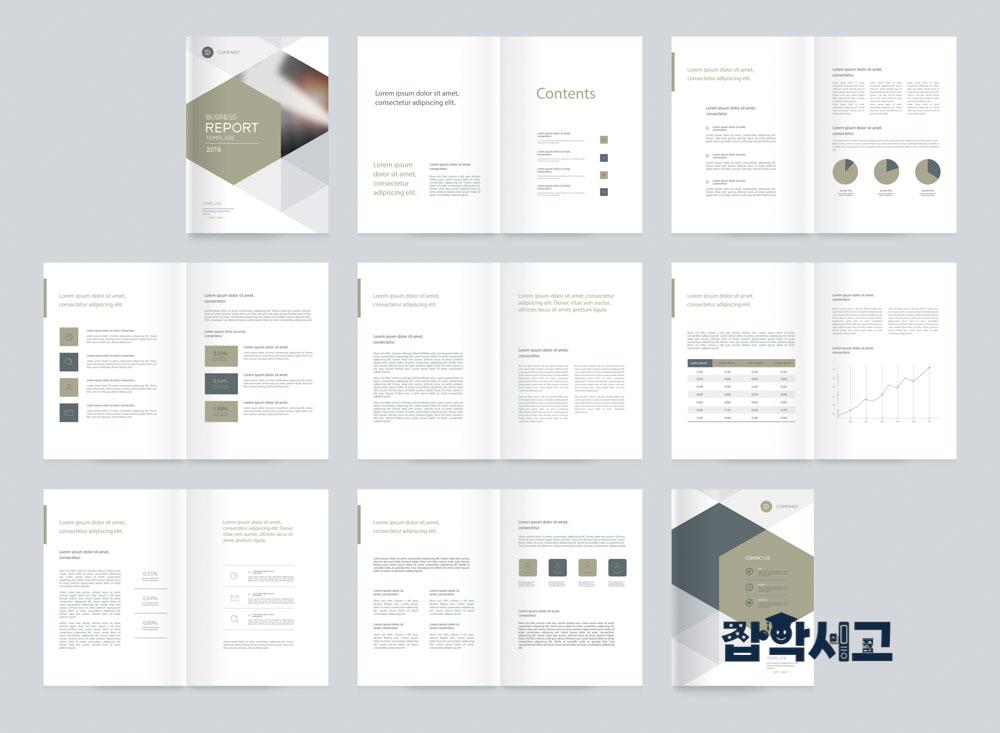 How should a report be structured?
Using Consistent Formatting
It is important to use consistent formatting when writing a report. Standardizing the formatting of each section, such as the cover, table of contents, main text, conclusion, and references, improves the report's overall readability and professionalism. For example, the cover should clearly state the report title, author's name, and date of writing, while the table of contents should include each chapter's title and page number.
Designing the Cover
The cover determines the first impression of a report. It should include the report title, author's name, affiliation, date of writing, and intended recipient, while maintaining a simple and clean design. Because the cover represents the report's content, it should be prepared in a format that conveys professionalism and credibility.
Creating the Table of Contents
The table of contents helps readers understand the report's structure at a glance. Clearly state the titles and page numbers of each chapter and section so that readers can quickly find the information they need. Using an automatic generation feature is convenient for creating a table of contents, and remember to update it whenever changes are made.
Structuring the Main Text
The main text contains the report's core content. It should be clearly divided into an introduction, main discussion, and conclusion, with consistent formatting maintained in each section. The introduction explains the report's purpose and background, the main discussion develops the key content systematically, and the conclusion presents a summary of the key points and recommendations.
Introduction
The introduction explains the report's background, purpose, and scope. It should be written clearly and concisely so that readers can understand the report's overall context. The introduction can attract readers' attention by emphasizing the research question or the report's importance.
Main Discussion
The main discussion addresses the report's key content and should develop it systematically and logically. Each chapter and section should have a clear title, and explanations, examples, and visual materials should be used appropriately to make the content easy to understand. It is helpful to write each section so that it can be understood independently.
Conclusion
The conclusion summarizes the report's core content and presents the main findings or recommendations. It should concisely summarize the content discussed in the main text and include recommendations for future research or practical application based on that content. It is important to write it so that readers can grasp the report's key points by reading the conclusion alone.
References
The references section lists the materials consulted when writing the report. Each source should be recorded accurately using a consistent citation format and presented clearly so that readers can consult it. It is important to follow appropriate citation conventions, such as APA, MLA, or Chicago style.
Appendices
The appendices provide material that is too detailed or extensive to include in the main text. Data tables, additional graphs, questionnaires, and interview materials can be included in the appendices, which are used to provide the originals of materials referenced in the main text. The appendices supplement the main text and should be organized so that readers can consult them when needed.
Maintaining Consistency and Professionalism in Formatting
All sections of the report should maintain consistent fonts, font sizes, line spacing, margins, and other formatting. This enhances the report's professionalism and helps readers read the content easily. In particular, standardizing the formatting of the cover, table of contents, main text, references, and other sections improves the report's overall quality.
Effective report writing is the first step toward successful work performance. Through accurate information collection and analysis, clear and concise writing, and appropriate use of visual elements, reports can provide readers with clear and reliable information.
We hope that referring to the methods explained in this article will help you write more effective reports. Successful report writing will contribute greatly to work performance and individual career development.