Considered one of the innovations of modern technology, 3D printers are bringing major changes to industries ranging from manufacturing to medicine, education, and art.
3D printers can produce complex products quickly and accurately, offering greater efficiency and cost-effectiveness than conventional manufacturing methods.
This article aims to explore the concept and operating principles of these 3D printers, their advantages and disadvantages, and their various applications in detail.
What Is a 3D Printer?
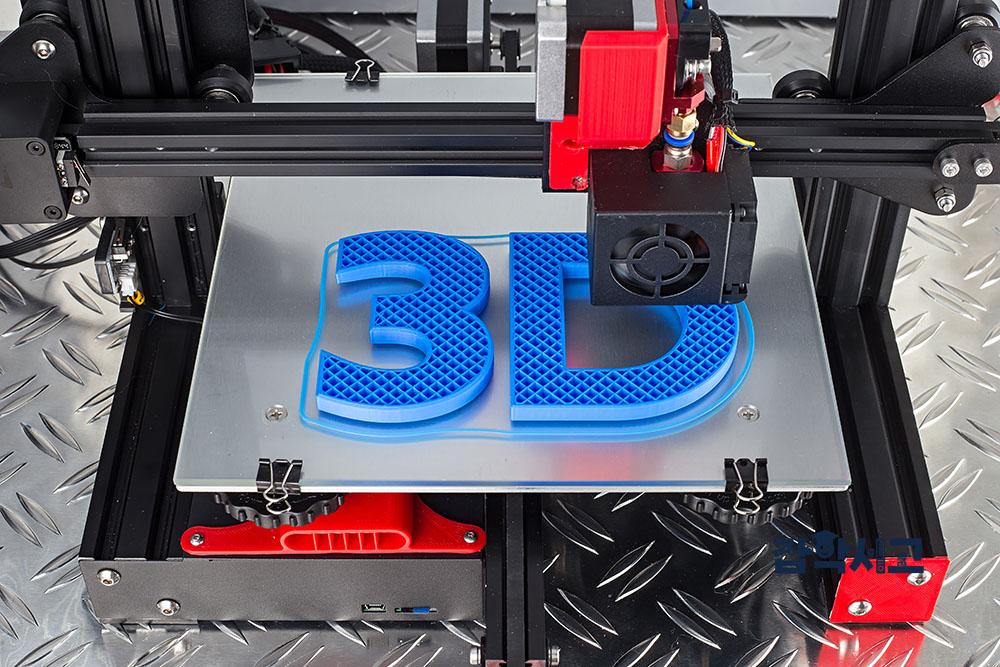 What Is a 3D Printer?
A 3D printer is a device that creates solid objects based on digital files. Unlike conventional printing on flat surfaces, this technology produces objects by building up multiple layers.
Using a 3D printer, you can transform a 3-dimensional design created on a computer into a solid object that you can actually touch.
Understanding Through a Simple Example
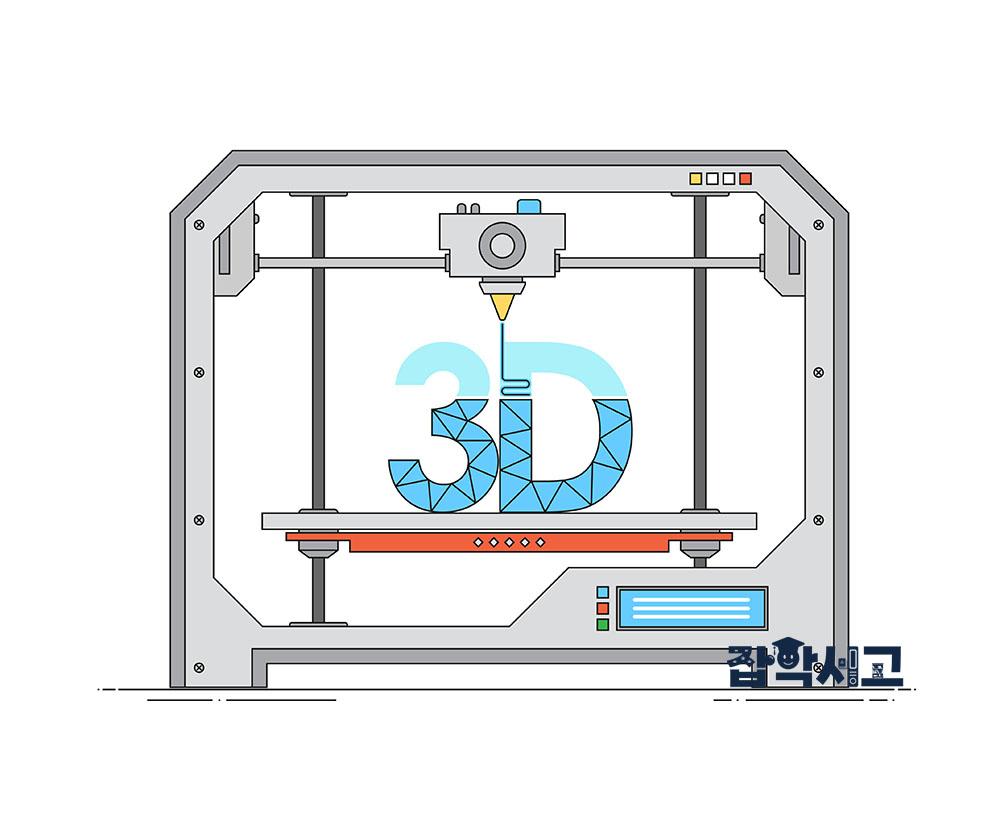 Helping You Understand 3D Printers
Imagine a cake made of stacked layers. Just as each layer of a cake is stacked in sequence, a 3D printer builds up material one layer at a time to create a solid object. During this process, the printer can use various materials, including plastic, metal, and ceramics.
The History of 3D Printers
The concept of 3D printers first appeared in the 1980s. As technology advanced, 3D printers became increasingly sophisticated and capable of using a wider variety of materials.
Initially, they were mainly used for prototyping, but their applications have expanded considerably as products at prices readily accessible to ordinary consumers have become available.
Types of 3D Printers
- FDM (Fused Deposition Modeling): The most common method, which melts plastic filament and builds it up one layer at a time.
- SLA (Stereolithography): A method that uses a laser to harden liquid resin. It allows for highly precise work.
- SLS (Selective Laser Sintering): Creates objects by solidifying powdered materials with a laser. Materials such as metal or nylon can be used.
The Operating Principles of 3D Printers
3D printers use technology that converts digital design files into physical objects, primarily through Additive Manufacturing.
This method involves creating objects by building them up layer by layer. The operating principles of 3D printers can be explained as follows.
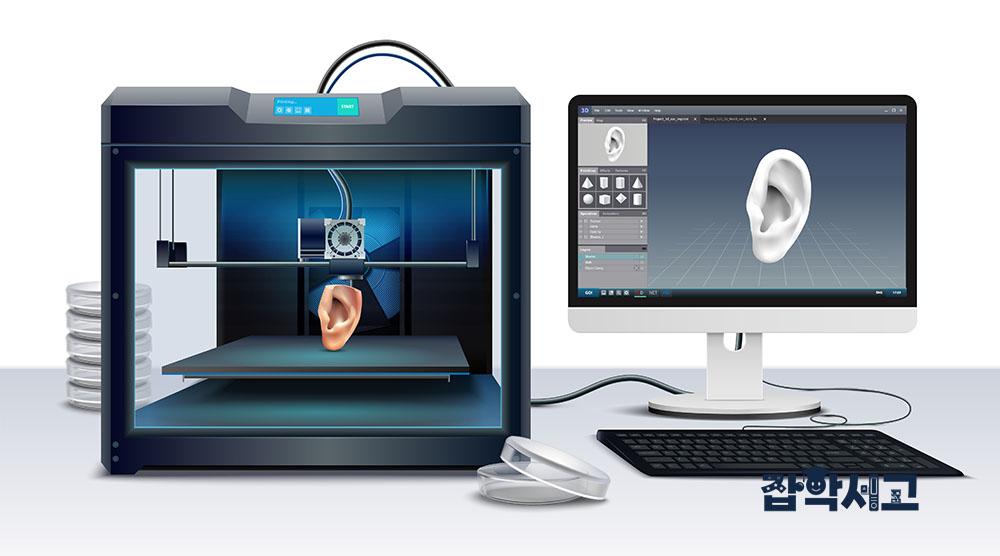 Operating Principles of 3D Printers
1. Preparing the Digital Model
First, a digital model of the object is created on a computer using 3D design software (CAD). This digital model is saved in the STL (Standard Tessellation Language) file format. This file represents the object's surface by dividing it into small triangles.
2. Slicing
The digital model file is divided into very thin layers using slicing software. During this process, instructions called G-code are generated, containing information about each layer. G-code is code that tells the 3D printer how to print each layer.
3. Preparing to Print
A 3D printer consists of the following main components.
- Printer head: Melts or hardens the material while building it up one layer at a time.
- Bed (platform): The surface on which the object is created. The bed moves vertically inside the printer to help build up the layers.
- Controller: A computer system that controls all of the printer's operations, reading digital files and issuing instructions.
- Material feeder: Supplies material to the printer head.
Preparation for printing is completed by supplying the printer with material (plastic filament, resin, metal powder, etc.) and adjusting the bed's position and temperature.
4. Layer-by-Layer Printing
The printing process consists of the following steps.
1) Printing the First Layer: The printer head extrudes material through a nozzle to form the first layer. This layer adheres directly to the bed.
2) Printing Each Layer: The printer head moves up and down, building each layer in sequence. The material gradually hardens in each layer, taking shape.
3) Cooling and Curing: For certain materials (e.g., resin), the layers are cured using a laser or UV light. Most materials cool naturally in the air.
5. Post-processing (Post-Processing)
Once printing is complete, the object is removed from the bed and undergoes post-processing if necessary. This may include the following processes.
- Support removal: Removes support structures added during printing to ensure structural stability.
- Surface finishing: Improves the quality of the finished object by smoothing its surface or applying paint and other treatments.
- Curing: Certain materials undergo additional curing to increase their strength.
6. Completion
Once post-processing is finished, the object that began as a digital design file is physically complete. Through this process, 3D printers can precisely produce even objects with complex shapes.
The operating principles of 3D printers are becoming more varied as materials and technologies advance, and their applications continue to expand.
Advantages and Disadvantages of 3D Printers
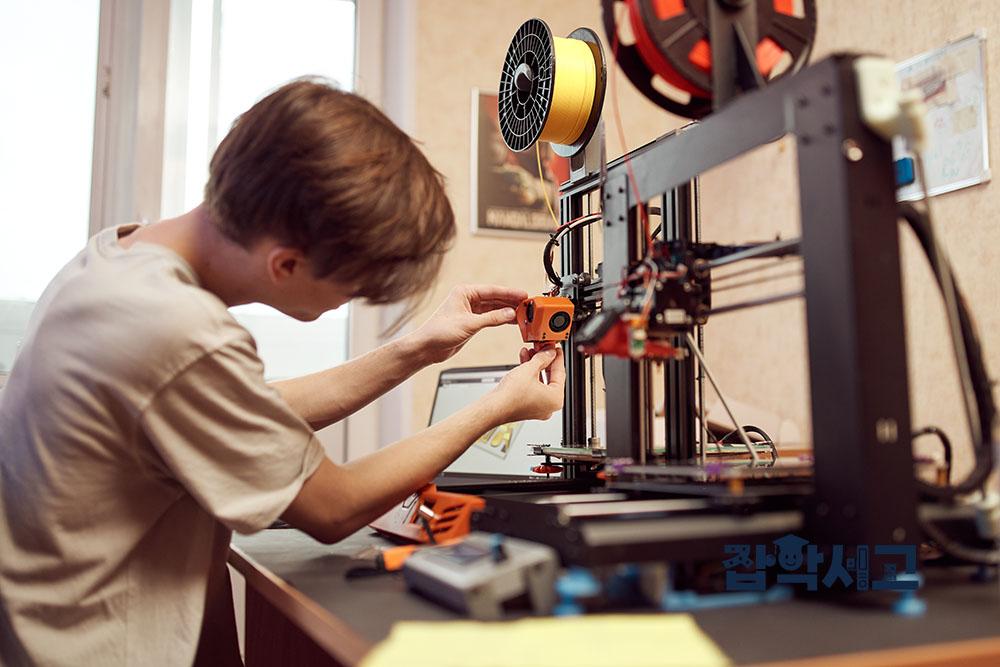 Advantages and Disadvantages of 3D Printers
3D printers have many advantages and a few disadvantages. These are outlined below.
Advantages
Customization
3D printers can produce customized items to meet individual needs. For example, you can create accessories with your own designs or assistive devices that fit you perfectly, and doctors can print artificial joints tailored to a patient's body for use in surgery.
Creating Complex Designs
3D printers can easily create complex designs that are difficult to produce using traditional manufacturing methods. For example, they can produce mechanically complex parts or intricate works of art.
Rapid Prototyping
When developing a new product, prototypes can be made quickly. This reduces the time needed to test and revise designs. For example, an automotive company can quickly produce prototypes to test parts for a new model.
Variety of Materials
3D printers can use various materials, including plastic, metal, and ceramics. For example, they can make toys from plastic, tools from metal, and artworks from ceramics.
Cost Savings
Costs can be reduced compared with traditional manufacturing methods. This is particularly advantageous for small production runs or customized products. In particular, mold-making costs can be reduced when creating a one-of-a-kind customized product.
Disadvantages
Production Time
3D printers can take a long time to create complex objects. Small objects can be made quickly, but large objects or intricate designs require considerable time. For example, a small part can be made within a few hours, while a large architectural model may take several days.
Material Limitations
Not every type of material can be used. Current 3D printers are suitable only for certain types of materials. Some 3D printers can use only specific plastics and cannot use materials such as metal or glass.
Strength and Durability
Objects made with 3D printers may have lower strength or durability than those made using traditional manufacturing methods. For example, plastic parts made with a 3D printer may not be as strong as parts made from metal.
Technical Limitations
3D printers cannot make everything. Current technology can achieve only limited sizes and levels of precision. For example, printing extremely precise electronic components or entire large buildings is still difficult.
Cost
High-performance 3D printers and materials are still expensive, so the initial investment can be substantial. Industrial 3D printers can cost tens of millions to hundreds of millions of won.
Although 3D printers have many advantages, the reality is that they still have some limitations. However, these disadvantages are expected to be gradually overcome as technology advances.
Applications of 3D Printers
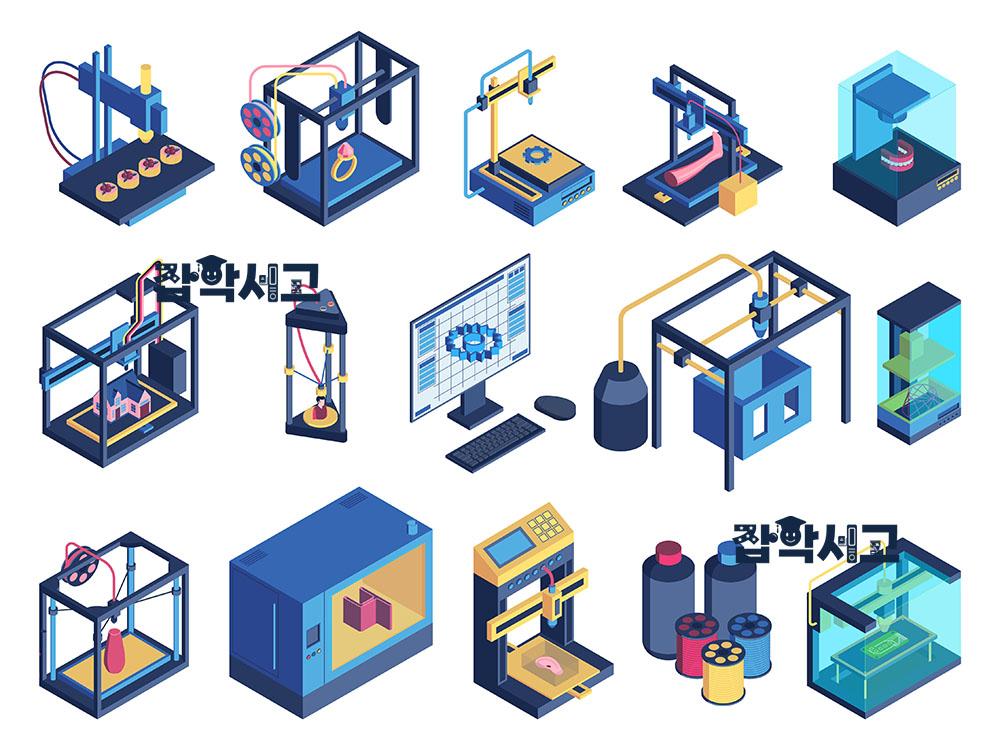 What Are the Applications of 3D Printers?
3D printers are used as innovative tools across various industries and fields. Their main applications are outlined below.
1. Manufacturing
Prototyping: 3D printers can produce prototypes of new products quickly and inexpensively, reducing product development time.
* Example: Automotive companies use 3D printers to make prototypes for testing new parts.
Customized Products: Personalized products tailored to consumer needs can be made easily.
* Example: Producing customized phone cases or appliance parts with special designs.
2. Medicine
Medical Devices and Implants: 3D printers can be used to produce medical devices or implants that fit a patient's body precisely.
* Example: Using 3D printers to make artificial joints or dental implants tailored to a patient's skeletal structure.
Surgical Models: Before surgery, models of a patient's organs are produced using a 3D printer for use in surgical planning.
* Example: Printing a patient's brain in 3D before brain surgery to practice the surgical procedure.
3. Architecture and Construction
Model Making: Architects and engineers can use 3D printers to produce scale models of buildings to review their designs visually.
* Example: Using a 3D printer to make a scale model of a planned building and show it to a client.
Housing Construction: Technologies that use 3D printers to print the structures of houses directly are also being developed.
* Example: Using a large 3D printer to build up concrete to create the walls and structures of a house.
4. Education
Producing Teaching Aids: 3D printers are used to produce educational tools and models.
* Example: Making animal bone models for students to use in biology classes or models of ancient artifacts for history classes.
STEM Education: They are used to help students learn and practice 3D design and printing technologies. Here, STEM is a term formed from the initial letters of Science, Technology, Engineering, and Mathematics.
* Example: Students design their own robot parts and produce them using a 3D printer.
5. Art and Design
Works of Art: Artists use 3D printers to create complex and creative works.
* Example: Printing digital art as physical sculptures for exhibition.
Fashion Design: Designers use 3D printers to produce clothing, shoes, and accessories.
* Example: Using a 3D printer to make customized shoes or unique fashion accessories.
6. Aerospace and Automotive Industries
Parts Production: Complex aircraft or automotive parts can be produced using 3D printers to reduce weight and improve performance.
* Example: Using a 3D printer to make complex aircraft engine parts lighter.
Maintenance and Repair: When parts need repair, 3D printers can be used to produce the necessary parts quickly.
* Example: Using a 3D printer to reproduce discontinued parts for an old car.
7. Consumer Products
Everyday Items: Personal 3D printers can be used to make simple household items at home.
* Example: Making small parts for broken appliances or decorations you have designed yourself.
3D printers are used in various fields in this way, and their applications are expanding further as technology advances. In the future, 3D printers will continue to establish themselves as important tools that open up new possibilities.
3D printers are moving beyond simple prototyping tools to drive innovation across various industries. As technology advances, 3D printing technology is becoming more sophisticated, and its applications are expanding.
They have now become tools for realizing individual creativity and an important technology driving industrial innovation. We can look forward to the limitless possibilities that 3D printers will create and the changes they will bring.